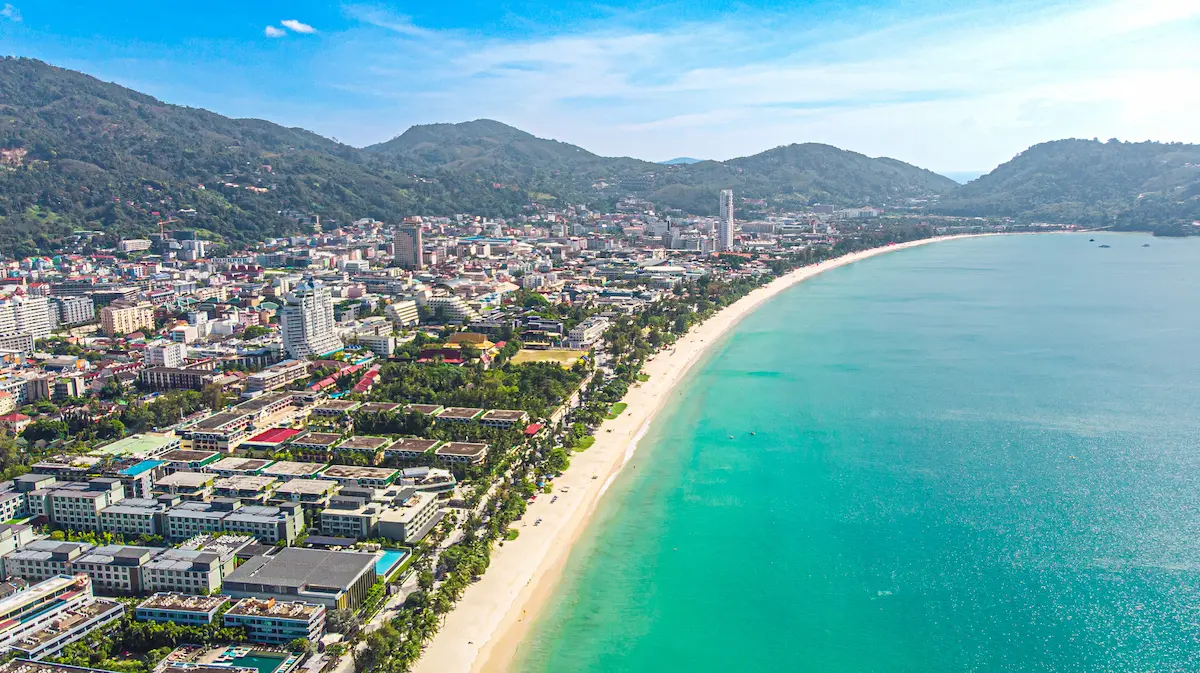
Patong Beach Phuket – Chaos, Sunsets, and the Loud Heart of the Island
Some beaches whisper. Patong Beach Phuket doesn’t. It hits you like heat off concrete the moment your sandals touch the sand — loud, colourful, flawed, addictive. It’s the kind of place people swear they’ll never visit again… right up until they find themselves checking flight prices back to Phuket.
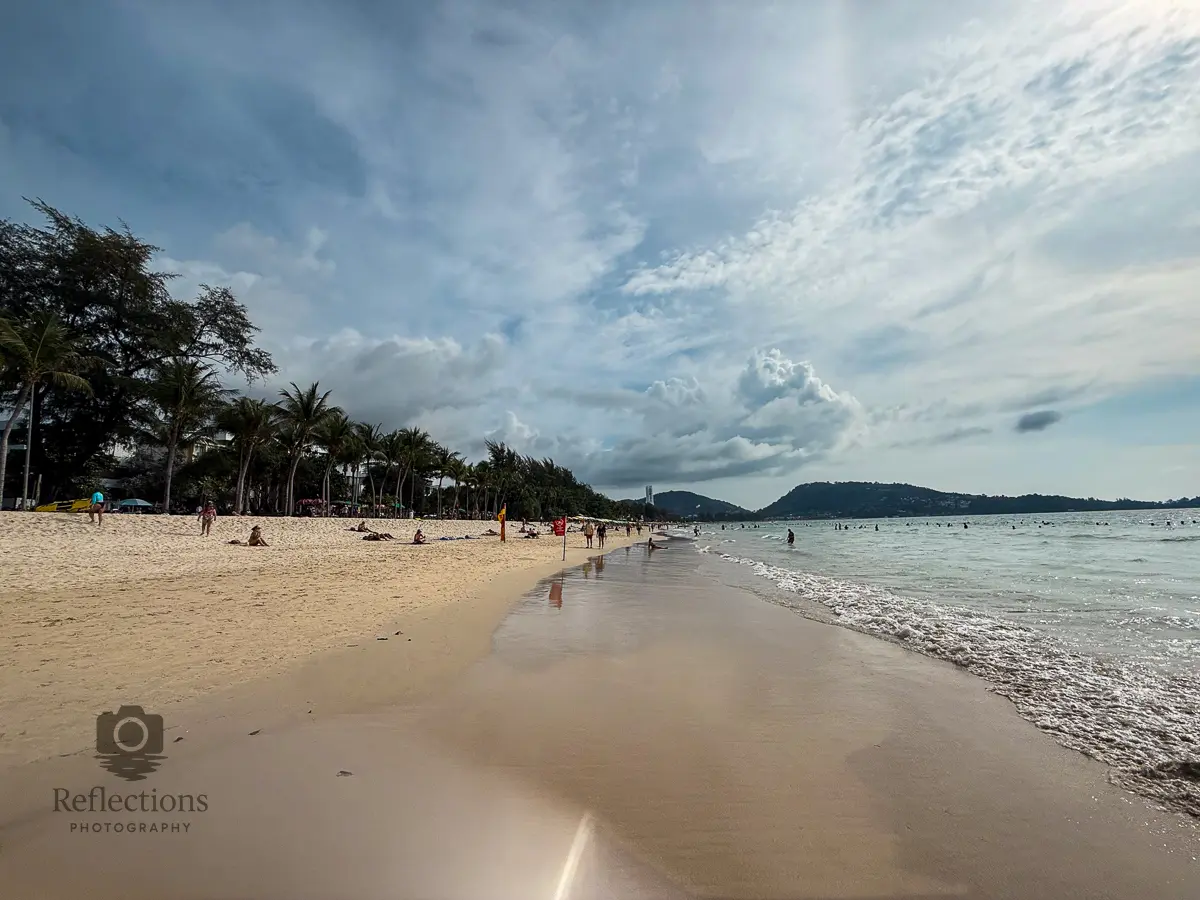
First Steps on Patong Beach Phuket
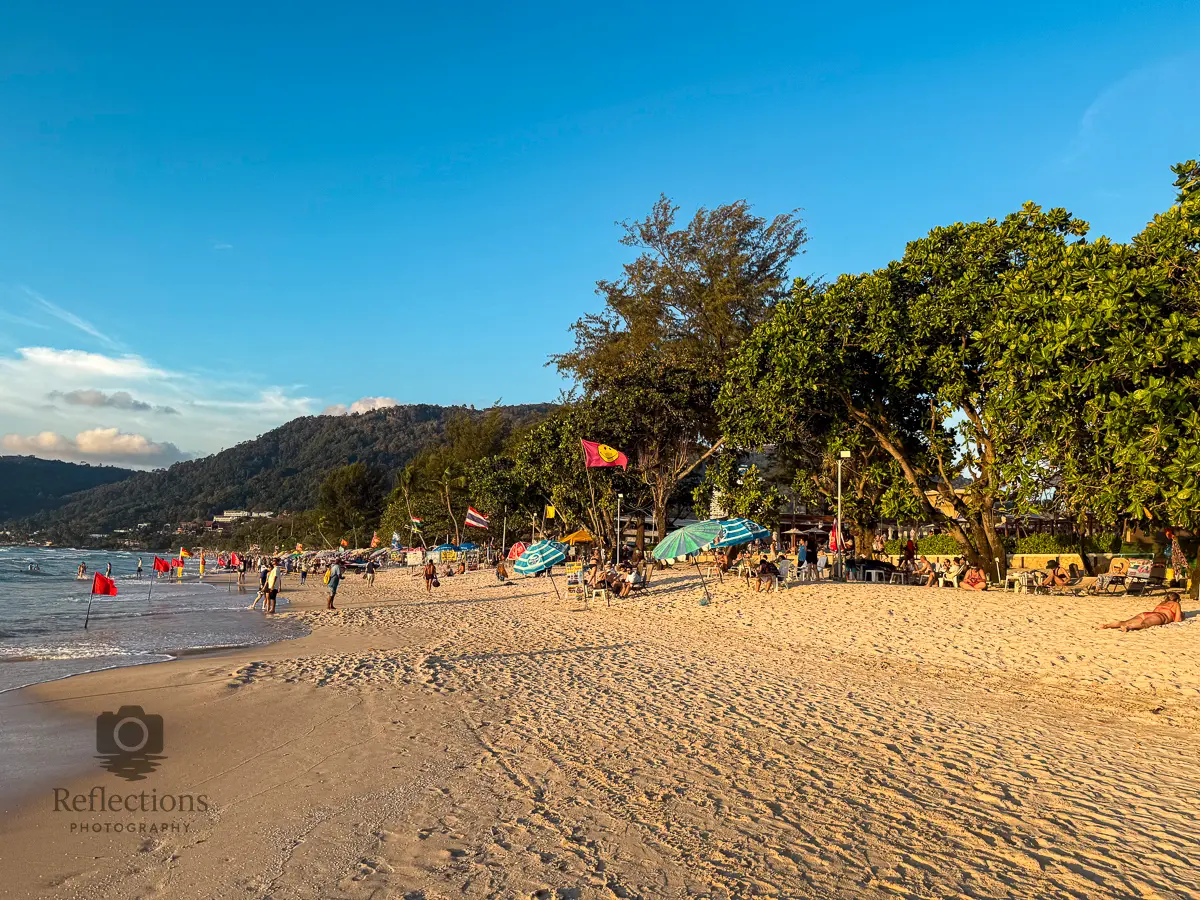
The first time you walk onto Patong Beach Phuket, the light feels almost too bright. The sand isn’t the soft, untouched powder from travel brochures — it’s trampled and lived-in, a runway for flip-flops and bare feet and the occasional slightly lost Russian in leather shoes.
You hear the bay before you really see it. Jet skis buzz, parasails drift overhead like neon jellyfish, a Bluetooth speaker leaks Thai pop into the air. Someone is arguing about the price of a coconut. Someone else is already on their second beer and it isn’t even midday.
It’s not subtle. Patong isn’t trying to seduce you with quiet charm. It shakes your hand, slaps your shoulder, and shouts, “You made it. What are you going to do with it?”
If you came here expecting the Thailand of meditation retreats and empty beaches, this stretch of coast will feel like a wrong turn at first. But give it time. Patong is less a “pretty picture” and more a character in a novel — complicated, noisy, and much more interesting than you think on day one.
The Layers Under the Sand
It’s hard to imagine, but once upon a time this bay was quiet enough that the loudest sound at night was the sea and a few scooters climbing the hill.
In the 1960s and 70s, before anyone put the words “Patong” and “Phuket” on a package tour brochure, the beach was mostly jungle and fishermen. A handful of families lived along this shoreline, mending nets by oil lamp, their boats pulled up on sand that had never seen a cocktail menu.
Then the backpackers came — the type who travelled on rumours and hand-drawn maps, not hashtags. They slept in bamboo huts, drank warm beer on the sand, and told each other they’d found a secret. For a while, it really was one.
But secrets don’t last long when you put an airport on an island. The 1980s and 90s rolled in with longer runways, better roads and the steady arrival of charter flights. Scandinavians, Australians, Europeans — they all came chasing winter sun and affordable beer. Wooden beach shacks turned into bars. Bars turned into blocks. Neon lights replaced stars one strip at a time.
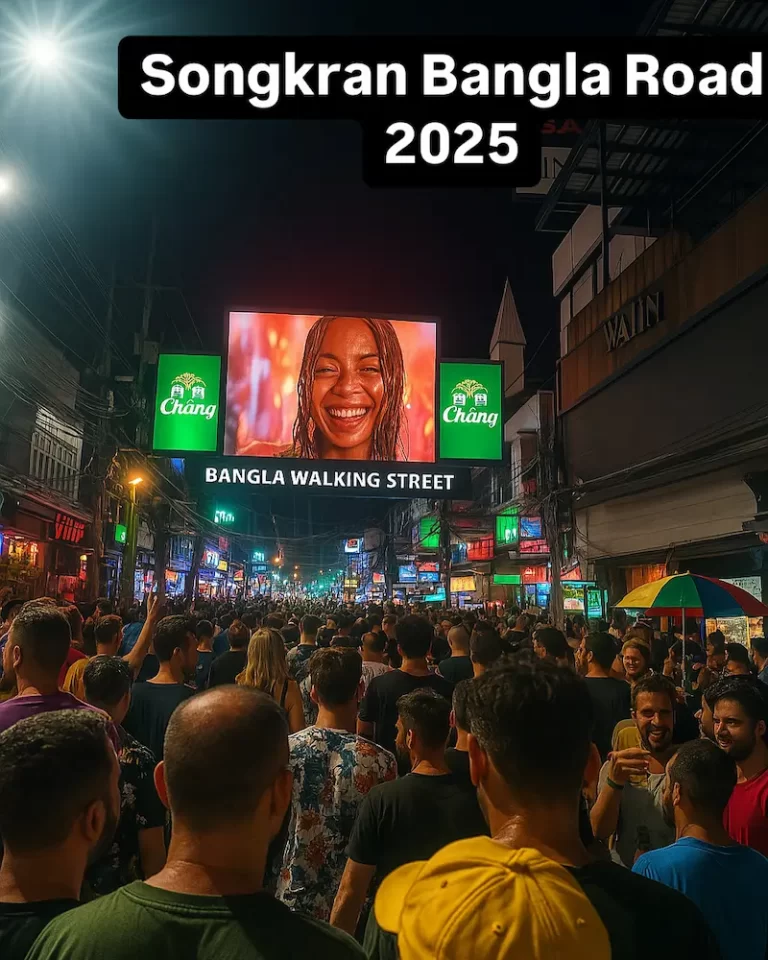
Bangla Road — the nightlife artery that runs just behind the beach — grew into something people would argue about over dinner on the other side of the world. For some, it became a reason to come. For others, a reason to stay away. Patong didn’t seem to mind either way, as long as the flights kept landing.
Then came December 26, 2004.
People still talk about that morning in a quieter voice. A line on the horizon. The sea pulling back. Confusion turning into instinct and then into fear. A wall of water hitting the beachfront like a hand sweeping pieces off a game board.
Boats ended up on rooftops. Buildings disappeared. Whole sections of the beachfront had to be rebuilt from bare foundations. By some strange grace, Patong Beach Phuket recorded far fewer deaths than it might have, especially compared to places like Khao Lak. But the emotional damage didn’t show up on statistics. The beach remembers that day, even if new visitors do not.
Years later, the pandemic did what even the tsunami couldn’t: it turned the noise off.
For months, the bay fell quiet. No jetskis. No parasails. Just a handful of locals and long-stay foreigners walking a beach suddenly too big for the number of footprints on it. Stray dogs stretched out where rows of sunbeds used to stand. You could hear the waves without turning your head.
Then the borders opened again.
Russians. Indians. Thais. Europeans. Domestic tourists from Bangkok. The lights flickered on. The sound returned. Patong did what it always does: it came back swinging.
A Day in the Life of the Beach
If you want to understand Patong Beach Phuket, don’t just visit once. Walk it at different hours. It’s like living with someone long enough to see them pre-coffee, mid-meeting, and three drinks deep.
Early Morning is for the people who actually live here. The sky is pale, the heat hasn’t tightened its grip yet, and the only music is the sound of the water folding itself onto the sand. You’ll see joggers in mismatched running gear, Thai aunties sweeping in front of their stalls, a few dedicated swimmers who know the lifeguards by name.
The beach looks cleaner at this hour — not because the tourists have changed, but because a small army of workers has been through in the dark, collecting yesterday’s sins in large black bags. You notice the order, not the work behind it.
By late morning, the sun gets serious. Umbrellas bloom. Vendors roll out carts: fruit, corn, grilled chicken, ice cream, inflatable flamingos you never knew you needed. The sand heats up enough to make flip-flops seem like good investments again.
Somewhere, a small drama about the price of a beach chair plays out in broken English. Somebody wins, somebody shrugs, and life moves on.
Afternoon is full volume. The water is busy with jetskis and banana boats. Kids build sandcastle empires doomed to fall at the next high tide. Instagram poses happen in batches by the shore. The accents around you are a live geography lesson: Russian, Hindi, Thai, Korean, English with five different flavours.
Convenience is the god here. Need a cold drink? Walk twenty steps. Need a SIM card, a pharmacy, a new swimsuit because you forgot yours? Cross the road. Within a short stroll of the waterline you can find malls, markets, massage shops, 7-Elevens, beach bars and tour desks that will send you everywhere from Phi Phi to the Similan Islands. You don’t plan logistics on this beach. You improvise them.
Then the sun starts to drop, and Patong shows its best side.
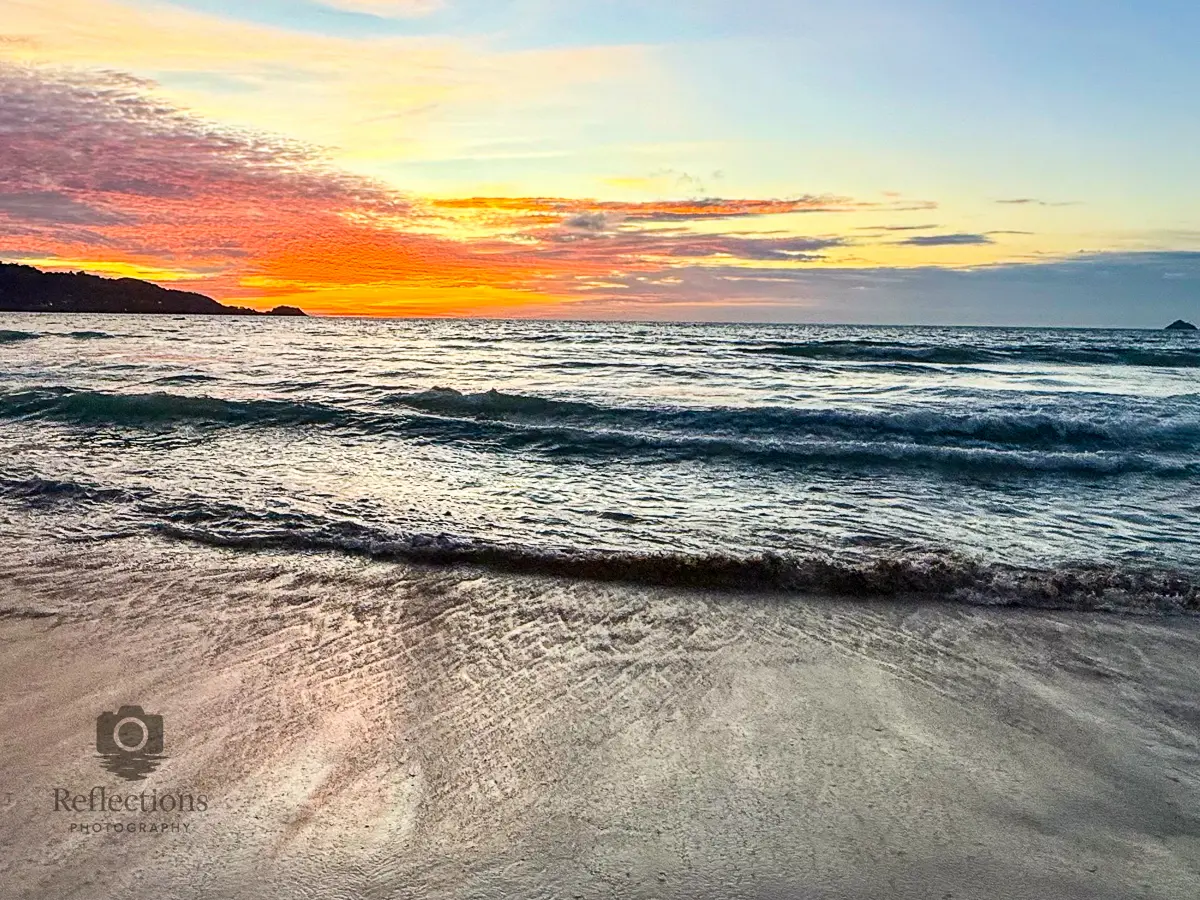
Sunset on Patong isn’t subtle. The sky goes full theatre — orange, pink, purple, sometimes all three fighting for space over the horizon. Faces turn towards the water almost automatically. For a few minutes each day, the beach collectively shuts up. Even the party people pause to film it. The day’s noise fades into the background hum of waves and camera shutters.
It is the closest Patong comes to a prayer.
After dark, the focus shifts inland. The beach itself quietens, but the glow behind it grows brighter. Bangla Road inhales the crowds and exhales stories people only half remember the next morning. Some nights are predictable. Others take strange turns. Patong has a reputation for giving you exactly the night you weren’t planning on.
Beauty, Bad Decisions, and Honest Flaws
It would be easy — and dishonest — to talk about Patong Beach Phuket as if it’s just sunsets and cold beer. Spend more than one day here and the cracks appear, sometimes literally.
There are days when the sea is glassy, clear and irresistible; and there are days when it’s churned up, cloudy and full of things that didn’t grow here. Plastic bottles. Stray foam. Little reminders that you are standing on a high-usage urban beach, not an untouched island.
Red flags go up when waves or currents make swimming risky. Some people ignore them. Lifeguards blow whistles in multiple languages. Most days it’s fine. Some days, it isn’t. That’s the ocean for you — and the ocean doesn’t care how much you paid for your hotel.
Then there’s the money side. Patong can be as cheap or as expensive as you let it. There are local places where you can eat a good plate of food for not much more than in town, and there are spots where a seafood dinner will silently test your credit limit. Beach activities, sunbeds, even coconuts — the price depends heavily on where you stop and how comfortable you are saying no.
There are tourist traps. There are people trying to sell you things you do not need and probably don’t want. There are touts whose job is to drag your attention towards yet another tailor, massage shop, or bar that insists it is “Number One in Phuket, my friend.”
If you only want temples, quiet bays and slow breakfasts, Patong will feel like a bad blind date. But if you understand that this beach is a mirror of mass tourism — the good, the bad, the occasionally ridiculous — you start to appreciate it for what it is instead of resenting it for what it isn’t.
The truth is: Patong doesn’t pretend. It’s loud about its virtues and its vices. It gives you the information up front. What you do with it is your call.
The Tunnel That Might Rewrite Patong
Behind the beach, past the hotels and condos and tattoo studios, the road climbs over the hill towards Kathu and Phuket Town. Anyone who’s been in the back of a minivan on that stretch during rain or peak traffic knows it’s not exactly relaxing.
For years, locals and long-stay expats have been talking about a solution in the way people talk about mythical creatures: the Kathu–Patong tunnel.
The plan sounds bold even on paper — a multi-kilometre tunnel bored straight through the mountain, creating a four-lane link between Patong and the rest of Phuket. Shorter driving times, fewer accidents, a smoother spine for the island’s transport.
On one level, it’s a simple infrastructure upgrade. On another, it’s a question: what happens to a place like Patong Beach Phuket when you make it easier for even more people to get there, faster, in any weather?
Some locals are excited. More tourists usually means more business. Others worry about what “more” really looks like — higher rents, more traffic around the beach, a faster churn of visitors who treat the place as a quick fix, not somewhere to linger.
The tunnel isn’t finished as I write this, but the idea of it hangs over Patong like a weather forecast. Change is coming. The beach has reinvented itself before. It will do it again. Whether it becomes better or just busier depends on decisions being made long before the concrete sets.
The Patong Paradox
Read enough online reviews and you start to feel like two completely different beaches are fighting for the same name.
On one side, you have people who describe Patong Beach Phuket as “vibrant,” “exciting,” “never boring.” They love the ease of it. The way you can land at the airport, drop your bags at a hotel and be in the water before you’ve fully adjusted your watch. They talk about the sunsets, the nightlife, the fact you can get almost anything you want within a ten-minute walk if you’re not too precious about atmosphere.
On the other side, you have the people who hit publish on reviews with words like “overrated,” “crowded,” “tourist trap.” They complain about the prices, the noise, the way the sea doesn’t match the turquoise in the brochure on some days, the sense that Thailand is somewhere else and this is a theme park loosely based on it.
The truth is, both groups are right — for themselves.
Patong doesn’t change from person to person. What changes is what you bring to it. If you land here expecting a quiet spiritual reset, you’ll probably hate it. If you come looking for a beach that behaves like a city — messy, imperfect, alive past midnight — you might end up extending your stay.
This is the Patong paradox: the exact things one traveller complains about are the reason another one comes back.
Living Beside Patong Beach Phuket
I’ve lived near Patong Beach Phuket long enough now to watch people arrive and try to make sense of it. The expressions change, but the pattern doesn’t.
There’s the first-timer walking down from their hotel with a towel over their shoulder, looking around like they’ve just been dropped into the internet. There’s the seasoned repeat visitor who already has a favourite spot on the sand and a handshake deal with a fruit seller. There’s the long-stay expat who walks the beach not to see it, but to think.
From my side, Patong has stopped being “content” and started being neighbour. I’ve seen the beach on wet mornings in low season when the sky is the colour of tin and only a few stubborn swimmers are out past the shore break. I’ve seen it on those crystalline days when the water looks like someone finally turned the saturation up to the level everyone uses on Instagram.
I’ve watched locals sweep cigarette butts into dustpans just after sunrise, working their way down the sand without making a noise about it. I’ve seen kids play football at the water’s edge, their parents sitting back under the shade of a tree, plastic cups of iced coffee dripping on the sand.
I’ve also watched arguments about jetski damage, about overcharging, about umbrellas. I’ve heard people swear they’re never coming back… and then run into them again a year later, shrugging with a beer in hand.
Living here doesn’t blind you to Patong’s problems. If anything, it makes them more obvious. You can’t romanticise plastic in the water when you see it three days in a row. You can’t ignore the pressure tourism puts on infrastructure and on people who work long shifts so that visitors can have a “carefree” holiday.
But you also see the quiet kindnesses — the vendor who hands a free bottle of water to someone who forgot their wallet, the beach worker who chases down a stranger to return a dropped phone, the way people from half a dozen countries manage to share a strip of sand every single day without it turning into chaos more often than it does.
Patong will never be the most beautiful beach in Thailand if you judge it purely on water clarity and palm-tree aesthetics. But if you judge it on humanity — on the way people collide, adapt, celebrate, mess up, try again — it’s one of the most interesting pieces of coastline I’ve ever walked.
Is Patong Beach Phuket Worth It for You?
So should you come?
If you want a quiet cabin in the jungle, no.
If you want a temple-only trip, also no.
If you want to meditate on a rock with nobody else around, definitely no.
But if you want to land in the middle of something alive — something that smells like grilled squid and spilled beer and coconut sunscreen; something that will give you a story whether you ask for one or not — then yes, Patong Beach Phuket is absolutely worth a couple of days of your life.
Come understanding that it’s not “pure Thailand” or “fake Thailand.” It’s just one version of Thailand — the version that grew when cheap flights met warm sea and nobody put a sensible limit on how many bars you could fit into one small grid of streets.
Use Patong as a base if you like. Sleep here, swim here, watch the sunset, eat on the back streets, then take day trips out to quieter bays and offshore islands. Or treat it like a live-action documentary on mass tourism, and then escape somewhere calmer when you’ve had your fill.
Either way, you’ll remember it. Not every beach can promise that.
Planning Your Phuket Trip
Once you’ve walked this stretch of sand and watched the sun drop behind the Andaman Sea, there’s a whole island out there — hidden coves, local markets, temples, and quieter beaches where the loudest thing is the wind in the trees.
If you’d like help turning all of that into a real itinerary instead of just a wish list, check out:
👉 Resurgence Travel — Phuket Guides & Custom Trips
That’s where I go deeper into the rest of Phuket — the places most visitors never quite get around to seeing.
Want More About Patong?
This piece is about the feel of Patong Beach Phuket — the noise, the history, the contradictions. But if you want to get practical, I’ve written separate guides that go into the detail without stripping out the honesty.
Check out the following guides on Go Find Asia:
- Where to Stay at Patong Beach Phuket — which parts of the beach are quieter, which are party-central, and how to choose a hotel zone that actually matches the trip in your head.
- Where to Eat Around Patong Beach — from smoky street stalls to surprisingly good coffee, and how to avoid the worst tourist traps without needing to speak Thai.
- What to Do at Patong Beach Phuket — beach activities, day trips, and a few non-obvious things to do when you’ve had enough sun.
Once those are live, I’ll link them here so this article becomes your “hub page” for everything Patong.
Useful Resources
If you’re the kind of traveller who likes to double-check things for yourself (you should be), these are worth bookmarking:
- Tourism Authority of Thailand — Phuket
Official updates, events, festivals and general island information.
https://www.tourismthailand.org/Destinations/Provinces/Phuket - Windy
Live wind, rain and wave maps — handy for checking sea conditions around Patong Beach Phuket before you book that island trip.
https://www.windy.com
And of course, the most important research happens with sand under your feet. Whatever you’ve heard about Patong, come see which version of the truth belongs to you.
Is Patong Beach Phuket safe for tourists?
Yes, Patong Beach Phuket is generally safe, especially in busy areas. Normal travel awareness is recommended — keep belongings secure, follow lifeguard signs, and be cautious late at night around Bangla Road.
Can you swim at Patong Beach all year?
Yes, you can swim year-round, but conditions vary. During monsoon season (May–October), red flags indicate strong waves or rip currents. Only swim where lifeguards allow.
What is the best time of year to visit Patong Beach Phuket?
November to April is ideal, with calm seas and clearer weather. The monsoon season brings bigger waves, cheaper hotels, and fewer crowds.
Is Patong Beach suitable for families?
Yes — especially the northern and southern ends, which are quieter and have gentler waves. Families who want calmer evenings often stay slightly outside central Patong.
Why is Patong Beach Phuket so popular?
Because of convenience: nightlife, food, malls, markets, and activities all within walking distance. Add dramatic sunsets and an electric atmosphere and it becomes unlike any other beach in Thailand.
Is the water at Patong Beach clean?
It depends on tides and recent weather. Some days the water is crystal clear; other days it can be murky or have floating debris due to runoff. This is normal for a high-usage urban beach.
Is Patong Beach Phuket good for first-time travelers to Thailand?
Absolutely. It’s easy, convenient, and full of options. Prices vary, but everything you need — food, SIM cards, transport, tours — is within a few minutes’ walk.
How will the Kathu–Patong Tunnel affect Patong Beach?
Once completed, it will reduce travel time, improve access, and increase visitor flow. Patong Beach Phuket may become busier, but infrastructure and local business opportunities will likely grow.