Where to Stay in Phuket
Choosing where to stay in Phuket sounds simple at first. You open a map, see a few familiar names—Patong, Kata, Karon—and assume it doesn’t make a huge difference where you base yourself.
In reality, it matters more than almost any other decision you’ll make.
Phuket isn’t one place. It’s a collection of different areas, each with its own pace, layout, and feel. Where you stay affects how easily you get around, what your days look like, and how much time you spend travelling instead of actually enjoying the island.
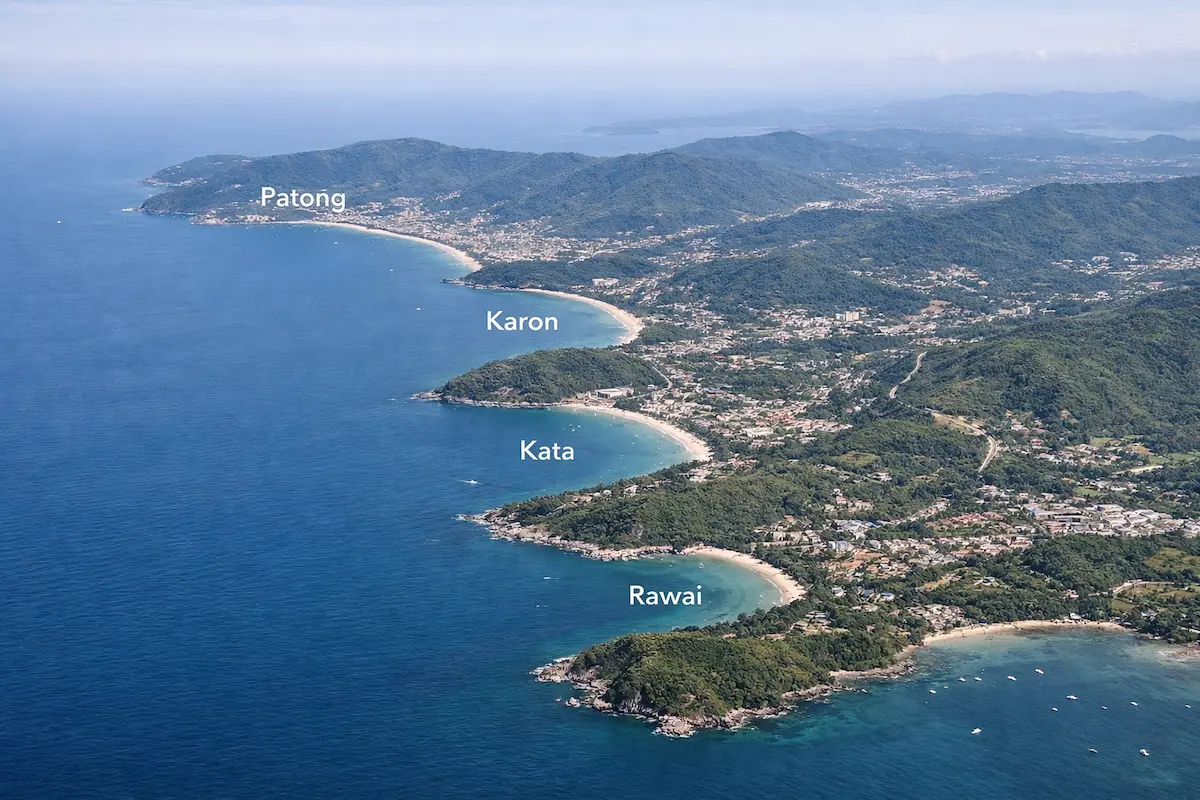
That’s where a lot of trips start to feel off.
People choose a location based on a quick search or a good-looking hotel, then realise they’re in the wrong part of the island for what they actually want to do. Getting between areas takes longer than expected, and what looked convenient on a map turns into unnecessary effort once you’re there.
It doesn’t need to be complicated.
This guide breaks down where to stay in Phuket clearly—how each area actually works, who it suits, and how to choose the right base for your trip.
How to Choose Where to Stay in Phuket
Deciding where to stay in Phuket becomes much easier once you focus on a few practical things instead of trying to compare every area at once.
The first is what kind of trip you actually want.
If you want convenience, nightlife, and everything within walking distance, you’ll need to stay somewhere built around activity. If you prefer something quieter, with more space and fewer people, you’ll be looking at a completely different part of the island.
There isn’t a single “best” area.
There are only areas that fit different types of trips.
The second factor is how much you want to move around.
Phuket looks compact on a map, but travel time adds up quickly.
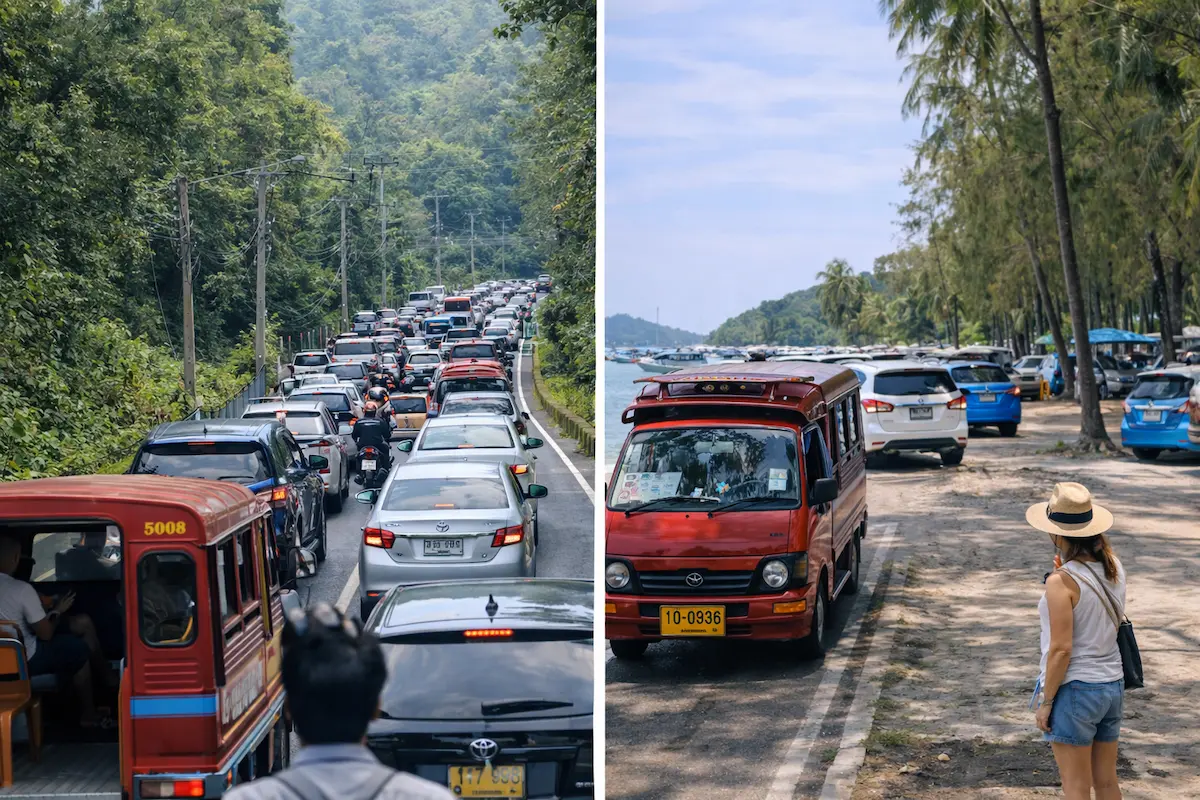
That’s partly because road layouts, development, and tourism zones have evolved over time across the island, something reflected in destination guidance from the Tourism Authority of Thailand.
Roads aren’t always direct, traffic can slow things down, and moving between areas often takes longer than expected. If you plan to explore a lot, your base matters more. If you’re happy staying local most days, you can choose somewhere more specific to your preference.
Walking access is another big one.
Some areas allow you to step out of your hotel and have everything nearby—beach, restaurants, shops. Others require transport for almost everything. Neither is automatically better, but it changes how your days feel.
That’s where many people get it wrong.
They choose a quieter location, then realise they need transport for every meal or activity. Or they stay somewhere central and busy, expecting it to feel more relaxed than it actually is.
Once you think about these three things—pace, movement, and access—the decision becomes much clearer.
You’re not trying to find the perfect place. You’re choosing an area that fits how you want your trip to work day to day.
Patong Beach Phuket
For many travellers, where to stay in Phuket starts with Patong.
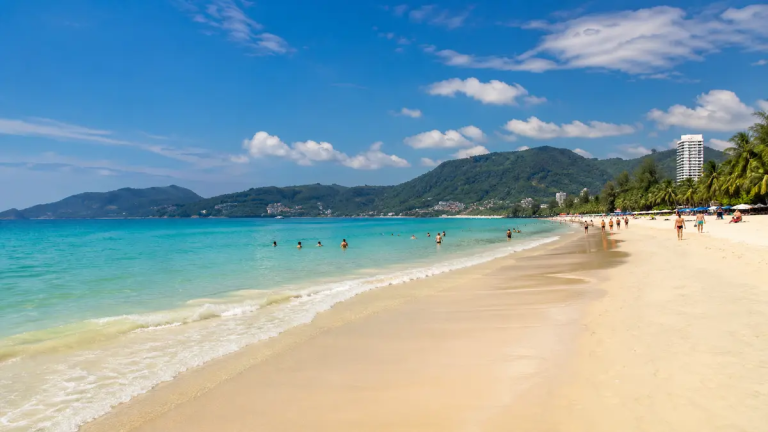
It’s the most well-known area on the island and the easiest place to understand at a glance. Everything is close together. You have a long stretch of beach, a dense strip of restaurants, shops, and bars, and a level of activity that runs from morning through to late at night.
That convenience is what makes Patong work.
If you’re staying for a shorter trip, want nightlife, or prefer having everything within reach, it’s a practical choice. You can move between the beach, food, and entertainment without needing transport, and there’s always something happening.
But that same convenience comes with trade-offs.
Patong is busy. Even during quieter periods, it still carries a constant level of activity. The beach is active, the streets are crowded, and the overall pace is higher than anywhere else in Phuket.
If you’re looking for a relaxed, quiet stay, Patong will feel overwhelming. But if you want energy, variety, and ease of access, it does exactly what it’s designed to do.
If you want a deeper breakdown, this guide to Patong vs Kata vs Karon explains how Patong compares to Phuket’s other main tourist bases in real conditions.
For many people, Patong works best as a base for convenience—especially if you plan to explore during the day and return somewhere central at night.
Kata Beach Phuket
Kata is often the safest answer to where to stay in Phuket if you want balance.
The beach is clean, well-maintained, and easy to spend time on without feeling crowded or disorganised. Behind it, the town is compact enough to walk around comfortably, with a good mix of restaurants, cafes, and everyday services within easy reach.
This is what makes Kata so popular.
It offers enough activity to keep things easy, but without the same intensity as Patong. For many first-time visitors, that middle ground is exactly what makes it work. You can enjoy the beach, eat well, and move through your day without needing to think too much about logistics.
At the same time, Kata is not as quiet or spacious as some slower areas, and over longer stays the options can start to feel familiar.
If you want the full breakdown, this Kata Beach Guide explains what Kata is actually like, where to stay, and who it suits best.
Karon Beach Phuket
Karon usually appeals to people who want more space.
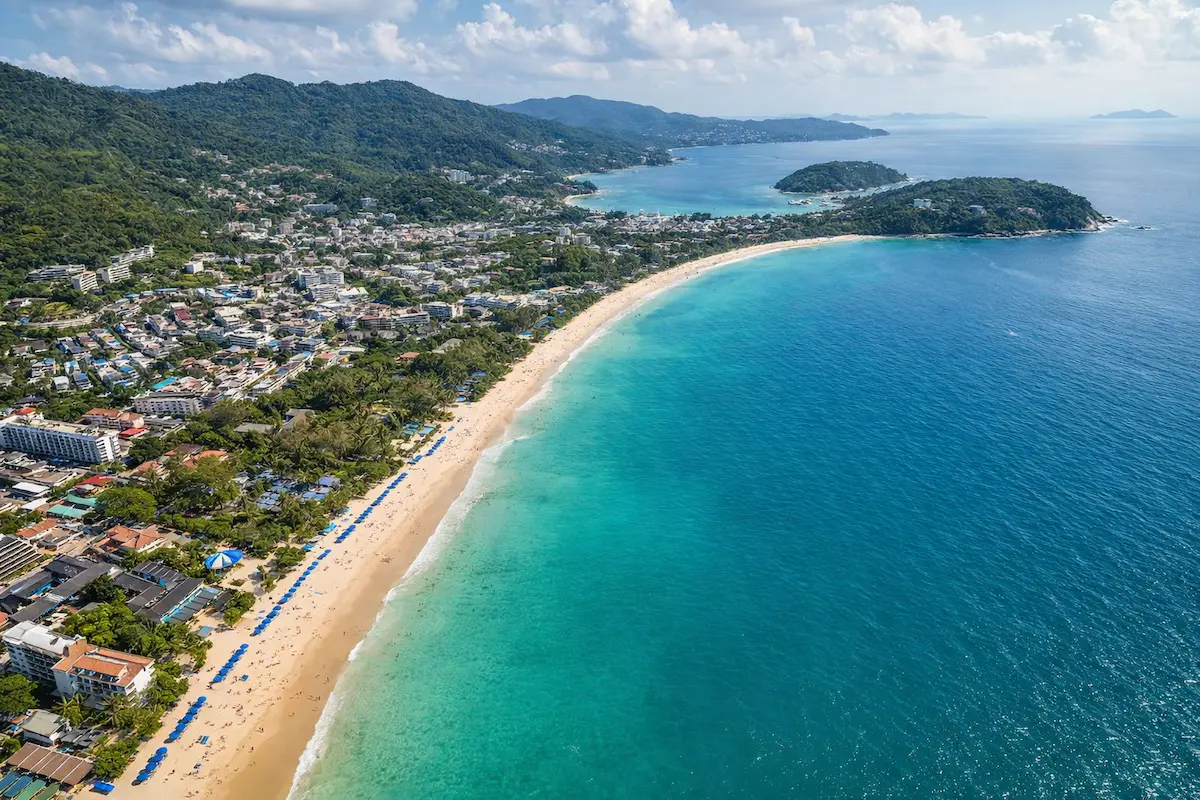
The beach is longer, wider, and more open than Kata, which changes the whole feel of the area. Even when there are plenty of visitors around, the extra room makes it feel less compressed and easier to relax in.
That openness is the main reason Karon works.
You’re not constantly surrounded by the same density of people, and the pace naturally slows down. But that same space comes with a trade-off. Restaurants and shops are more spread out, and everyday convenience is slightly lower than in more compact areas.
If you want a fuller picture, this Karon Beach Guide breaks down what Karon is actually like, where to stay, and how it compares to nearby areas.
Kamala Beach Phuket
Kamala sits in a different lane again.
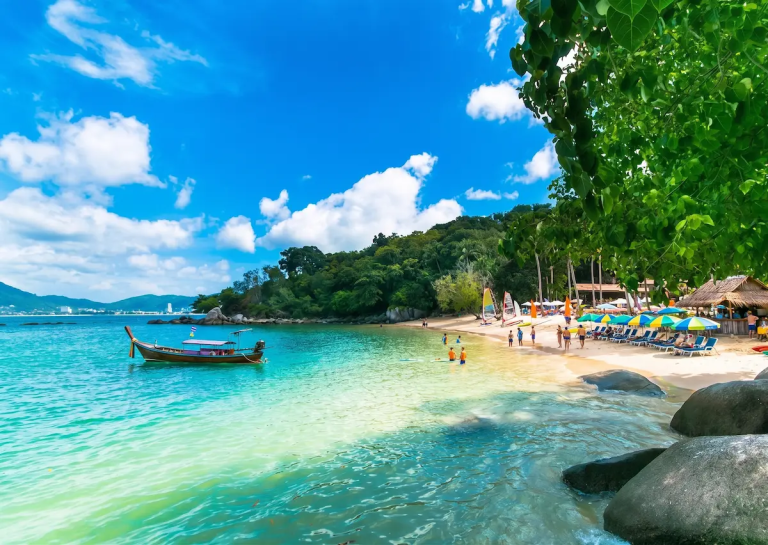
It’s quieter, more contained, and less driven by constant activity than Patong, Kata, or even Karon. The beach is comfortable, the main area is manageable, and the overall pace feels slower from the moment you arrive.
That’s exactly why some travellers prefer it.
If you want a quieter base without feeling completely cut off, Kamala can work very well. But it also has fewer options and less variety, which means it suits travellers who are comfortable trading choice for simplicity.
This Kamala Beach Guide gives a full breakdown of what the area is actually like and when it makes sense as your base.
Where to Stay in Phuket: Key Differences That Matter
When deciding where to stay in Phuket, the real differences are not about which beach looks best in photos. They’re about how your trip actually feels once you arrive.
Convenience vs Space
Patong gives you maximum convenience. Karon gives you more space. Kata sits between them, while Kamala leans quieter and more contained.
Walkability vs Distance
Some areas make it easy to walk between the beach, restaurants, and accommodation. Others ask more of you in terms of taxis, short rides, or longer walks. That changes how effortless—or how interrupted—your days feel.
Short Trip vs Longer Stay
On a short trip, convenience matters more because you have less time to waste. On a longer stay, pace and comfort often matter more than density and activity.
This is the part people often overlook. You’re not choosing the “best” area. You’re choosing what friction you’re willing to accept.
Matching Your Base to Your Trip
By this point, where to stay in Phuket should feel more straightforward.
The next step is making sure your location actually fits how you plan to spend your time. This is where a lot of trips start to fall apart. People choose an area based on a general idea, then build an itinerary that doesn’t match it. They end up travelling across the island more than expected, trying to fit everything in, and losing time in the process.
It’s usually better to keep things simple.
If most of your plans are based around beaches and nearby restaurants, staying in one area and exploring locally works well. If you’re planning specific activities or day trips, it makes more sense to base yourself somewhere that reduces travel time.
Trying to combine everything from one location rarely works as smoothly as it looks on a map.
That’s why your base should come first. Once you know where you’re staying, the rest of your plans become easier to organise around it. Distances make more sense, travel time becomes more predictable, and your days feel less rushed.
If you haven’t mapped that out yet, this Phuket itinerary will help you structure your time so your plans actually work with your location.
And if you’re planning excursions beyond your base, this guide to Phuket day trips helps narrow down what’s actually worth adding without overloading your schedule.
Common Mistakes When Choosing Where to Stay in Phuket
Most problems with where to stay in Phuket don’t come from a lack of options. They come from small decisions that don’t match how the trip actually unfolds.
One of the most common mistakes is choosing based on price alone.
A cheaper hotel in a less convenient area can end up costing more in time and transport. If you need to take taxis or rides every time you leave your accommodation, the savings disappear quickly—and it adds friction to your day.
Another mistake is underestimating distance.
Phuket isn’t huge, but getting between areas takes longer than people expect. Roads aren’t always direct, traffic can slow things down, and moving across the island regularly can become tiring.
There’s also a tendency to pick a location based on one idea.
For example, choosing a quiet area without realising how limited the access is, or staying in a busy area expecting it to feel more relaxed than it actually is. That mismatch is what causes frustration.
Trying to change locations mid-trip is another common issue. It might seem like a good way to experience more of the island, but in practice it usually means losing time to packing, transport, and check-in delays.
The better approach is simpler. Choose one area that fits most of what you want, stay there, and plan around it.
Which Area Should You Choose?
If you want energy, nightlife, and maximum convenience, Patong is the most practical choice.
If you want balance, good beach access, and an easier all-round stay, Kata is often the safest option.
If you want more space, fewer crowds, and a slower pace, Karon makes more sense.
If you want a quieter base that still feels manageable, Kamala is often the better fit.
That’s the real answer to where to stay in Phuket. It depends on what kind of trip you actually want to have.
Plan the Rest of Your Phuket Trip
Choosing where to stay in Phuket is only one part of getting the trip right. How you structure your days, what you prioritise, and how you move around the island often makes just as much difference as the location itself.
If you want a clear, practical plan to follow without second-guessing your decisions, I’ve put together a full Phuket guide that walks through where to stay, what to do, and how to make the most of your time without overcomplicating it.
FAQs — Where to Stay in Phuket
What is the best area to stay in Phuket for first-time visitors?
Kata is often the safest choice for first-time visitors because it balances beach access, restaurants, and a more relaxed atmosphere without the intensity of Patong. Karon is also a strong option if you prefer more space.
Is Patong a good place to stay in Phuket?
Patong is a good place to stay in Phuket if you want nightlife, shopping, and everything within walking distance. It works well for shorter stays and travellers who value convenience over quiet.
Should I stay in one area or move around Phuket?
For most trips, staying in one area is better. Moving between locations usually costs more time and energy than people expect. Choosing the right base early tends to lead to a smoother trip.
Which areas in Phuket are the quietest?
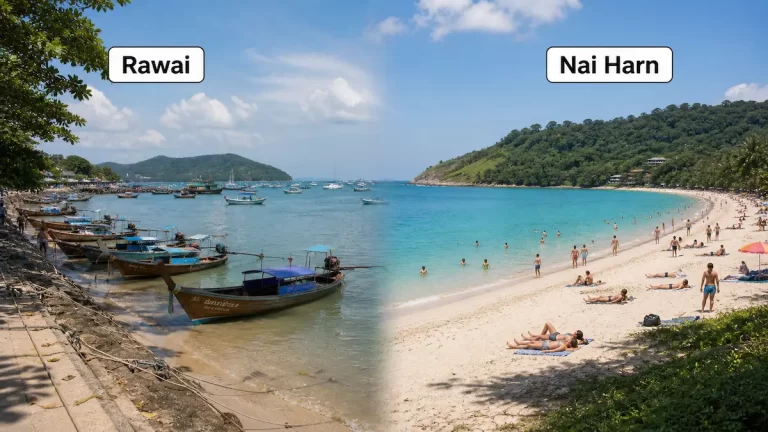
Kamala, Rawai, Nai Harn, and some parts of the north tend to be quieter than Patong, Kata, or Karon. They suit travellers who prefer a slower pace and are comfortable relying more on transport.
Is it easy to get around Phuket from any location?
Not always. Phuket looks smaller on a map than it feels in real travel time. Traffic, indirect roads, and spread-out development can make moving between areas slower than expected.
How far is Patong from Kata, Karon, or Kamala?
Kata and Karon are relatively close to Patong, while Kamala sits just to the north. Actual travel time depends on traffic, but even short distances can take longer than people expect in Phuket.
Does it matter where you stay if you’re only in Phuket for a few days?
Yes, it matters even more. On a short trip, the right base helps reduce travel time and makes it easier to enjoy what’s nearby without constantly moving around the island.