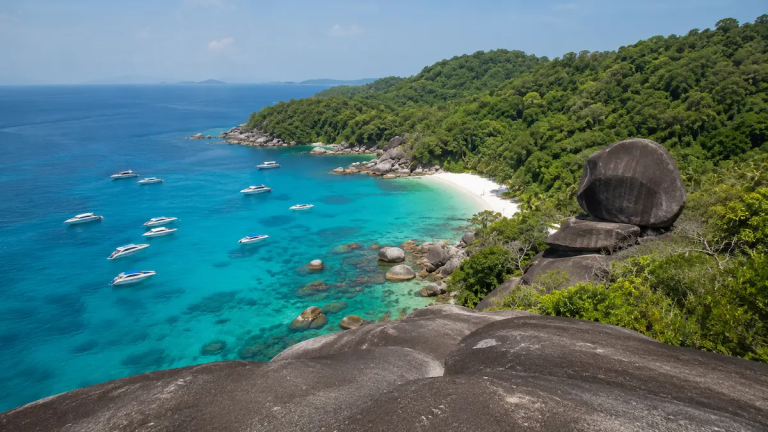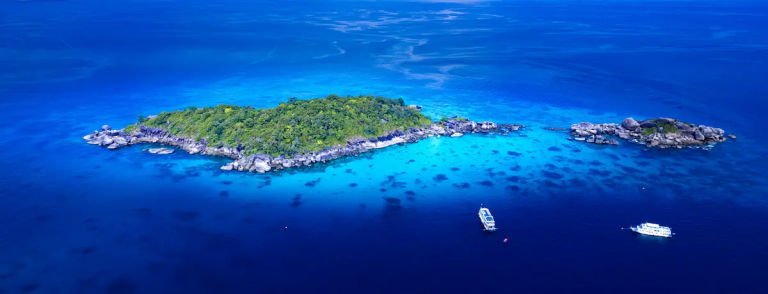
Phuket Day Trips (What’s Actually Worth It)
Most people looking at phuket day trips run into the same problem almost immediately.
There isn’t a shortage of options.
There’s too many of them.
Phi Phi Islands. James Bond Island. Coral Island. Racha Island. Long boats, speedboats, snorkelling, sightseeing, half-day, full-day. Everything is presented as if it’s equally worth doing, and most of it looks the same at a glance.
That’s where the confusion starts.
Not because the trips are bad—but because there’s no clear way to understand what actually fits your time, your energy, or the kind of experience you’re trying to have.
Some trips are long, crowded, and built around ticking off famous locations. Others are slower, easier, and give you more time in the water. Some look impressive online but feel rushed in reality. Others don’t get talked about as much, but end up being a better fit for how people actually travel.
If you try to choose based on what looks “best,” you’ll probably get it wrong.
The better approach is to understand what each type of day trip actually involves—and then decide from there.
Because the goal isn’t to do more.
It’s to choose something that actually works for you.
Why Day Trips Matter
Most people don’t look into day trips from Phuket until a day or two into their trip.
That’s usually when it clicks.
Phuket itself is easy. You’ve got beaches, food, nightlife, and everything within reach. But after a short time, the experience starts to repeat. The beach feels familiar. The streets feel the same. The movement becomes predictable.
Not because Phuket lacks options—but because it’s only one part of what makes this area interesting.
The real variation sits just outside it.
Within a couple of hours, the landscape changes completely. Open coastline turns into limestone cliffs. Busy beaches turn into clear, quieter water. The pace shifts from constant movement to something slower and more defined by the environment.
That’s what day trips actually give you.
Not just “something to do”—but contrast.
Phuket works best as a base. It gives you access, convenience, and structure. But the moment you step away from it, even briefly, the experience opens up in a different way. You start to see why people travel here in the first place.
Many of these surrounding areas are part of protected or managed tourism zones, with access and activity shaped by guidelines from the Tourism Authority of Thailand.
That’s also why most trips follow similar patterns—early starts, defined routes, and return by late afternoon.
The mistake people make is treating these trips like extras.
They’re not.
They’re what breaks the trip out of repetition and makes the whole experience feel complete.
Types of Day Trips
Before you start comparing specific trips, it helps to understand how most Phuket island tours actually break down.
Because despite how they’re marketed, they tend to fall into a few clear categories.
Once you see that, choosing becomes much easier.
1. Island Hopping (Phi Phi and similar)
These are the most well-known trips.
They’re built around iconic locations—clear water, limestone cliffs, beaches you’ve probably already seen online. The day usually involves moving between multiple stops, with short periods at each one.
They’re fast-paced, structured, and often crowded.
If you want to see the “postcard version” of Thailand, this is where it happens. But it comes with less time to slow down or stay anywhere for long.
2. Scenic / Landscape Trips (Phang Nga Bay)
These trips are less about beaches and more about the environment.
Phang Nga Bay, including James Bond Island, is the main example. The focus here is on the landscape—rock formations, caves, calm water, and a slower overall pace.
You’re not rushing between swim spots. You’re moving through a space that feels different from Phuket entirely.
3. Close-Range Islands (Coral and Racha)
These are the easiest options.
Shorter travel time. Less effort. More time actually in the water.
Instead of spending hours getting somewhere, you’re there quickly—and the day becomes more about relaxing, swimming, and staying in one place rather than moving constantly.
This is often the better choice if your trip already feels full, or if you’re trying to avoid turning the day into something exhausting.
What catches people out is assuming these are interchangeable.
They’re not.
Each type of trip creates a completely different experience—and the right choice depends less on what looks best, and more on how you want the day to feel.
If you’re trying to balance this with beach time on the island itself, it also helps to understand how different coastal areas compare. Some are busier, some quieter, and that can influence whether you even need a full day trip at all.
For a clearer breakdown of where to go, see: Best Beaches in Phuket
Phi Phi Islands
When people think about phuket day trips, Phi Phi Islands is usually the first thing that comes to mind.
It’s the image most people already have before they arrive.
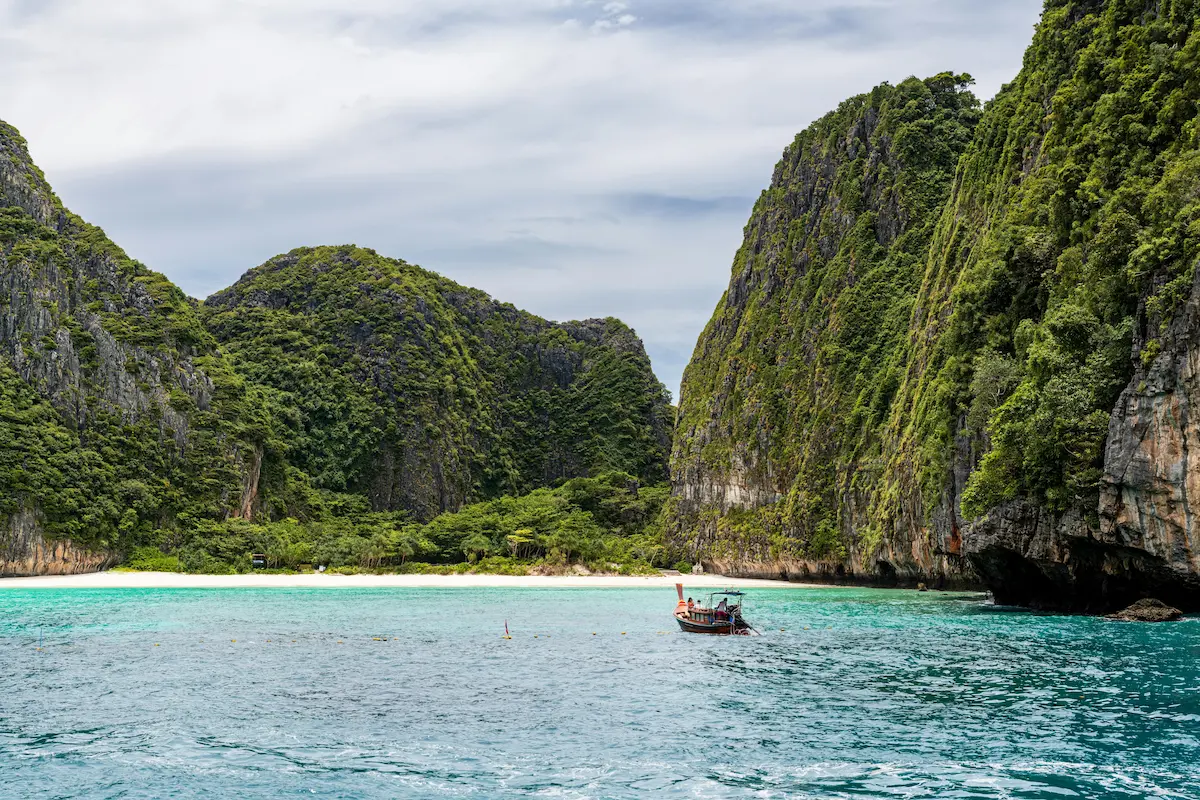
Clear water, limestone cliffs, longtail boats, and beaches that look exactly like the photos. And in that sense, it delivers. The landscape is real, and it’s impressive in a way that Phuket itself doesn’t quite match.
But the experience around it is what catches people off guard.
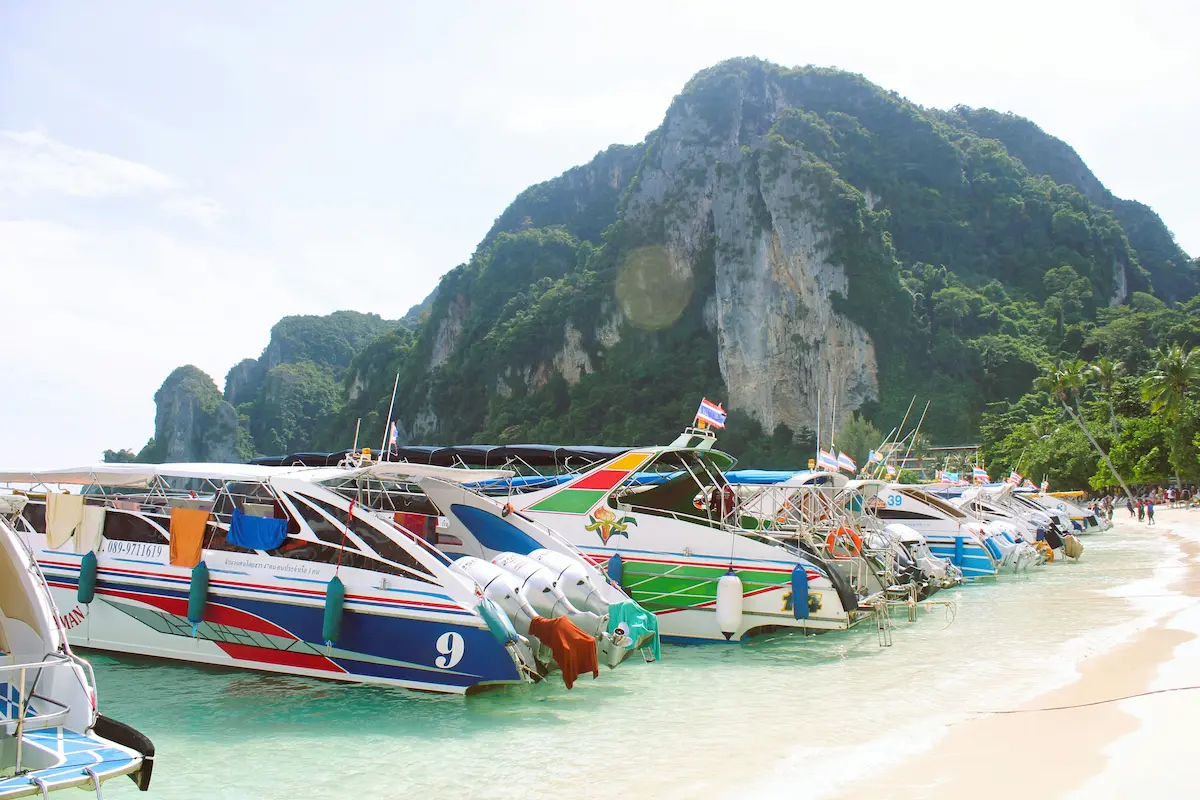
A typical Phi Phi Islands tour from Phuket starts early. You’re picked up, transferred to a pier, and then spend a good part of the morning getting out to the islands by speedboat. Once you arrive, the day becomes structured—multiple stops, limited time at each one, and a steady flow of other boats moving through the same locations.
It’s not chaotic, but it is busy.
You’ll stop at well-known points—often Maya Bay, Pileh Lagoon, and a couple of snorkelling spots. Each place has its own appeal, but you’re rarely staying long enough to settle into it. The day is built around seeing the highlights rather than experiencing one place in depth.
That’s not necessarily a negative.
For a lot of people, doing Phi Phi once makes sense. It gives you a clear picture of what the region looks like beyond Phuket, and it ticks off something that would otherwise feel like a gap in the trip.
The issue is when expectations don’t match the reality of the pace.
If you’re looking for a relaxed beach day, this won’t feel like that. It’s a full, structured experience that takes energy, time, and a willingness to move through things quickly.
That’s why most itineraries only include one major trip like this. Trying to combine it with too many other activities can start to wear down the rest of the trip.
If you’re trying to fit this into a wider plan, see: Phuket Itinerary (3, 5, 7 Days)
👉 Phuket Itinerary (3, 5, 7 Days)
If you approach it with the right expectations, it works.
If you don’t, it’s usually the point where people start feeling rushed instead of relaxed.
James Bond Island / Phang Nga Bay
Not all phuket day trips follow the same pace as Phi Phi.
Phang Nga Bay—often grouped under a James Bond Island tour Phuket—offers something completely different.
Instead of open ocean and fast movement between stops, this part of the region feels more contained. The water is calmer. The space feels quieter. And the focus shifts away from beaches and toward the landscape itself.
What defines this area are the limestone formations rising vertically out of the water. You’re not arriving at one main destination—you’re moving through a series of natural structures that change as you go.
That changes the rhythm of the day.
Most trips still start early, but once you’re out in the bay, the experience slows down. Boats move more steadily. Stops often include short cave explorations or kayaking sections, where you pass through narrow openings into enclosed lagoons.
It’s less about “arriving” somewhere, and more about moving through a space that feels distinct from Phuket entirely.
James Bond Island itself is usually a quick stop.
It’s recognisable, and people want to see it, but it’s not the highlight of the day. The value comes from everything around it—the scale of the landscape and the way the environment shapes the experience.
Compared to island-hopping trips, this tends to feel less rushed.
But it also appeals to a different type of traveller.
If you’re expecting clear water and long swims, this isn’t where you’ll find it. If you’re more interested in scenery, variation, and a slightly slower pace, it often ends up being the better choice.
That’s why these trips aren’t interchangeable.
They solve different parts of the same problem—getting you out of Phuket—but they do it in completely different ways.
Coral + Racha Islands
Not every option within phuket day trips needs to be a full, high-effort experience.

Coral Island and Racha Island sit much closer to Phuket, and that changes the day completely.
The biggest difference is travel time.
Instead of spending hours getting out to a destination, you’re there relatively quickly. That means less structure, less pressure to move, and more time actually in the water. The day becomes simpler—arrive, settle in, swim, and stay in one place for longer.
That alone makes these trips feel different.
A typical racha island day trip or coral island phuket trip is less about covering multiple locations and more about giving you a controlled, predictable beach environment. Clear water, defined swimming areas, and enough space to relax without constantly shifting between stops.
It’s not trying to impress in the same way as Phi Phi.
It’s trying to work.
That’s why these trips are often a better fit if your time in Phuket already feels full, or if you’re trying to avoid turning the day into something that requires too much energy. You’re still leaving the main island, but you’re not committing to a long, structured schedule to do it.
Some people overlook these options because they don’t sound as well-known.
But in practice, they often end up being the most usable.
Especially if the goal isn’t to see everything—but to have a day that actually feels like a break.
How to Choose the Right Day Trip
Choosing between phuket day trips isn’t really about picking the “best” one.
It’s about choosing something that fits the shape of your trip.
Most people get this wrong because they start with the destination. Phi Phi, James Bond, Racha—whatever looks most appealing—and then try to fit it into their schedule afterwards.
That’s backwards.
The better way to approach it is to look at your trip first.
How many days do you actually have? How much movement is already built into your plan? Are your days already full, or do you have space for something more structured?
Once you look at it that way, the decision becomes clearer.
If your trip is short, or already packed, a closer option like Coral or Racha usually works better. You get the experience without losing a full day to travel and logistics.
If you’ve got more time and want to see something more iconic, then Phi Phi makes sense—but it should be treated as a full, standalone day, not something squeezed in between other plans.
If you’re somewhere in between, or you’re looking for something different rather than “better,” Phang Nga Bay often fills that gap. It changes the environment without pushing the pace too hard.
The key is not stacking these trips.
One well-chosen day trip usually adds more to the experience than trying to fit in two or three. After a certain point, it stops feeling like exploration and starts feeling like obligation.
This is where the rest of your time in Phuket matters.
If you’re already spending time in places like Patong, where the pace and energy are constant, your day trip doesn’t need to replicate that. It can balance it instead.
For details of what you can do in Patong Beach head over here:
Once you think in terms of balance—not just options—the decision becomes easier.
And the day itself usually works better.
Common Mistakes
Most issues people have with day trips from Phuket don’t come from the trips themselves.
They come from how they’re chosen.
The most common mistake is trying to do too much.
People see multiple options—Phi Phi, James Bond, Racha—and assume they should fit in more than one. On paper, it looks efficient. In reality, it turns the trip into a sequence of early starts, long transfers, and constant movement.
Instead of adding variety, it drains energy.
Another mistake is choosing based on what looks best online.
Photos tend to focus on ideal conditions—clear water, empty viewpoints, perfect light. The actual experience depends just as much on timing, crowd levels, and how the day is structured. If those expectations aren’t aligned, even good trips can feel disappointing.
There’s also a tendency to underestimate travel time.
Some of the more popular trips take up most of the day, and that has a knock-on effect on everything else—meals, evenings, and how much energy you have left the next day.
None of these are major problems on their own.
But together, they’re usually the difference between a trip that feels balanced—and one that starts to feel rushed.
By the time people look into day trips, the bigger pattern usually starts to show.
It’s not about finding more things to do.
It’s about understanding how everything fits together—what to prioritise, what to leave out, and how to structure your time so the trip actually works.
Day trips are just one part of that.
Where you stay, how you move between areas, how much you try to fit into each day—all of it connects. And when those decisions aren’t aligned, even good choices can start to feel disjointed.
If you’re trying to choose the right day trips without wasting time or energy, the full Phuket guide breaks it down step by step.
👉 View the full Phuket guide here
It’s built around the same idea—making clear decisions early, so the rest of the trip becomes easier.
FAQs — Phuket Day Trips
1. Are Phuket day trips worth doing?
Yes—if you choose the right one. Phuket itself is easy to explore, but the surrounding areas offer completely different landscapes. A well-chosen day trip adds contrast to your trip, rather than just filling time. The key is picking something that fits your pace, not just what looks popular.
2. How many day trips should you do in Phuket?
For most trips, one is enough. Two at most if you have more time. Trying to do more usually leads to fatigue and rushed days. It’s better to choose one trip that fits well into your itinerary than to stack multiple tours back-to-back.
3. Which Phuket day trip is the best?
There isn’t a single “best” option. Phi Phi is the most famous, Phang Nga Bay offers a different landscape, and Coral or Racha are easier and more relaxed. The best choice depends on how much time you have and how much effort you want to put into the day.
4. How long do Phuket day trips usually take?
Most full-day trips run from early morning to late afternoon, often 7–9 hours including transfers. Closer destinations like Coral or Racha Island can be shorter, while trips like Phi Phi usually take up most of the day due to travel time.
5. Are Phuket day trips crowded?
Some are, especially popular routes like Phi Phi Islands. Boats follow similar schedules, so certain stops can feel busy. Less well-known or closer trips tend to feel more relaxed. Managing expectations around this is important when choosing which trip to take.
6. Do you need to book Phuket day trips in advance?
Not always. Many trips can be booked locally a day or two ahead. However, during peak season or for specific tours, it’s better to secure a spot earlier. The main advantage of booking ahead is certainty, not necessarily a better experience.
7. What should you bring on a Phuket day trip?
Keep it simple—swimwear, towel, sunscreen, water, and something light to wear. Most tours provide basic equipment, but comfort matters more than packing extras. You’ll be moving between locations, so it’s better to travel light rather than overprepare.