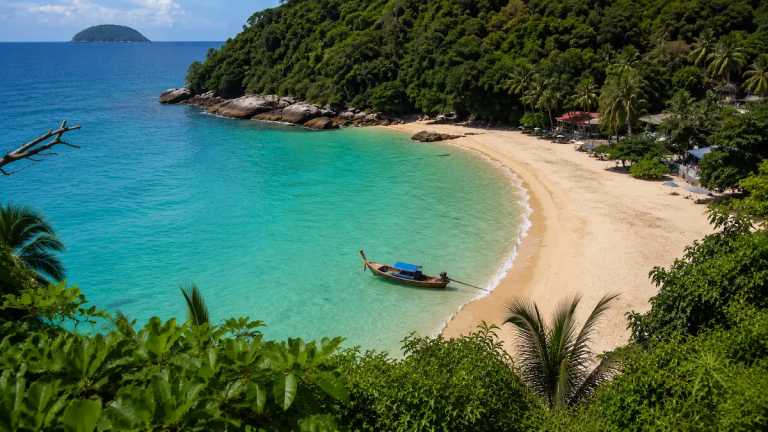
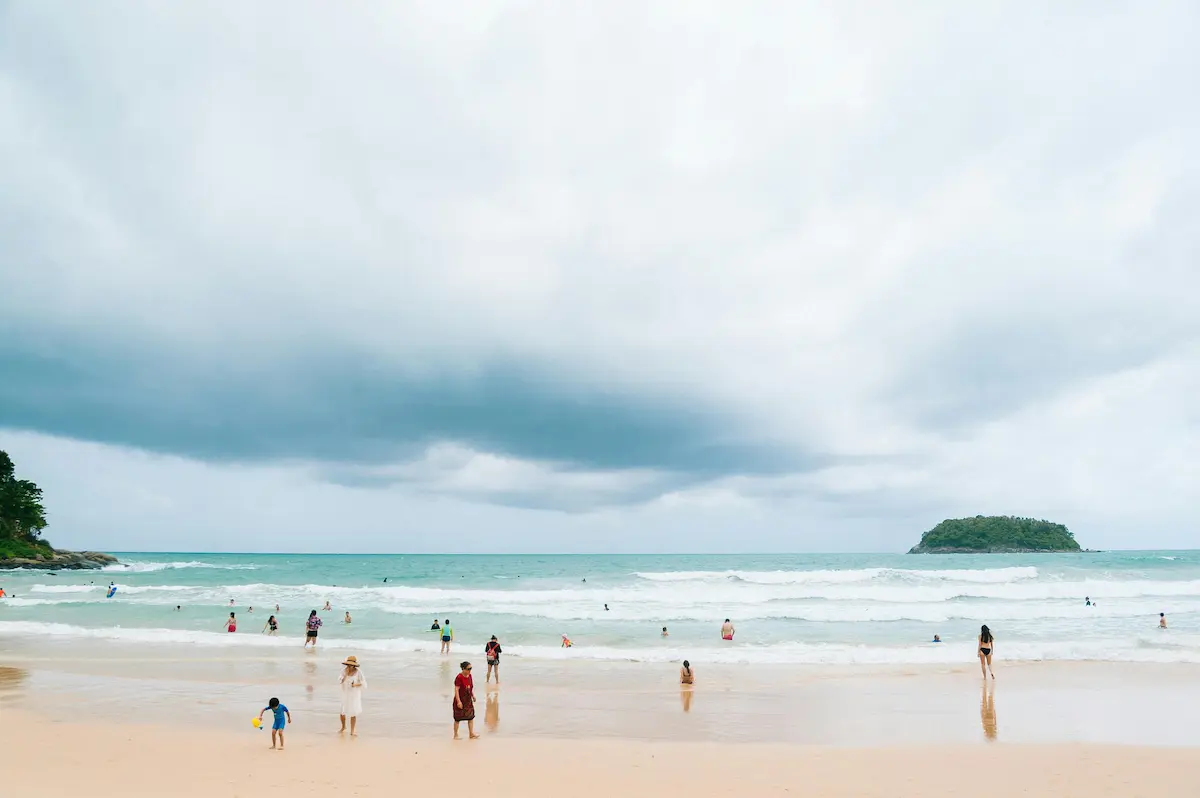
Best Beaches in Phuket (2026 Guide): Which Beach Fits Your Trip?
Most people looking for the best beaches in Phuket expect a simple answer.
A shortlist. A ranking. Maybe a “top 5” they can follow without thinking too much about it.
The problem is, Phuket doesn’t really work like that.
The island has a lot of beaches, but they are not interchangeable. Some are busy and built around nightlife. Others are quieter, take more effort to reach, and feel completely different once you’re there. Some look incredible in photos, then fail to match what people imagined when they arrive.
That is where the confusion usually starts.
It is rarely about finding the single “best” beach in Phuket.
It is about choosing the right beach for how you actually want to spend your time.
If you’re staying in Patong, your best options will usually look different from someone based further south. If you want easy access, restaurants, and activity, you’ll make different choices than someone looking for space, calmer water, or a slower pace.
A lot of travellers only realise this after they arrive.
They choose based on popularity, then spend their trip dealing with the wrong location, unnecessary transport, or a beach that simply doesn’t suit the kind of days they wanted.
This guide breaks that down clearly.
Not by forcing rankings—but by showing how Phuket’s beaches differ, what they’re actually like, and how to decide which ones fit your trip without overcomplicating it.
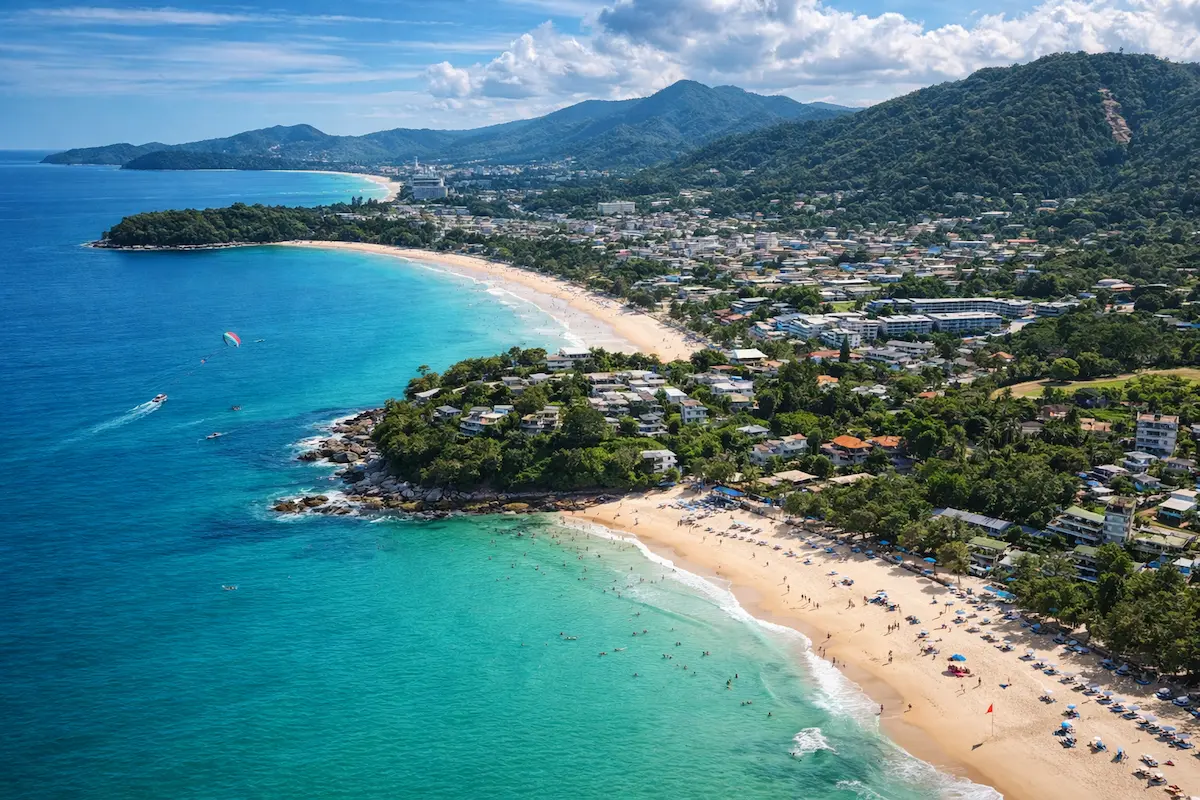
How to Choose the Right Beach
Finding the best beaches in Phuket usually has less to do with choosing the most famous name—and more to do with understanding how different beaches actually feel once you’re there.
At a glance, many of them look similar.
Sand, water, coastline, palm trees.
But once you arrive, the experience can change quickly depending on where you go.
The biggest difference is often how developed the area is.
Some beaches are built around activity. You’ll find restaurants, bars, beach vendors, jet skis, and a steady flow of people throughout the day. They’re easy to access, convenient, and simple to use—but they’re rarely quiet.
Others are less developed.
That often means fewer facilities, fewer people, and sometimes a little more effort to reach. In return, you may get more space, a slower pace, and a beach that feels less commercialised. The trade-off is less structure once you leave the sand.
Access plays a major role as well.
Beaches close to main bases like Patong, Kata, and Karon are naturally easier to reach and usually busier. Once you move further north or south, the atmosphere often shifts. Crowds reduce, but so do nearby restaurants, transport options, and convenience.
That trade-off matters more than people expect.
Another thing travellers often misjudge is distance.
Phuket does not look especially large on a map, but getting from one beach to another can take longer than expected. Traffic, hills, road layout, and parking all add up. What looks like a quick plan on paper can easily turn into a day that feels rushed.
By midday, many visitors who planned to “see three beaches” are still dealing with the first transfer.
That’s why trying to beach-hop too aggressively often disappoints.
Most tourism planning across the island reflects these realities, with beach access, facilities, and visitor zones shaped over time, as also outlined by the Tourism Authority of Thailand.
Once you understand these differences, the decision becomes much easier.
You’re not really asking which beach is best.
You’re asking what kind of beach fits your trip—and how much effort you want to spend getting there.
That is what usually leads you to the best beaches in Phuket for your situation.
Patong Beach
When people search for the best beaches in Phuket, Patong is usually the first name they come across.
It is the most recognisable beach on the island—and one of the most misunderstood.
Patong Beach is not really about quiet, space, or a picture-perfect shoreline.
It is built around activity.
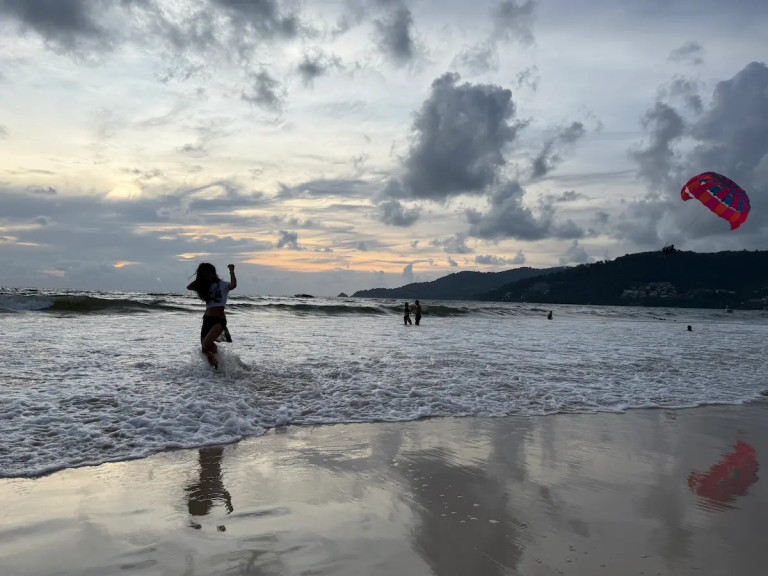
From the moment you arrive, there is movement. Jet skis, parasailing, beach vendors, music, restaurants, traffic, and people constantly moving between the sand and the streets behind it. It is easy to access, easy to use, and there is usually something happening.
That convenience is a major reason Patong remains popular.
If you want a beach where you can swim, grab lunch, shop, book a tour, and head into nightlife later without travelling far, Patong works well. Everything is compressed into one area, which removes a lot of friction from your day.
For some travellers, that is exactly the point.
But if you are expecting a calm, beach-first experience, Patong often feels different from what the photos suggest.
The beach itself is long and open, but the environment around it shapes how it feels. Even during quieter periods, there is usually an underlying sense of energy rather than stillness.
By late afternoon, the beachfront often feels less like a beach escape and more like part of a larger entertainment district.
That is where expectations matter.
Patong is not trying to be the best beach in Phuket for scenery, peace, or clear water. It is part of a bigger package—one built around convenience, nightlife, variety, and constant options.
If that is what you want, it can be a smart choice.
If not, it is often better used as a base rather than your main beach destination.
That way, you still get the convenience—without relying on Patong for everything.
If Patong is already on your shortlist, it helps to understand how the area actually works once you arrive—from beach days to nightlife and day-to-day convenience.
If you’re still deciding between Phuket’s most common first-time visitor bases, this comparison breaks down the real differences.
Kata Beach
For many travellers, Kata Beach ends up being one of the safest answers when choosing the best beaches in Phuket.
It sits in the middle of several competing priorities—and does most of them well.
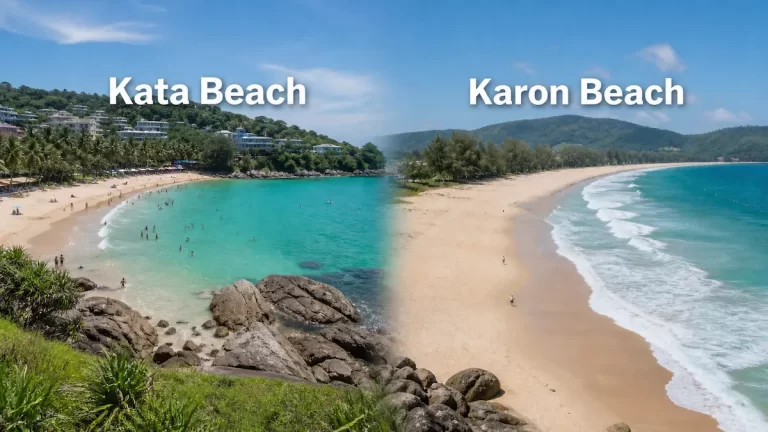
You get a proper beach environment, enough restaurants and shops nearby, and a pace that feels noticeably calmer than Patong without becoming too quiet.
That balance is what gives Kata broad appeal.
The beach itself is more compact than Karon, but often feels more practical day to day. You can stay nearby, walk to food, return easily, and structure your time without much friction.
It also tends to appeal to travellers who actually want to use the beach.
Swimming conditions are often favourable in season, and the area feels built around beach days rather than only nightlife or movement.
By mid-afternoon, the central section can become busier, but a short walk toward either end usually opens up more space.
That matters more than people think.
Kata is not the quietest beach in Phuket, nor the most exciting, nor the most luxurious.
It is simply one of the most usable.
For many first-time visitors, that makes it one of the smartest choices on the island.
If Kata is already on your shortlist, this full breakdown explains how the area works in real conditions.
Kata Beach Phuket Guide
Karon Beach
Karon Beach often appeals to travellers who like the idea of Kata—but want more room to breathe.
It sits just north of Kata, yet the atmosphere can feel noticeably different once you arrive.
The beach is longer, wider, and usually feels less compressed, even during busier periods. That extra space changes the experience more than many people expect.
You are less likely to feel crowded, less likely to compete for room on the sand, and more likely to settle into the day without constant movement around you.
That is Karon’s biggest strength.
It offers a more open version of the Phuket beach experience while still keeping enough convenience nearby to make your stay practical.
Restaurants, hotels, and everyday services are available around the area, but the pace is generally calmer than Patong and less concentrated than Kata.
By late morning, people spread naturally across the beach rather than clustering tightly in one central zone, which helps Karon hold a more relaxed feel even when it is active.
This makes it a strong choice for travellers who value beach time itself.
Long walks, more open views, and a slower rhythm tend to matter more here than nightlife or constant variety.
That said, Karon can feel a little less intimate than Kata.
Some travellers love the extra space. Others prefer the slightly more compact, connected feel of neighbouring areas.
That is where personal preference matters.
If you want a beach that feels more open without losing convenience entirely, Karon is often one of the better choices in Phuket.
If you’re considering Karon as a base, this guide breaks down what it’s actually like once you arrive.
Karon Beach Phuket Guide
Surin Beach
Surin Beach often appeals to travellers who care less about activity—and more about how a beach actually feels once they arrive.
It sits north of Patong and south of Bang Tao, but the atmosphere is noticeably different from both.
The first thing many people notice is the cleaner visual feel.
There is less heavy development directly on the beachfront, fewer distractions competing for attention, and a clearer line between the sand, the water, and the surrounding greenery. That simplicity gives Surin a more refined first impression than many busier beaches on the island.
This is where Surin stands out.
It feels more beach-led than tourism-led.
People usually come here specifically for the beach itself rather than because it happens to sit beside nightlife, shopping, or a dense hotel zone. That changes the rhythm of the day.
By late morning, visitors tend to settle into the sand, swim, relax, or stay nearby rather than constantly moving in and out of the area.
For travellers wanting a cleaner and calmer beach experience, that can be a major advantage.
The trade-off is convenience.
Surin does not offer the same density of restaurants, nightlife, or immediate options you’ll find in Patong, Kata, or even Bang Tao. Once you leave the beach, the area becomes quieter fairly quickly.
That makes expectations important.
If you want a lively base with constant variety, Surin can feel too limited.
If you want a more refined beach setting where the beach itself remains the main attraction, it often works very well.
It is not the biggest beach in Phuket, nor the busiest, nor the most famous.
But for some travellers, it can feel closer to what they imagined Phuket would be before they arrived.
If Surin sounds like your style of stay, this full guide explains how the area works in real conditions.
👉 <a href=”/surin-beach-phuket/”>Surin Beach Phuket Guide</a>
Bang Tao Beach
Bang Tao Beach often suits travellers who want more than just a beach.
They want space, comfort, better hotels, and an area that feels slightly more polished than the typical tourist strip.
Located just north of Surin, Bang Tao is one of the longest beaches in Phuket, and that scale shapes the entire experience.
Even when the area is active, it rarely feels compressed in the same way smaller beaches can. There is simply more room to spread out, which creates a calmer atmosphere without needing the beach to be empty.
That is one of Bang Tao’s biggest strengths.
The second is how the area is built around longer stays.
Resorts, villas, beach clubs, and planned zones like Laguna give Bang Tao a more structured feel than many other parts of Phuket. For some travellers, it feels comfortable and easy. For others, it can feel less organic and more resort-driven.
That distinction matters.
Bang Tao is rarely the best choice if you want nightlife within walking distance or a compact area full of spontaneous options.
It often works better for couples, families, digital nomads, or travellers who like choosing a good base and settling into it.
By mid-afternoon, many visitors are not moving between multiple places—they are still at the same resort, beach club, or chosen stretch of sand they started with earlier in the day.
That says a lot about how Bang Tao functions.
It rewards staying put more than constantly moving.
The trade-off is convenience versus character.
Some people love the cleaner, more organised environment. Others prefer areas that feel busier, messier, and more alive.
Neither is wrong—it depends on your trip.
If you want space, comfort, and a more polished beach base, Bang Tao is one of Phuket’s stronger options.
If Bang Tao is on your shortlist, this full guide breaks down what it’s actually like once you arrive.
👉 <a href=”/bang-tao-beach-phuket/”>Bang Tao Beach Phuket Guide</a>
Nai Harn Beach
Nai Harn Beach often appeals to travellers who still want a strong beach experience—but with a calmer setting around it.
Located in the south of Phuket, it feels more separated from the island’s busiest tourist zones, and that distance changes the atmosphere in a good way for many visitors.
The beach itself is one of Nai Harn’s biggest strengths.
It sits in a more enclosed bay, which often creates a neater, more focused beach environment than some of Phuket’s longer open coastlines. During the high season, swimming conditions are often favourable, and the water can feel calmer than more exposed areas.
That combination gives Nai Harn a loyal following.
People who discover it often return because it feels like a beach chosen intentionally, rather than one they ended up at by default.
By late morning, the main stretch usually becomes active, but the area still tends to feel more beach-led than entertainment-led. People come to swim, relax, read, walk the sand, and spend time by the water rather than move constantly between venues.
That is where Nai Harn separates itself.
The beach experience is strong.
The surrounding area is quieter.
There are restaurants, hotels, and everyday services nearby, but not the same concentration of options you would find in Patong, Kata, or Bang Tao. If you need constant variety, Nai Harn can feel limited after a few days.
If you value a better beach day over having endless choices nearby, it often feels like a smart trade.
It is especially appealing for couples, return visitors, and travellers who want a slower rhythm without becoming isolated.
If Nai Harn sounds like the kind of Phuket you actually want, this full guide explains how the area works in real conditions.
👉 <a href=”/nai-harn-beach-phuket/”>Nai Harn Beach Phuket Guide</a>
Rawai Beach
Rawai Beach is one of the easiest places in Phuket to misunderstand.
People see the coastline, the boats, and the sea views, then assume it functions like a classic swimming beach.
It usually doesn’t.
Rawai works better when understood as a waterfront base rather than a beach-first destination.
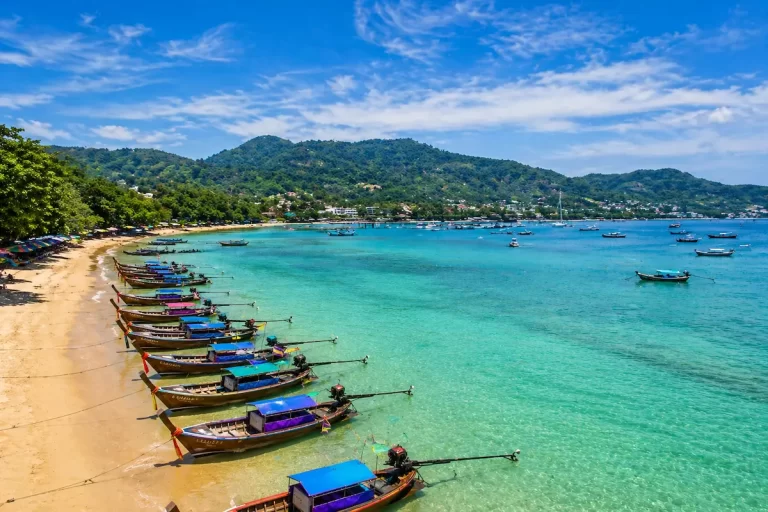
The shoreline is lined with longtail boats, seafood restaurants, local businesses, and daily movement connected to island trips and life in the south of Phuket. The atmosphere feels more working coastal town than resort strip, and for many travellers, that is exactly the appeal.
This is where Rawai stands apart.
It offers a different side of Phuket.
You come here less for lying on the sand all day, and more for the surrounding lifestyle—seafood lunches, local cafes, gym culture, nearby viewpoints, boat access to islands, and easier movement toward places like Nai Harn, Ya Nui, and Promthep Cape.
By late afternoon, the waterfront often feels more social than beach-focused, with people walking, eating, meeting friends, or watching the changing light rather than swimming.
That rhythm matters.
Travellers who need a postcard beach directly outside their hotel can feel disappointed if they choose Rawai for the wrong reasons.
Travellers who want a lived-in area with character and access to southern Phuket often end up liking it far more than expected.
The trade-off is simple.
Less classic beach experience.
More everyday atmosphere.
If that sounds like your style of trip, Rawai can be a smart base—especially for longer stays or return visitors who want something beyond the usual tourist zones.
If you’re considering Rawai, this full guide explains what it’s actually like once you arrive.
👉 <a href=”/rawai-beach-phuket/”>Rawai Beach Phuket Guide</a>
Freedom Beach + Quieter Hidden Beaches
Not all of the best beaches in Phuket are the easiest to reach.
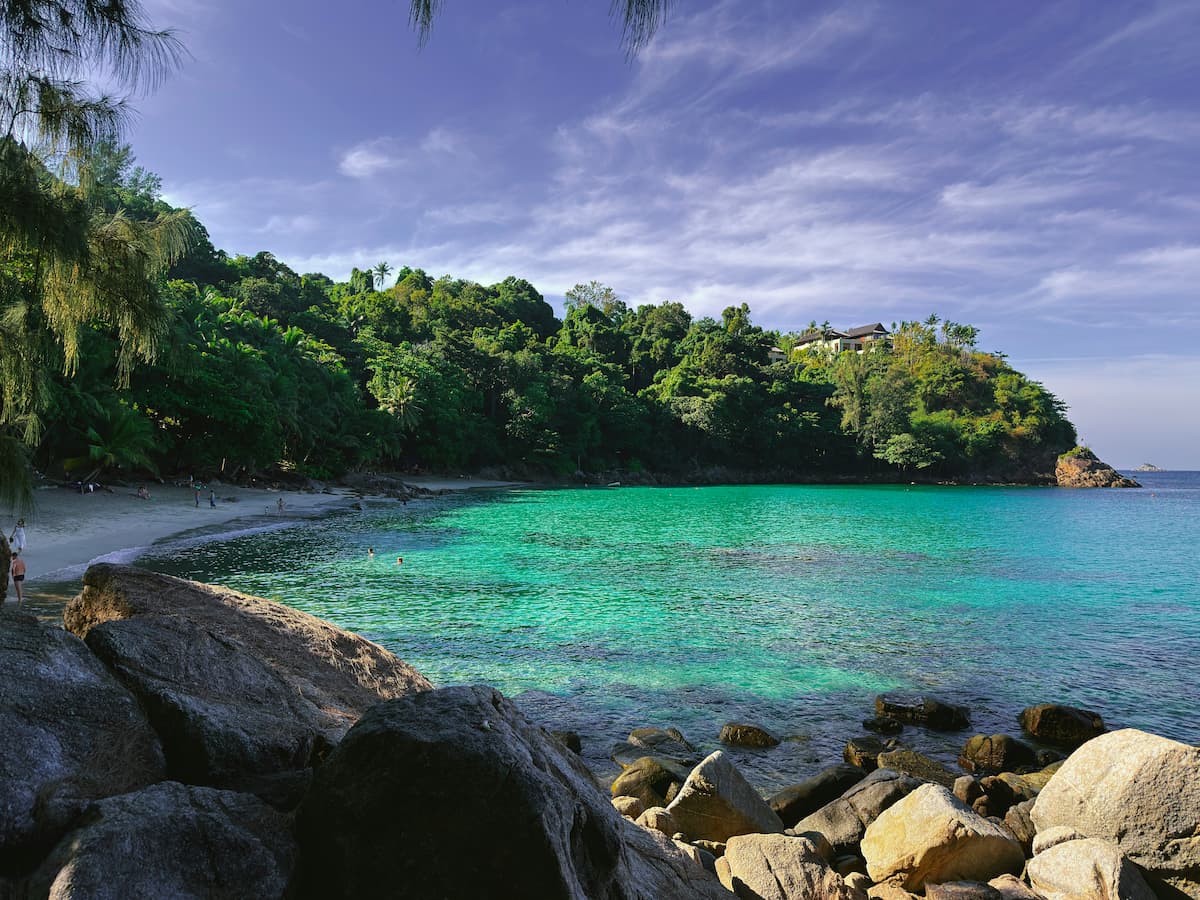
Some of the quieter and more photogenic options require a little more effort, and that extra step often changes the experience.
Freedom Beach is the best-known example.
Despite being relatively close to Patong, it can feel like a different world once you arrive. Access usually involves a boat transfer or a steeper walk, which naturally filters out some of the casual foot traffic found on easier beaches.
That matters more than many people realise.
When access is slightly harder, people tend to stay longer, move less, and treat the beach as a destination rather than a quick stop. The result is often a calmer atmosphere, clearer water in season, and a more settled rhythm to the day.
But it is important to keep expectations realistic.
Freedom Beach is not a secret paradise untouched by tourism. It is well known, and during peak periods you should still expect other visitors. The difference is usually scale and feel—not total isolation.
That is where many online photos mislead people.
Images are often taken early, edited heavily, or framed tightly to remove signs of activity. Arriving at midday with unrealistic expectations is one of the fastest ways to feel disappointed anywhere in Phuket.
Freedom and similar quieter beaches work best when you plan properly.
Bring what you need, allow enough time, and expect to spend several hours rather than rushing in and out.
They are usually better as committed beach days than quick add-ons between other plans.
If you’re building beach visits into a wider island trip, this guide to <a href=”/phuket-day-trips/”>Phuket Day Trips</a> can help structure your time more realistically.
For travellers willing to make a little effort, beaches like these can feel like some of the best beaches in Phuket.
For everyone else, the easier options are often the smarter choice.
Northern Beaches (Mai Khao / Nai Yang)
Some of the best beaches in Phuket are not found near the busiest tourist zones at all.
They are further north.
Beaches like Mai Khao and Nai Yang feel different almost immediately. There is less development, fewer crowds, and far more open coastline than you’ll usually find around Patong, Kata, or Karon.
That creates a very different kind of beach day.
Mai Khao is the clearest example.
It is one of the longest beaches on the island, and large sections can feel surprisingly empty even during busier seasons. You won’t usually find rows of vendors, loud activity, or a tightly packed beachfront scene.
Instead, it is more about space.
Long walks, open horizons, and a quieter environment where you are less likely to feel rushed or surrounded.
Nai Yang offers a more practical version of that northern feel.
It is still calmer than the major tourist beaches, but with enough nearby restaurants, small hotels, and local services to make it comfortable without feeling heavily developed.
For many travellers, Nai Yang lands in the sweet spot.
Quieter than the south.
More usable than the farthest north.
These beaches suit a different type of trip.
They are less about constant movement and more about slowing down, staying local, and letting the day unfold without trying to fill every hour.
The trade-off is location.
If you are staying in Patong, Kata, Karon, or Rawai, making frequent trips north usually costs more time than people expect. What looks manageable on a map can become tiring in practice.
But if you are based nearby—or simply want a slower reset for a day or two—the northern beaches can feel like some of the best beaches in Phuket for space and calm.
Common Mistakes People Make Choosing Beaches in Phuket
Most people do not struggle to find beaches in Phuket.
They struggle with how they plan around them.
The most common mistake is trying to visit too many in one trip.
On a map, moving between beaches can look simple. In reality, traffic, parking, hills, and road layout often turn an ambitious plan into hours spent transferring instead of enjoying where you are.
Many travellers imagine:
Beach in the morning.
Another beach at lunch.
Sunset somewhere else.
Sometimes that works.
Often it becomes exhausting.
Packing up, moving, finding transport, settling again, then watching the clock can drain the day faster than people expect.
Another common mistake is choosing based only on photos.
Many beach images online are taken early in the morning, edited heavily, or framed tightly to remove crowds and nearby development. Arriving in the middle of the day with unrealistic expectations is a reliable way to feel underwhelmed.
Location is also underestimated.
If you are staying in Patong, it rarely makes sense to spend every day chasing beaches in the far north. If you are based in Rawai, daily trips back toward Bang Tao may become more effort than value.
This is where many trips quietly lose momentum.
People spend too much energy trying to optimise every beach decision instead of enjoying the strong options already near them.
The better approach is usually simpler.
Choose one main beach base that suits your style. Add one or two different beach days if they genuinely improve the trip. Then allow enough time to enjoy each properly.
Beach time works best when it is not rushed.
Final Thoughts: Which Phuket Beach Is Right for You?
Once you start looking for the best beaches in Phuket, it becomes clear there is no single answer.
It depends on where you are staying, how much you want to move around, and what kind of days you actually want to have once you arrive.
Some beaches are easy and built around convenience.
Others take more effort, but feel calmer once you get there.
Some work best as full holiday bases. Others are better enjoyed as day visits.
That is usually where people get stuck.
They focus on finding the “best” beach instead of choosing the right fit for their trip.
If you want restaurants, nightlife, and everything close together, Patong can make sense.
If you want balance and simplicity, Kata is one of the strongest all-round choices.
If you want more room and a slower pace, Karon often works well.
If you want a more refined beach setting, Surin stands out.
If you want comfort and longer-stay convenience, Bang Tao is a strong option.
If you want beach quality with a quieter southern feel, Nai Harn is hard to ignore.
If you want local atmosphere and access to the south, Rawai can surprise people who choose it for the right reasons.
The real goal is not to win a ranking.
It is to choose how you want your trip to feel.
Once that becomes clear, the right beach usually does too.
If you’re still planning the bigger picture, this Phuket Itinerary guide helps structure your time so your beach choices fit the rest of the trip.
If you want a simple step-by-step starting point for everything else, you can also get the full guide below.
FAQs — Best Beaches in Phuket
What is the best beach in Phuket for first-time visitors?
For most first-time visitors, Kata Beach is one of the safest choices. It offers a strong balance of beach quality, convenience, restaurants, and an easy day-to-day setup without the intensity of Patong.
Which Phuket beach is best for nightlife?
Patong Beach is the clear choice if nightlife matters most. It gives you beach access during the day, then easy movement into bars, clubs, restaurants, and late-night activity.
Which Phuket beach is the quietest?
Beaches in the north, such as Mai Khao and parts of Nai Yang, often feel quieter than the main tourist zones. They offer more space and less density, though usually with fewer nearby options.
Which Phuket beach is best for couples?
That depends on the type of trip. Nai Harn and Surin suit quieter beach-focused stays, Bang Tao suits resort comfort, and Kata is a strong all-round option with easier logistics.
Is Patong Beach worth visiting?
Yes, if you value convenience, nightlife, and a high-energy environment. It is less suited to travellers wanting a calm, beach-first stay.
How many beaches should I visit in one Phuket trip?
Usually one main base plus one or two additional beach days works better than trying to see everything. Phuket rewards better choices more than more choices.
Are all Phuket beaches basically the same?
No. They differ significantly in atmosphere, convenience, crowd levels, beach quality, surrounding development, and how well they suit different travel styles.
What if I haven’t chosen where to stay yet?
That decision often matters more than people realise. If you’re still comparing bases, this guide on <a href=”/where-to-stay-in-phuket/”>Where to Stay in Phuket</a> can help you choose the right area first.