Thai Food in Phuket Guide
Trying Thai food in Phuket is usually about far more than simply sitting down for restaurant meals. Across the island, food becomes part of the entire travel experience itself. Small roadside stalls appear beside busy streets, seafood cooks over open flames near beaches, local markets fill with smoke and noise after sunset, and simple family-run restaurants sit hidden between cafés, hotels, bars, and everyday neighbourhood life.
For many visitors, some of the most memorable moments in Phuket are connected to food rather than major attractions. It might be eating grilled seafood at a night market during a tropical rainstorm, finding a tiny local restaurant down a side street in Patong, trying fresh mango sticky rice while walking through Phuket Old Town, or sitting beside the beach with a cold drink and a plate of spicy Thai food after sunset.
One of the reasons Thai food in Phuket feels different from many other destinations in Thailand is the strong southern Thai and seafood influence across the island. While travellers will still find familiar dishes like pad Thai, green curry, and fried rice almost everywhere, Phuket’s food culture also includes heavier spice, fresh seafood, grilled dishes, stronger curries, and flavours that reflect the island’s connection to the sea.
At the same time, Phuket is also one of Thailand’s biggest tourist destinations, so the food scene becomes a mix of local culture and international influence. In the same evening, travellers might move between local seafood restaurants, western cafés, smoothie stalls, Thai street food vendors, and modern night markets packed with visitors from all over the world.
For first-time visitors, that variety can feel exciting but also slightly overwhelming at first. Questions about spice levels, food safety, local etiquette, seafood pricing, and where to actually eat are all extremely common when planning a Phuket trip.
This guide explains what Thai food in Phuket is really like, where to try it, what dishes you are most likely to encounter, and what first-time visitors should realistically expect while exploring the island’s food culture.
If you are also planning markets, transport, and sightseeing around the island, our Phuket Markets Guide and First-Time Phuket Guide may help you better understand how food fits into the wider Phuket travel experience.
What Makes Thai Food in Phuket Different?
Part of what makes Thai food in Phuket different from other parts of Thailand is the island’s strong connection to southern Thai cooking and seafood culture. While many visitors arrive already familiar with dishes like pad Thai, green curry, or mango sticky rice, the food scene in Phuket often feels slightly heavier, spicier, saltier, and more seafood-focused than what travellers may have experienced elsewhere.
Seafood plays a major role almost everywhere on the island. Fresh prawns, squid, fish, shellfish, and crab appear constantly across local restaurants, markets, beachside dining areas, and roadside food stalls. In some areas, seafood tanks and displays become part of the restaurant atmosphere itself, especially near beaches and local seafood districts.
Southern Thai flavours are also often stronger than central Thai food that many tourists know internationally. Curries can be more intense, chilli levels can increase quickly, and dishes often lean heavily into herbs, spice, garlic, seafood, and bold seasoning. At the same time, Phuket still caters heavily to international tourism, so travellers can usually find milder versions of many dishes in tourist-oriented restaurants if needed.
Another thing that shapes Thai food in Phuket is the island’s tourism economy itself. In one street you may find a simple local noodle stall serving workers breakfast, while nearby restaurants offer seafood platters, smoothie bowls, cocktails, Italian food, or western brunch menus designed for international visitors. Phuket’s food culture is not isolated from tourism — the two have blended together over decades.
That mix creates an interesting balance for travellers. Visitors can easily stay inside comfortable tourist-friendly restaurants the entire trip, but they can also gradually step into more local-style food experiences through markets, street stalls, seafood restaurants, and smaller family-run places without needing to completely leave the main tourist areas.
Food in Phuket is also closely connected to movement around the island. Different areas have noticeably different dining atmospheres. Patong feels busy, tourist-heavy, and nightlife-oriented, while Phuket Old Town leans more toward cafés, local restaurants, and walking street culture. Beach areas often focus more on seafood and sunset dining, while local neighbourhood markets provide a more everyday food experience.
That contrast becomes part of what makes exploring Thai food in Phuket interesting. The island is not offering one single food identity. Instead, it combines local southern Thai culture, tourism, seafood traditions, international influence, markets, nightlife, and beach culture into one constantly shifting environment.
Travellers wanting a broader understanding of how tourism and local life overlap across the island should also read Real Phuket vs Instagram Phuket once published. If you are trying to balance restaurants, markets, accommodation, and activity spending during your trip, our Phuket Travel Costs guide may also help you plan more realistically.
Best Places to Try Thai Food in Phuket
One of the best things about exploring Thai food in Phuket is that good food is spread across almost the entire island. You do not need to visit expensive restaurants or famous viral locations to eat well here. Some travellers end up remembering a simple roadside noodle shop or a busy market stall more clearly than any high-end dining experience.
At the same time, different parts of Phuket offer very different food atmospheres. Some areas focus heavily on nightlife and tourist convenience, while others feel slower, more local, or more connected to seafood and traditional cooking.
For first-time visitors especially, understanding where to eat can make the experience far less overwhelming.
Phuket Night Markets
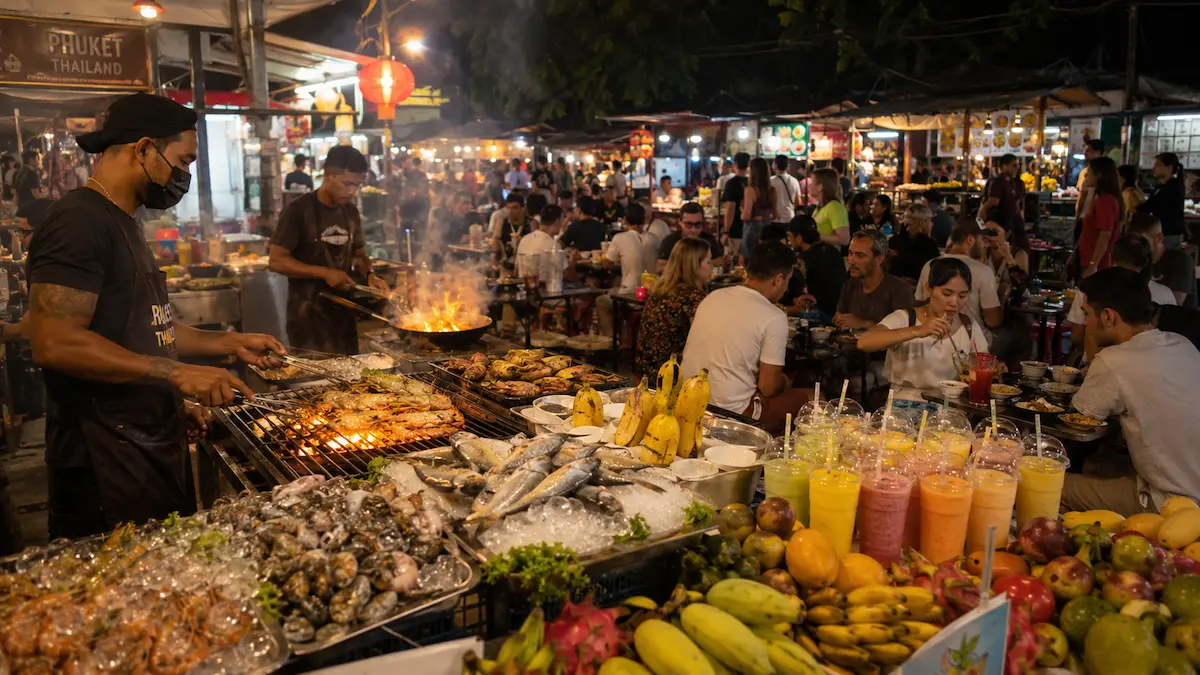
Night markets are one of the easiest and most accessible ways to experience Thai food in Phuket for the first time. Instead of committing to one large meal, travellers can slowly move between stalls trying different dishes, snacks, desserts, grilled seafood, smoothies, and local drinks throughout the evening.
Markets like Chillva Market, Naka Weekend Market, and the Phuket Old Town Sunday Walking Street Market all offer slightly different atmospheres, but food is usually the main attraction in each one.
One of the advantages of eating at Phuket markets is variety. In a single evening, you might try grilled prawns, mango sticky rice, satay skewers, fruit shakes, fried chicken, coconut desserts, and spicy seafood dishes without ever sitting in a formal restaurant.
The atmosphere itself also becomes part of the experience. Smoke from grills drifts through crowded walkways, music plays from nearby stalls, people sit together at shared tables, and food is constantly being cooked fresh in front of you. Even visitors who are normally cautious about street food often find markets an easy and approachable place to start.
Travellers wanting a full breakdown of which markets are best for food, shopping, and atmosphere should also read the complete Phuket Markets Guide.
Local Restaurants and Street Food Areas
Some of the best Thai food in Phuket is found in small local restaurants and roadside food areas that many tourists walk straight past without noticing. These places often look simple from the outside, sometimes with plastic chairs, basic menus, fluorescent lighting, or cooking stations positioned directly beside the road.
That simplicity does not mean the food is bad. In many cases, it is exactly the opposite.
Small local restaurants often focus on cooking a limited number of dishes consistently well rather than offering huge tourist-oriented menus covering every possible type of cuisine. Busy local customers are usually a good sign, especially during meal times.
Street food areas also appear throughout Phuket, particularly near markets, busy roads, beach zones, and transport areas. Some stalls specialise in one dish only, while others cook a wider variety of grilled meats, noodles, rice dishes, seafood, or desserts.
For first-time visitors, one of the easiest approaches is simply observing where local people are eating. A crowded stall with fast turnover is often a better sign than a completely empty restaurant trying aggressively to attract tourists from the street.
At the same time, visitors do not need to chase “hidden local secrets” to eat well in Phuket. Plenty of tourist-accessible restaurants still serve excellent Thai food, especially around Patong, Kata, Rawai, and Phuket Old Town.
Phuket Old Town Cafés and Restaurants
Phuket Old Town offers one of the most interesting food atmospheres on the island because it blends traditional local restaurants, cafés, dessert shops, modern Thai dining, and historic surroundings into the same walkable area.
Compared to beach zones like Patong, the food scene here usually feels slower and more focused on cafés, local cooking, and evening exploration rather than nightlife. Sino-Portuguese buildings, small alleyways, old shopfronts, and walking streets create a setting that feels completely different from Phuket’s beach districts.
Many travellers combine food with photography and sightseeing while exploring Phuket Old Town. It is common to stop for coffee or desserts during the afternoon before moving toward restaurants or the Sunday Walking Street Market later in the evening.
The area also works well for travellers who feel slightly intimidated by street food or local markets at first. Phuket Old Town provides a softer introduction where visitors can move gradually between cafés, restaurants, market stalls, and more local food experiences at their own pace.
If you plan to spend time eating and exploring around this area, our full Phuket Old Town Guide covers the streets, atmosphere, cafés, and walking routes in more detail.
Popular Thai Dishes You Will See in Phuket
One of the easiest mistakes travellers make when researching Thai food in Phuket is assuming the island has one single style of cuisine. In reality, visitors usually encounter a mix of classic Thai dishes, southern Thai flavours, seafood-heavy meals, market snacks, tourist-friendly comfort food, and local specialities depending on where they eat.
The good news is that first-time visitors do not need deep knowledge of Thai cuisine to enjoy eating in Phuket. Many dishes appear repeatedly across markets, restaurants, food courts, beach areas, and local cafés, making it fairly easy to become comfortable with the basics after only a few days on the island.
Pad Thai
Pad Thai is still one of the most common dishes tourists encounter while exploring Thai food in Phuket. The dish usually combines stir-fried rice noodles with egg, vegetables, sauce, and a choice of chicken, prawns, seafood, or tofu.
Because Phuket receives visitors from around the world, pad Thai often acts as an easy starting point for travellers who want something familiar before becoming more adventurous with local dishes. The flavour is generally milder and slightly sweeter compared to some southern Thai dishes, making it approachable for most people.
At markets and street stalls, watching pad Thai cooked over high heat in front of you often becomes part of the experience itself.
Tom Yum
Tom Yum is one of Thailand’s most recognisable soups and appears regularly across Phuket restaurants and local food stalls. The dish is known for its balance of spicy, sour, salty, and herbal flavours, usually built around lemongrass, lime, chilli, and seafood or chicken.
In Phuket, seafood versions are especially common because of the island’s coastal culture. Prawns and mixed seafood often appear in tom yum dishes served around markets, seafood restaurants, and beach dining areas.
For first-time visitors, spice levels can vary heavily depending on where the soup is ordered. Tourist-oriented restaurants often soften the heat slightly, while smaller local restaurants may prepare much stronger versions by default.
Green Curry and Thai Curries
Curries remain a major part of Thai food in Phuket, although many visitors are surprised by how different they can taste from western Thai restaurants back home.
Green curry is common across the island and usually includes coconut milk, herbs, vegetables, and meat served alongside rice. Massaman curry is another popular option, often slightly richer and milder with stronger spice and cinnamon-style flavours.
Southern Thai curries can become significantly hotter and heavier than many tourists expect. In more local restaurants, spice levels sometimes increase quickly even when dishes do not initially look intimidating.
Travellers who are uncertain about spice tolerance are usually better starting slowly rather than ordering the hottest dishes immediately.
Grilled Seafood
Seafood is everywhere in Phuket, and grilled seafood becomes one of the defining food experiences for many visitors. Prawns, squid, fish, shellfish, and crab appear constantly across markets, roadside restaurants, beach dining areas, and seafood-focused restaurants.
One reason seafood feels so connected to Phuket is because it often becomes part of the atmosphere itself rather than just the meal. Smoke from grills, seafood displayed on ice, open-air seating, and beachside cooking all create a very different feeling compared to eating seafood in more formal environments.
Pricing varies heavily depending on location. Tourist beachfront restaurants often charge far more than local seafood spots or market stalls selling simpler grilled dishes.
Som Tam
Som tam, or Thai papaya salad, appears frequently throughout Phuket and is especially popular in markets and casual food areas. The dish combines shredded green papaya with chilli, lime, fish sauce, tomatoes, and other ingredients depending on the variation.
The flavour is fresh, sharp, spicy, and often surprisingly intense for first-time visitors. Southern versions can become extremely spicy very quickly.
Som tam is commonly eaten alongside grilled meats, sticky rice, or seafood dishes rather than as a large standalone meal.
Mango Sticky Rice and Thai Desserts
After spicy food and seafood, many travellers end up remembering Thai desserts just as clearly. Mango sticky rice is one of the most common desserts tourists encounter while exploring Thai food in Phuket, especially at markets and evening food stalls.
The combination of sweet mango, sticky rice, and coconut milk is simple but works extremely well in Phuket’s hot climate. Fruit smoothies, coconut desserts, pancakes, and sweet snacks also appear constantly across markets and beach areas.
For many visitors, desserts become one of the easiest entry points into local food culture because they feel less intimidating than heavily spiced savoury dishes.
Street Food in Phuket: What First-Time Visitors Should Know
For many travellers, trying street food becomes one of the most memorable parts of experiencing Thai food in Phuket. At the same time, first-time visitors are often slightly nervous about food hygiene, spice levels, ordering systems, or simply not knowing what they are looking at when standing in front of busy food stalls.
The reality is that most Phuket street food is far less intimidating once you actually begin exploring it.
One of the easiest ways to approach street food in Phuket is by starting at busier markets rather than isolated roadside stalls. Places like Chillva Market, Naka Weekend Market, and Phuket Old Town Sunday Walking Street provide an easier environment for first-time visitors because there are many stalls grouped together, plenty of tourists nearby, and a more relaxed atmosphere overall.
Busy stalls are usually a positive sign. High customer turnover often means food is being cooked continuously instead of sitting for long periods. In many cases, the busiest stalls are busy for a reason.
Visitors also do not need to become instantly adventurous to enjoy Phuket street food. Starting with familiar or simpler dishes is completely normal. Fried rice, grilled chicken skewers, smoothies, seafood, satay, fruit, and pad Thai are all easy entry points before moving toward stronger southern Thai flavours or more unfamiliar dishes later in the trip.
Spice is something travellers should take seriously, especially when eating outside heavily tourist-focused restaurants. Some local dishes may be significantly hotter than visitors expect, particularly in southern Thai cooking. Asking politely for less spice is completely acceptable and extremely common in tourist areas.
Cash is still useful at many street food stalls, especially smaller vendors. Seating can also vary heavily depending on location. Some stalls provide tables and plastic chairs nearby, while others are designed more for takeaway or quick eating while walking through the market.
Another thing first-time visitors quickly notice is that Phuket street food is often deeply connected to the surrounding atmosphere itself. Eating in markets or roadside areas means hearing scooters passing nearby, music playing from neighbouring stalls, people talking loudly around shared tables, and smoke drifting through crowded walkways. The experience is usually less polished than restaurant dining, but that is also part of what makes it memorable.
Travellers wanting broader cultural tips around behaviour, respect, and local customs should also read Thailand Etiquette for Tourists once published. Visitors still feeling uncertain about general travel safety around the island may also find Is Phuket Safe helpful before exploring Phuket more independently.
Is Thai Food in Phuket Very Spicy?
One of the most common questions first-time visitors ask before travelling to Thailand is whether Thai food in Phuket is extremely spicy. The honest answer is that it depends heavily on where you eat, what you order, and how local the restaurant or market is.
Some dishes are fairly mild and approachable even for travellers who normally avoid spicy food. Others, especially certain southern Thai dishes, can become far hotter than many visitors expect after only a few bites.
Southern Thai cuisine generally has a reputation for stronger spice levels compared to some central Thai dishes that tourists may already recognise internationally. Chilli, herbs, garlic, seafood, and stronger seasonings appear frequently across Phuket food culture, particularly in more local restaurants and market areas.
At the same time, Phuket is also one of Thailand’s biggest tourist destinations, so many restaurants naturally adjust dishes for international visitors. In heavily tourist-oriented areas like Patong, Kata, and parts of Phuket Old Town, travellers can usually request milder versions of many dishes without any issue.
Learning a few simple phrases or requests can help significantly. Asking for “less spicy” is very common and completely normal in tourist areas. Even then, spice tolerance is subjective, and what feels mild to a local cook may still feel intense for someone unfamiliar with Thai chilli levels.
For cautious travellers, it is usually smart to start slowly rather than immediately ordering the hottest-looking dishes on the menu. Fried rice, pad Thai, satay, grilled seafood, mango sticky rice, and milder curries often provide easier entry points into Thai food in Phuket before experimenting with stronger flavours later in the trip.
It is also important to understand that spicy food in Phuket is not only about heat. Many dishes combine sourness, sweetness, saltiness, herbs, seafood, smoke, citrus, and chilli together at the same time. The overall flavour balance is often more important than pure spice alone.
Over time, many travellers become more comfortable with Thai spice levels than they initially expected. After a few days exploring markets, seafood restaurants, and local cafés, people often begin trying dishes they would normally avoid back home simply because the food environment feels more approachable and enjoyable while travelling.
Seafood in Phuket
Because Phuket is an island, seafood naturally becomes one of the biggest parts of the local food culture. Fresh prawns, squid, crab, shellfish, and fish appear almost everywhere across the island, from small roadside restaurants and local markets to beachfront seafood restaurants and busy night markets.
For many travellers, seafood ends up becoming one of the most memorable parts of experiencing Thai food in Phuket.
One reason seafood feels so connected to the island is because it often becomes part of the atmosphere itself rather than simply something served on a plate. Visitors regularly walk past tanks filled with live seafood, open grills cooking prawns over flames, market stalls packed with shellfish on ice, and restaurants displaying the day’s seafood selection directly outside near the street.
Different areas of Phuket also create very different seafood experiences.
In tourist-heavy beach areas, seafood dining often becomes part of the evening entertainment atmosphere. Restaurants line the roads near beaches while staff encourage people inside to choose seafood directly from displays out front. Some places focus heavily on presentation and tourist convenience, while others remain simpler and more local in style.
Markets offer a different experience again. Visitors can often sample smaller grilled seafood dishes while walking through stalls rather than committing to large restaurant meals. This is one of the easiest ways for first-time travellers to try different seafood dishes gradually throughout the evening.
Pricing can vary dramatically depending on where you eat. Beachfront seafood restaurants in major tourist areas may charge significantly more than local restaurants or market stalls selling similar ingredients in simpler settings. Some restaurants also price seafood by weight, which can surprise visitors who are not paying close attention before ordering.
For travellers wanting a more relaxed and affordable introduction to seafood in Phuket, markets and smaller local restaurants are often easier starting points than high-end seafood venues aimed heavily at tourists.
At the same time, visitors should keep expectations realistic. Not every seafood restaurant in Phuket is automatically authentic or exceptional simply because it is near the ocean. Like anywhere heavily connected to tourism, quality, freshness, atmosphere, and pricing vary heavily from place to place.
Travellers wanting a broader overview of local markets, seafood stalls, and evening food culture should also read the full Phuket Markets Guide before deciding where to eat around the island.
Is Thai Food in Phuket Worth Trying?
For most travellers, trying Thai food in Phuket becomes one of the highlights of visiting the island. Even people who arrive expecting Phuket to be mostly about beaches and nightlife often end up remembering the food experiences just as clearly as the scenery itself.
Part of what makes Thai food in Phuket interesting is the variety. In a single day, travellers might move between beachside seafood restaurants, crowded night markets, tiny roadside stalls, modern cafés, smoothie bars, and local family-run restaurants serving dishes that feel completely different from one another.
The food also becomes closely connected to the atmosphere of Phuket itself. Eating grilled seafood beside the beach after sunset, walking through smoky market stalls during a busy evening, or stopping for cold fruit shakes during the afternoon heat all feel tied to the rhythm of travelling around the island.
At the same time, visitors should avoid expecting every meal to become some perfect “hidden local food experience.” Phuket is one of Thailand’s largest tourist destinations, and the food scene reflects that reality. Some restaurants are heavily tourist-oriented, some are genuinely local, and many sit somewhere between the two.
That balance is not necessarily a bad thing. One of the advantages of Phuket for first-time visitors is that travellers can explore Thai food gradually at their own comfort level. People can begin with familiar dishes and tourist-friendly restaurants before slowly becoming more adventurous through markets, seafood spots, and smaller local eateries later in the trip.
For many visitors, the best food experiences in Phuket are not always the most expensive or famous places. Often they are the unexpected meals discovered between beaches, markets, side streets, cafés, and everyday moments around the island.
If you are planning your first Phuket trip, food is usually best approached as part of the wider experience rather than a standalone checklist. Markets, beaches, nightlife, local neighbourhoods, and transport all shape the way travellers experience Thai food in Phuket throughout their stay.
Planning your first Phuket trip? Our free Phuket guide from Resurgence Travel helps travellers understand where to stay, how to get around, what areas fit different travel styles, and the common mistakes that can easily affect a Phuket holiday. It is designed to give you a more practical and realistic understanding of the island before you arrive.
Frequently Asked Questions About Thai Food in Phuket
What is the most popular Thai food in Phuket?
Some of the most common dishes travellers encounter include pad Thai, tom yum soup, green curry, grilled seafood, mango sticky rice, satay skewers, and fried rice. Seafood plays a particularly large role in Thai food in Phuket because of the island’s coastal location.
Is Thai food in Phuket very spicy?
Some dishes can be extremely spicy, especially southern Thai food, but many restaurants in tourist areas offer milder versions for international visitors. Travellers unsure about spice levels can usually request less chilli when ordering.
Is street food in Phuket safe to eat?
In general, yes. Busy food stalls with high customer turnover are often a good sign. Markets and popular food areas usually provide a comfortable introduction to Phuket street food for first-time visitors.
Where is the best place to try Thai food in Phuket?
Night markets, local restaurants, seafood restaurants, and Phuket Old Town are all excellent places to explore Thai food in Phuket. Different areas offer different atmospheres and food styles depending on what type of experience you want.
Is seafood expensive in Phuket?
Seafood pricing varies heavily depending on location. Beachfront seafood restaurants in major tourist areas are usually more expensive, while markets and smaller local restaurants often provide more affordable options.
What Thai food should first-time visitors try in Phuket?
Good starting dishes for first-time visitors include pad Thai, grilled seafood, satay skewers, fried rice, mango sticky rice, and milder curries. These dishes are widely available and generally approachable for most travellers.
Can vegetarians eat easily in Phuket?
Yes. Many restaurants and markets offer vegetarian dishes, vegetable stir-fries, fruit, rice dishes, noodles, and tofu-based meals. Tourist areas are especially accommodating toward different dietary preferences.
Are Phuket night markets good for food?
Yes. Markets like Chillva Market, Naka Weekend Market, and Phuket Old Town Sunday Walking Street are extremely popular for food and allow visitors to try many smaller dishes in one evening.
Do I need cash for food markets in Phuket?
Cash is still useful at many smaller stalls and markets, although larger tourist-oriented markets increasingly support digital payments and card options.
Is Thai food in Phuket different from Bangkok?
Yes. Phuket food often has stronger southern Thai and seafood influences, with heavier spice levels and more seafood-focused dishes compared to some food styles commonly associated with Bangkok or central Thailand.
About the Author
David Hibbins is the founder of Go Find Asia and a Phuket-based travel writer focused on practical travel experiences across Thailand and Southeast Asia. His work explores the real side of destinations beyond resort marketing, with a strong focus on local food culture, markets, nightlife, transport, and everyday travel experiences.
Through Go Find Asia and Resurgence Travel, David creates detailed destination guides designed to help first-time visitors understand how places like Phuket actually feel once you arrive — including where to eat, what to expect, and how to experience the island more confidently and realistically.