Phuket Areas Explained: Choosing the Right Base for Your Holiday
Choosing where to stay in Phuket is one of the most important decisions you will make when planning your holiday — and it is also one of the most misunderstood.
Many first-time visitors imagine Phuket as a relatively small tropical island where beaches, hotels, restaurants, and attractions all sit close together. In reality, Phuket is large, spread out, and surprisingly varied. Different Phuket areas can feel like completely different destinations depending on the atmosphere, pacing, and style of travel you are looking for.
Some parts of Phuket are built around nightlife, shopping, and convenience. Others focus more on quieter beaches, resort living, local cafés, wellness stays, or slower coastal atmosphere. A traveler staying in Patong will experience the island very differently from someone based in Nai Harn, Bang Tao, Kamala, or Phuket Old Town.
This is why understanding Phuket’s different regions matters so much.
The wrong base can leave travelers spending hours in traffic, feeling disconnected from the type of holiday they actually wanted, or constantly crossing the island between beaches, restaurants, tours, and activities. The right base, however, can completely change the rhythm of a trip — making a Phuket holiday feel smoother, calmer, and far more enjoyable overall.
Importantly, there is no single “best” answer when deciding where to stay in Phuket.
Instead, the right area depends on your travel style, budget, interests, and the kind of atmosphere you want your holiday to have. Some travelers want walkable nightlife and easy access to tours. Others prefer quieter Phuket beach areas, local restaurants, slower travel pacing, or a more residential side of the island.
This Phuket Areas Explained guide breaks down the island’s major tourist regions, explains what each area is actually like in real life, and helps travelers understand which Phuket base best matches the type of holiday they want to experience.
If you are still early in the planning process, it may also help to read First-Time Phuket Guide, How Many Days in Phuket, and Phuket Travel Planning Guide before choosing your base.
Why Choosing the Right Phuket Base Matters
One of the biggest mistakes travelers make in Phuket is assuming the island works like a compact beach destination where everything is only a few minutes away. In reality, Phuket is much larger than many visitors expect, and the atmosphere changes dramatically from one area to another.
Choosing the right base is not simply about finding a nice hotel near the beach. It affects almost every part of the trip — your daily transport time, how often you deal with traffic, your access to restaurants and tours, your nightlife options, and even the overall energy of your holiday.
This becomes especially important once travelers realize Phuket does not have a single “center.” Instead, the island is made up of multiple beach towns, resort zones, residential areas, and quieter coastal regions spread across a large area of coastline.
For example, someone staying in Patong may have easy access to nightlife, shopping, restaurants, and tour departures, but they will also experience a busier and more energetic environment. Meanwhile, travelers staying in Nai Harn or Rawai may enjoy a much calmer and more local atmosphere, but will likely spend more time traveling if they want frequent nightlife or shopping access.
Transport also plays a larger role in Phuket than many first-time visitors anticipate.
Traffic can become slow during peak periods, especially in the southern beach areas, around Patong Hill, and during evening travel times. A beach that looks “close” on a map can sometimes take far longer to reach in practice. This is one reason many experienced travelers structure their holiday around the areas they expect to spend the most time in rather than trying to cross the island constantly.
The emotional pacing of a trip matters too.
Some parts of Phuket naturally encourage a faster, more social, and activity-driven holiday rhythm. Others feel slower, quieter, and more restorative. Travelers who choose an area that does not match the style of trip they actually want often end up feeling surprisingly disconnected from the experience they imagined.
This is also why some visitors choose to split their stay across multiple areas of Phuket, especially on longer trips. Spending a few nights in a busier beach hub before moving to a quieter southern or northern area can create a much more balanced overall experience.
Understanding these differences early makes planning far easier.
Before choosing where to stay, it is worth understanding how Phuket actually functions as an island destination — not just how it appears in promotional photos.
For more practical planning advice, see our Phuket Transport & Practical Travel and Phuket Travel Costs guides.
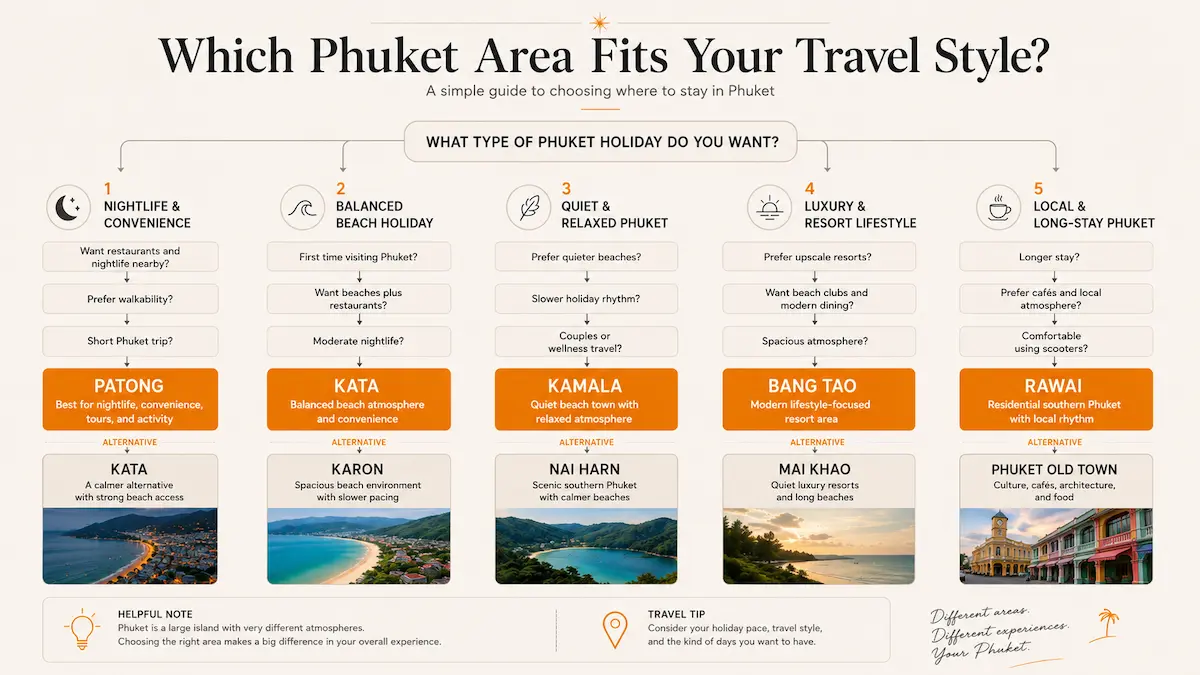
Quick Overview: Phuket Areas at a Glance
Before looking at each area in detail, it helps to understand the general personality of Phuket’s main tourist regions. While many visitors focus only on beaches, the atmosphere, convenience, pacing, and travel style of each area can feel very different in practice.
Some parts of Phuket are built around nightlife and convenience. Others focus on quieter resort environments, local living, wellness, or slower beach travel. There is no universally “correct” choice — only the area that best fits the type of holiday you want to have.
Phuket Areas at a Glance
| Area | Best For | Atmosphere |
|---|---|---|
| Patong | Nightlife, convenience, first-time visitors wanting everything nearby | Busy, energetic, highly developed |
| Kata | Balanced beach holidays, couples, first-time visitors | Relaxed but active |
| Karon | Families, longer beach walks, quieter resort stays | Spacious and slower paced |
| Kamala | Couples, families, quieter resort atmosphere | Calm and scenic |
| Bang Tao | Luxury resorts, beach clubs, upscale stays | Modern, spacious, lifestyle-focused |
| Rawai | Long stays, local cafés, fitness, residential atmosphere | Relaxed and local |
| Nai Harn | Scenic beaches, slower travel, nature-focused stays | Quiet and restorative |
| Phuket Old Town | Food, culture, cafés, photography, short stays | Historic and urban |
| Mai Khao | Resort isolation, honeymoon-style relaxation | Quiet and remote |
Importantly, these areas are not interchangeable.
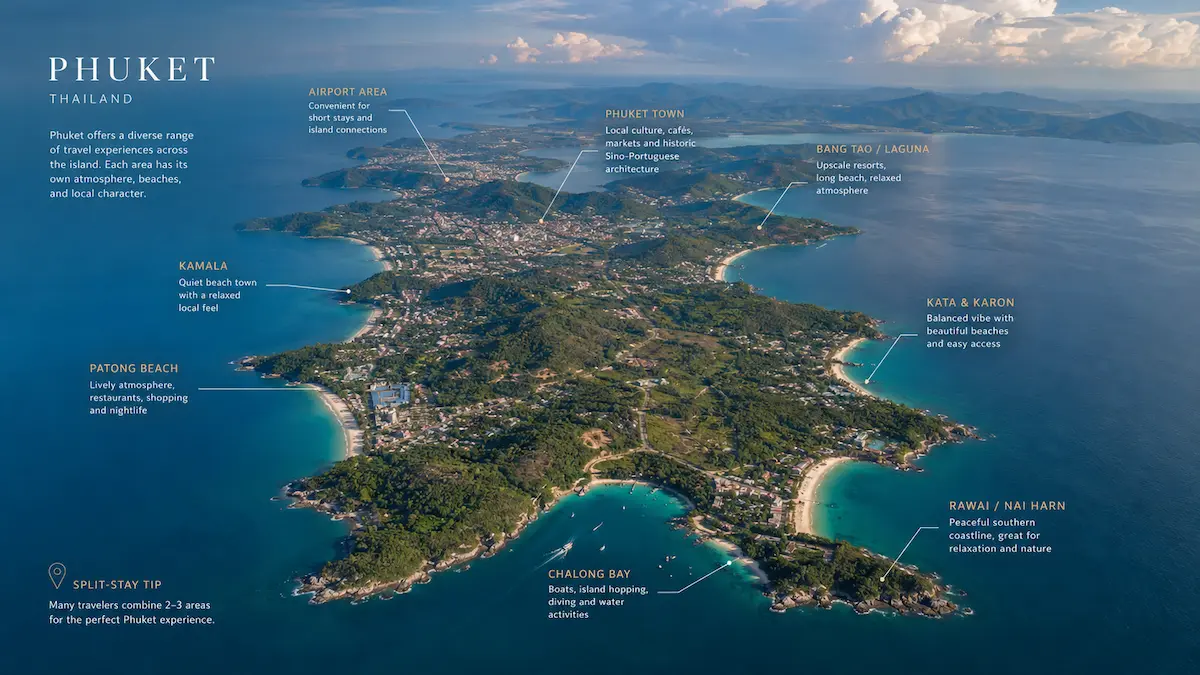
A traveler looking for nightlife and convenience may find Mai Khao far too isolated, while someone seeking a quiet beach holiday may quickly feel overwhelmed staying in central Patong. Likewise, travelers wanting walkability and restaurant access may struggle in areas where scooters or taxis become more necessary.
It is also common for travelers to underestimate how different the north and south of Phuket feel.
Southern areas such as Rawai and Nai Harn often feel slower, more residential, and more connected to local day-to-day life. Central west coast areas like Patong, Kata, and Karon are more tourism-focused and convenient for shorter stays. Northern Phuket, meanwhile, tends to feel quieter, more spacious, and increasingly resort-oriented.
Another important point is that no single area gives perfect access to everything.
Travelers hoping to combine nightlife, quiet beaches, local atmosphere, short transport times, luxury resorts, and low prices in one location usually discover that Phuket involves tradeoffs. Understanding those tradeoffs early is one of the best ways to build a smoother and more enjoyable trip.
In the sections below, we will break down each major Phuket area in more detail, including who it suits best, what the atmosphere actually feels like, and the types of travelers most likely to enjoy staying there.
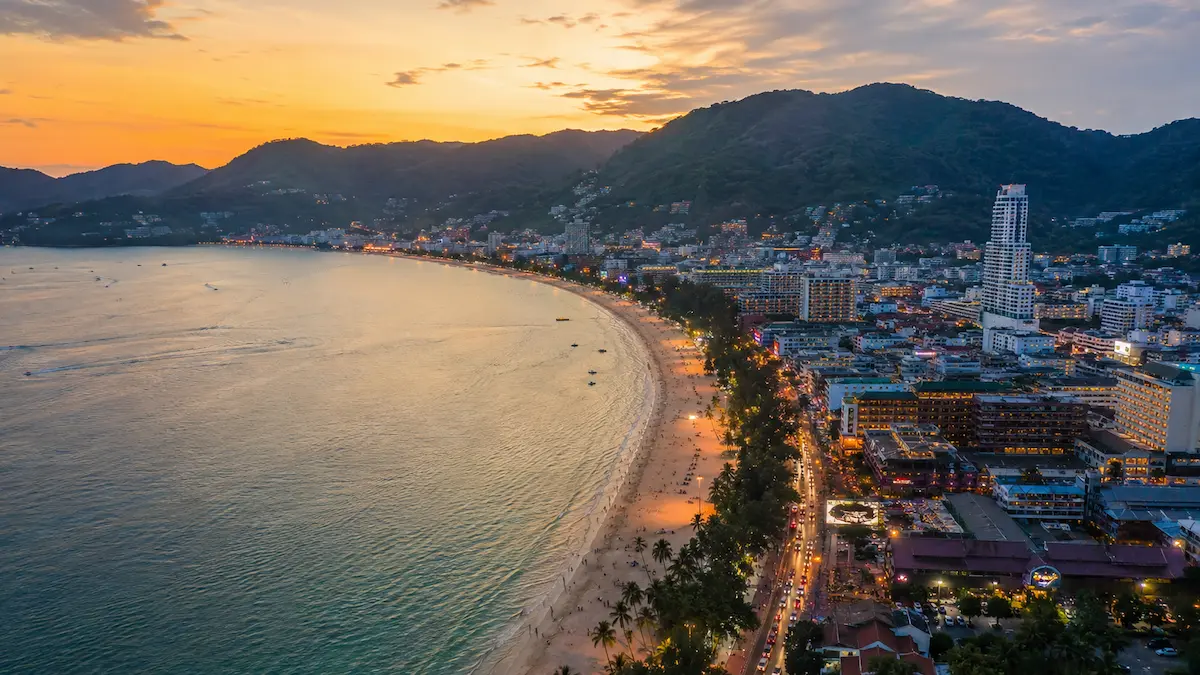
Patong: Phuket’s Most Convenient Tourist Hub
Patong is the busiest and most heavily developed tourist area in Phuket — but it is also one of the most convenient places on the island to base yourself, especially for first-time visitors.
This is important because Patong is often simplified online into either “the party area” or “the area to avoid.” In reality, the experience of staying in Patong depends heavily on what type of traveler you are, where you stay within Patong itself, and what you want from your holiday.
For many visitors, Patong works extremely well.
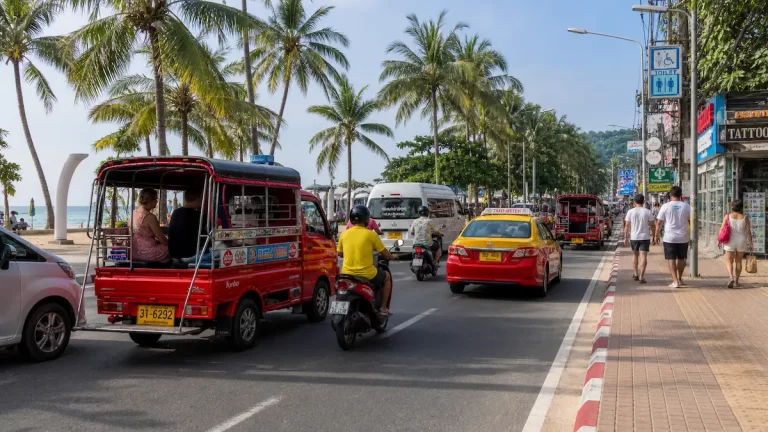
The area offers the largest concentration of restaurants, nightlife, shopping, cafés, convenience stores, tour operators, massage shops, bars, and entertainment in Phuket. It is also one of the easiest places to navigate without renting a scooter, since many hotels, beaches, restaurants, and nightlife areas are walkable.
This convenience reduces friction during a trip.
Travelers staying in quieter parts of Phuket often underestimate how useful it can be to simply walk out of the hotel and immediately have access to food, nightlife, transport, and activities without needing long taxi rides every evening.
Patong also functions as a major operational hub for tourism in Phuket.
Many island tours, transport services, nightlife experiences, shopping trips, and excursions either depart directly from Patong or include simplified pickup arrangements there. For shorter holidays, this convenience can save a significant amount of time and planning stress.
At the same time, Patong is not a calm tropical beach town.
The area is busy, commercial, energetic, and heavily tourism-focused. Around Bangla Road and the central entertainment zones, the atmosphere can become loud and crowded, particularly at night and during peak tourist season. Some travelers enjoy this energy, while others find it exhausting after only a few days.
Importantly, not all parts of Patong feel identical.
Hotels located near the northern or southern ends of the beach, or slightly back from the nightlife center, can feel noticeably quieter while still maintaining easy access to the main tourist infrastructure. This is one reason Patong often works better than expected for travelers who want convenience without being directly inside the nightlife core.
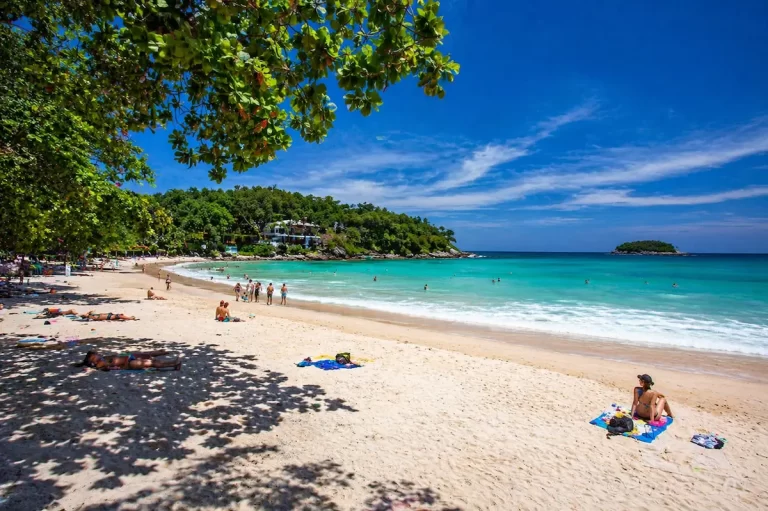
The beach itself is large, accessible, and visually attractive, although it is generally not considered Phuket’s most scenic beach for swimming or atmosphere compared with places like Kata or Nai Harn. However, for travelers prioritizing convenience, social energy, tours, and easy logistics, Patong remains one of the most practical bases on the island.
Patong is often best suited to:
- first-time Phuket visitors
- travelers wanting nightlife and restaurants nearby
- shorter stays
- visitors not planning to rent a scooter
- travelers wanting maximum convenience
- social or activity-focused holidays
It may be less suitable for:
- travelers seeking quiet beaches
- honeymoon-style relaxation
- wellness-focused trips
- visitors sensitive to crowds or nightlife noise
Ultimately, Patong works best when travelers understand what it actually is.
Rather than expecting a secluded tropical island atmosphere, it is better viewed as Phuket’s main tourism and entertainment hub — energetic, highly convenient, and capable of making certain types of holidays much easier.
For more detail, see our Patong Beach Guide, Phuket Nightlife Guide, and Is Phuket Safe articles.
Kata and Karon: The Balanced Phuket Holiday
For many first-time visitors, Kata and Karon represent the most balanced areas in Phuket.
They offer a middle ground between the high-energy atmosphere of Patong and the much quieter pace of southern or northern Phuket. Travelers staying here often find they can enjoy beaches, restaurants, cafés, nightlife, and day trips without feeling constantly surrounded by the intensity of Phuket’s busiest tourism zones.
This is one reason Kata and Karon remain consistently popular with couples, families, and travelers looking for a more relaxed version of a classic Phuket beach holiday.
Although the two areas sit directly beside each other, they still feel noticeably different in practice.
Kata Beach: Relaxed but Active
Kata is often one of the easiest areas for first-time Phuket visitors to enjoy immediately.
The beach itself is attractive, swimmable during much of the year, and surrounded by a comfortable mix of restaurants, cafés, massage shops, small nightlife venues, convenience stores, and tourism infrastructure. The atmosphere feels active enough to provide energy and convenience, but generally calmer and more manageable than Patong.
This balance gives Kata broad appeal.
Travelers can walk between many hotels, restaurants, bars, and beach areas without needing constant transport, while still enjoying a holiday rhythm that feels slower and more beach-oriented than central Patong.
Kata also works well for:
- couples
- families
- first-time visitors
- shorter holidays
- travelers wanting beach access without heavy nightlife
- visitors wanting moderate walkability
The area has enough nightlife and dining variety to stay lively in the evenings, but it rarely feels dominated by nightlife culture in the same way as Patong.
Kata Noi, located just south of Kata Beach, introduces another layer to the area. It feels quieter, more scenic, and more upscale, with a calmer atmosphere that appeals to travelers wanting a slower beach environment while still remaining close to restaurants and services.
One tradeoff, however, is that Kata has become increasingly popular over the years. During peak periods, parts of the area can feel busy, particularly around the beachfront and restaurant zones. Even so, the overall emotional tone generally remains far more relaxed than Phuket’s main nightlife districts.
For many travelers, Kata represents the “classic Phuket holiday” people imagine before arriving.
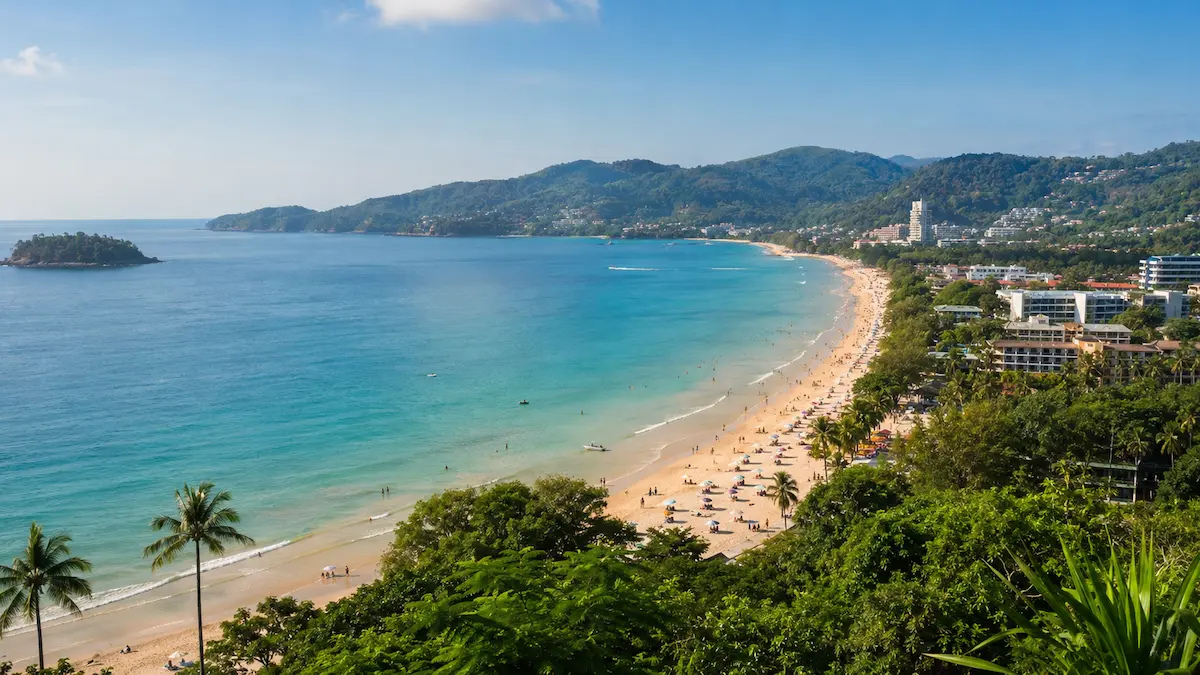
Karon Beach: Spacious and Slower Paced
Karon sits immediately north of Kata but usually feels more spacious, quieter, and more spread out.
The beach itself is one of the longest in Phuket, creating a much more open visual atmosphere compared with many of the island’s smaller or busier beach areas. Even during relatively active travel periods, Karon often feels less crowded simply because of the amount of beachfront space available.
This changes the rhythm of the area considerably.
Karon tends to attract travelers looking for a calmer resort-style holiday while still maintaining reasonable access to restaurants, shops, tours, and nearby nightlife. It feels slower than Kata, less intense than Patong, and often appeals to travelers who prioritize relaxation over constant activity.
The restaurant and nightlife scene exists, but at a noticeably lower energy level than Patong. Evenings in Karon generally revolve more around beach restaurants, casual bars, sunset walks, and relaxed dining rather than nightlife-focused entertainment.
Karon often works especially well for:
- families
- couples
- resort-focused holidays
- travelers wanting quieter evenings
- longer beach walks
- visitors seeking more physical space
One important distinction is that Karon can feel slightly less walkable and less compact than Kata. The area spreads out more along the coastline, and depending on hotel location, some travelers may rely more heavily on taxis or scooters for moving between restaurants or neighboring beaches.
Still, for travelers wanting a balanced Phuket stay with a calmer atmosphere and excellent beach access, Karon remains one of the island’s strongest options.
Together, Kata and Karon offer what many travelers are actually searching for when planning a Phuket holiday — a combination of beach access, convenience, comfort, restaurants, and manageable tourism energy without the full intensity of Patong.
For a large percentage of first-time visitors, they remain some of the safest and most balanced choices on the island.
Kamala and Bang Tao: Slower and More Upscale Phuket
For travelers exploring different Phuket areas beyond the island’s busiest tourism hubs, Kamala and Bang Tao offer a noticeably slower and more refined style of holiday experience.
While both destinations still provide resorts, restaurants, beach access, and strong tourism infrastructure, the atmosphere generally feels calmer, more spacious, and less dominated by nightlife or dense commercial development. These western Phuket beach areas appeal strongly to couples, families, longer-stay travelers, and visitors wanting a more relaxed travel rhythm.
Importantly, however, Kamala and Bang Tao are not identical.
Although both are often described as “upscale” or “relaxed,” they create very different types of Phuket holidays. Travelers researching the best Phuket accommodation areas should understand that Kamala leans more toward quieter beach-town atmosphere, while Bang Tao feels more modern, lifestyle-focused, and resort-oriented.
Kamala: Calm, Scenic, and Easygoing
Kamala sits north of Patong along Phuket’s west coast and has developed a reputation as one of the island’s calmer and more balanced Phuket areas.
The beach itself is long, attractive, and generally feels more relaxed than the busier central beaches further south. The atmosphere revolves more around quieter restaurants, cafés, beach walks, family-friendly resorts, and slower evenings rather than nightlife-driven tourism.
This makes Kamala especially attractive for:
- couples
- families
- slower beach holidays
- travelers wanting reduced nightlife intensity
- visitors seeking a quieter base near Patong
One reason Kamala works so well is its balance between peaceful atmosphere and practical convenience. Travelers can still reach Patong relatively easily for shopping, nightlife, or tours while returning to a noticeably calmer environment afterward.
The overall pacing of Kamala feels softer than many other Phuket beach areas.
Even during busier travel seasons, the area rarely creates the same level of sensory intensity found in Patong. Restaurants tend to feel more relaxed, traffic feels lighter, and evenings revolve more around beachfront dining or low-key bars than entertainment districts.
Kamala also has a slightly more residential and long-stay atmosphere in certain areas, helping it feel less dominated by short-term tourism. For travelers researching quieter Phuket accommodation areas, this slower rhythm can become a major advantage.
At the same time, visitors should understand that Kamala is intentionally quieter. Travelers wanting major nightlife, heavy shopping, or constant entertainment may find the area too subdued after several days.
For more detail, see our Kamala Beach Guide and Best Beaches in Phuket articles.
Bang Tao: Modern, Spacious, and Lifestyle-Oriented
Bang Tao offers a very different atmosphere from Kamala.
While Kamala feels like a quieter beach town, Bang Tao feels more modern, spread out, and lifestyle-focused. Over recent years, the area has evolved into one of Phuket’s strongest upscale destinations, containing many of the island’s premium resorts, villa developments, wellness spaces, beach clubs, international restaurants, and long-stay communities.
Among Phuket’s more modern Phuket areas, Bang Tao stands out for its sense of physical space.
The beach itself is large and open, helping the area feel less crowded even during active travel periods. Combined with broader roads and lower-density development, Bang Tao often feels noticeably more spacious than southern Phuket.
This creates a very different style of holiday atmosphere.
Bang Tao appeals strongly to:
- upscale travelers
- couples
- families
- digital nomads
- long-stay visitors
- wellness-focused travelers
- visitors wanting modern comforts and beach access
The dining scene also differs from many traditional Phuket beach areas.
Rather than revolving heavily around nightlife strips or tourist entertainment zones, Bang Tao leans more toward beach clubs, wine bars, brunch cafés, international dining, wellness venues, and modern lifestyle-oriented spaces. In many ways, the atmosphere feels closer to a contemporary resort destination than a traditional beach-town tourism hub.
Laguna Phuket, located within the Bang Tao region, further reinforces this upscale identity through integrated resorts, golf courses, villas, and resort-style infrastructure.
However, Bang Tao’s scale also creates tradeoffs.
The area is less walkable than places like Patong or Kata, and many travelers rely more heavily on scooters, taxis, or hotel transport. Some parts of Bang Tao can also feel more resort-oriented and less connected to traditional Thai street atmosphere compared with older Phuket areas further south.
Still, for travelers wanting calmer and more polished Phuket accommodation areas, Bang Tao has become one of the island’s strongest options.
For more detail, see our Bang Tao Beach Guide and future Phuket Luxury Resorts Guide.
Together, Kamala and Bang Tao represent a slower and more upscale side of Phuket — one built less around nightlife intensity and more around comfort, space, beach lifestyle, and relaxed travel pacing.
For many travelers, especially those prioritizing atmosphere over constant activity, these two Phuket areas create one of the smoothest and most enjoyable holiday experiences on the island.these areas create a much smoother and more restorative Phuket experience.
Rawai and Nai Harn: A More Local and Relaxed Side of Phuket
Southern Phuket feels very different from the island’s main tourism hubs.
Areas like Rawai and Nai Harn attract travelers looking for a slower, more residential, and more locally connected version of Phuket — one that revolves less around organized tourism and more around everyday island rhythm. For some visitors, this becomes their favorite part of Phuket. For others, especially first-time tourists expecting a classic resort-style beach holiday, the experience can feel surprisingly different from what they imagined.
This is why understanding the character of southern Phuket matters before booking accommodation there.
Rawai: Local Atmosphere and Long-Stay Living
Rawai is one of the most distinctive areas in Phuket because it functions less like a traditional beach resort destination and more like a lived-in coastal community.
The area has become especially popular with:
- long-stay travelers
- digital nomads
- fitness-focused visitors
- scooter travelers
- returning Phuket visitors
- people wanting a more local atmosphere
Unlike Patong, Kata, or Karon, Rawai is not built primarily around beachfront tourism. The waterfront itself is scenic and active, filled with longtail boats, seafood restaurants, local movement, and island tour departures, but it is generally not considered one of Phuket’s main swimming beaches.
This is an important distinction.
Some first-time visitors book Rawai expecting a “walk out of the hotel directly onto a swimmable tropical beach” experience and end up disappointed. In reality, Rawai works better for travelers who value atmosphere, cafés, gyms, restaurants, scooter access, and a slower day-to-day rhythm over direct beach convenience.
The emotional pacing here feels different.
Mornings often revolve around cafés, fitness sessions, markets, or quieter coastal drives. Evenings tend to focus more on restaurants, rooftop spaces, seafood dining, or small social venues rather than nightlife districts or tourist entertainment zones.
Rawai also provides strong access to nearby southern attractions including Nai Harn Beach, Ya Nui Beach, Promthep Cape, and island departure points toward Coral Island and other nearby destinations.
One of Rawai’s strengths is that it often feels more grounded and residential than Phuket’s heavier tourism centers. However, this also means transport becomes more important. Travelers staying here frequently benefit from renting a scooter or budgeting for regular taxi usage.
Nai Harn: Scenic, Calm, and Nature-Focused
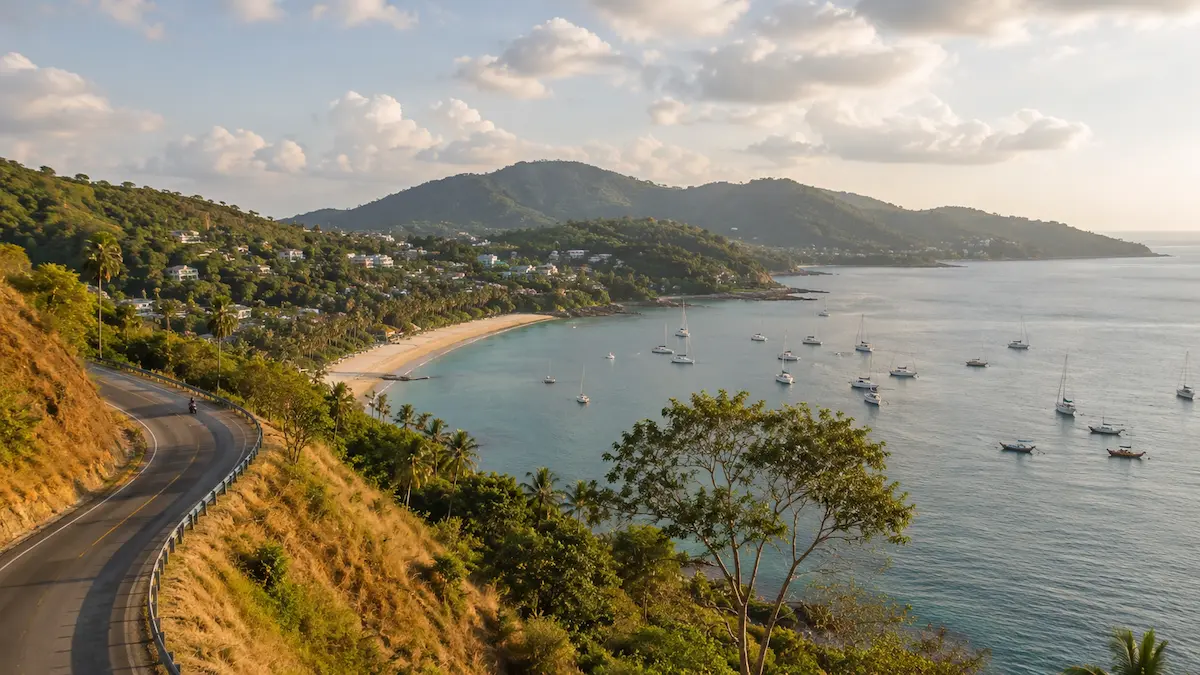
Located just west of Rawai, Nai Harn offers one of the calmest and most visually balanced beach environments in Phuket.
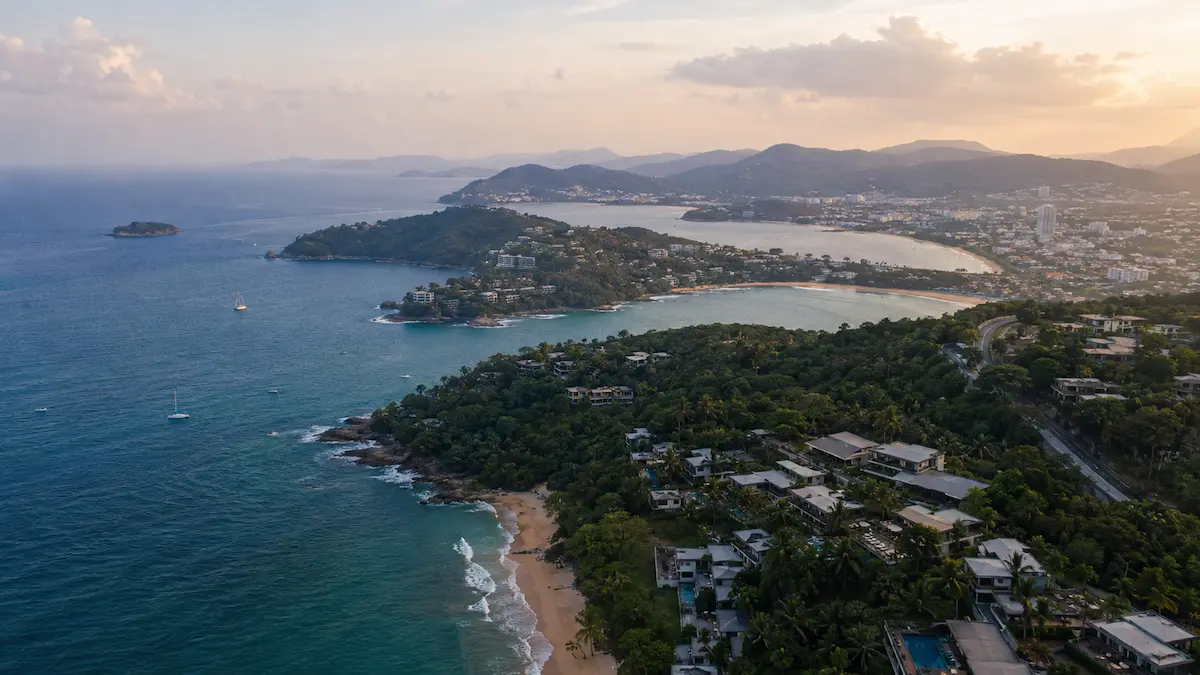
The area feels quieter, greener, and more scenic than many of Phuket’s busier tourist beaches. Surrounded by hills, lakes, viewpoints, and smaller coastal roads, Nai Harn creates a more restorative atmosphere that appeals strongly to travelers wanting a slower style of beach holiday.
The beach itself is widely regarded as one of Phuket’s best.
Compared with Patong or even Kata, Nai Harn often feels cleaner, calmer, and less commercially developed. The surrounding environment remains more open and natural, helping preserve a sense of space that has disappeared in some of Phuket’s busier tourism zones.
Nai Harn tends to attract:
- couples
- slower travelers
- wellness-focused visitors
- photographers
- repeat Phuket visitors
- travelers prioritizing beach atmosphere over nightlife
The area works particularly well for travelers wanting mornings at the beach, slower afternoons, scenic cafés, and quieter evenings rather than packed nightlife schedules or heavily structured tourism days.
At the same time, Nai Harn is intentionally quieter.
Travelers wanting major nightlife, shopping malls, or large entertainment areas will usually need to travel elsewhere on the island. This is part of the tradeoff that creates Nai Harn’s calmer atmosphere in the first place.
The area also pairs naturally with Rawai. Many visitors stay between the two locations and move fluidly between Nai Harn’s beach atmosphere and Rawai’s cafés, restaurants, gyms, and local infrastructure.
Together, Rawai and Nai Harn represent a side of Phuket that feels slower, more residential, and often more emotionally grounded than the island’s larger tourism hubs.
For travelers wanting nightlife convenience and dense tourism infrastructure, these areas may feel too quiet or spread out. But for visitors seeking calmer beaches, local atmosphere, slower pacing, and a more lived-in version of Phuket, southern Phuket can become one of the most rewarding parts of the island.
Phuket Old Town: Culture, Cafés, and Short-Stay Exploration
Phuket Old Town offers a completely different side of the island from Phuket’s beach areas.
Rather than focusing on beaches, resorts, or nightlife, the Old Town centers around history, food, architecture, cafés, local culture, and urban atmosphere. For many travelers, it becomes one of the most memorable parts of a Phuket trip precisely because it feels so different from the island’s coastal tourism zones.
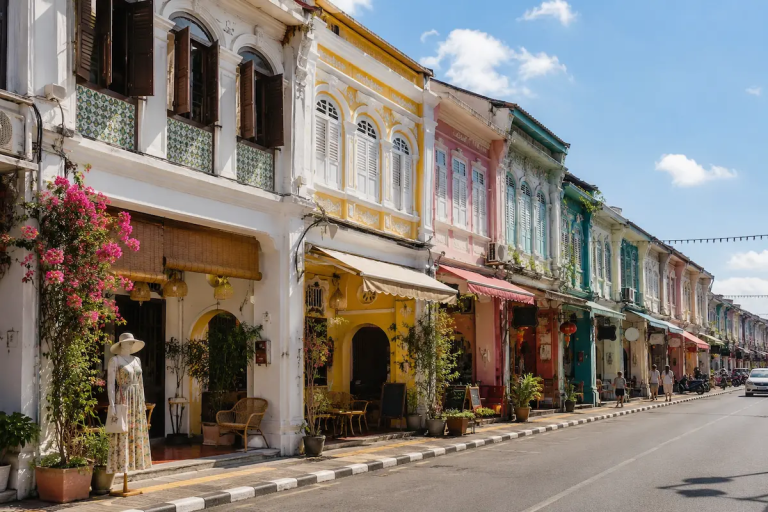
The area is known for its colorful Sino-Portuguese buildings, narrow streets, local restaurants, street art, cafés, markets, and slower walking-oriented atmosphere. Compared with the beach towns, Phuket Old Town feels more connected to Phuket’s historical identity and everyday local life.
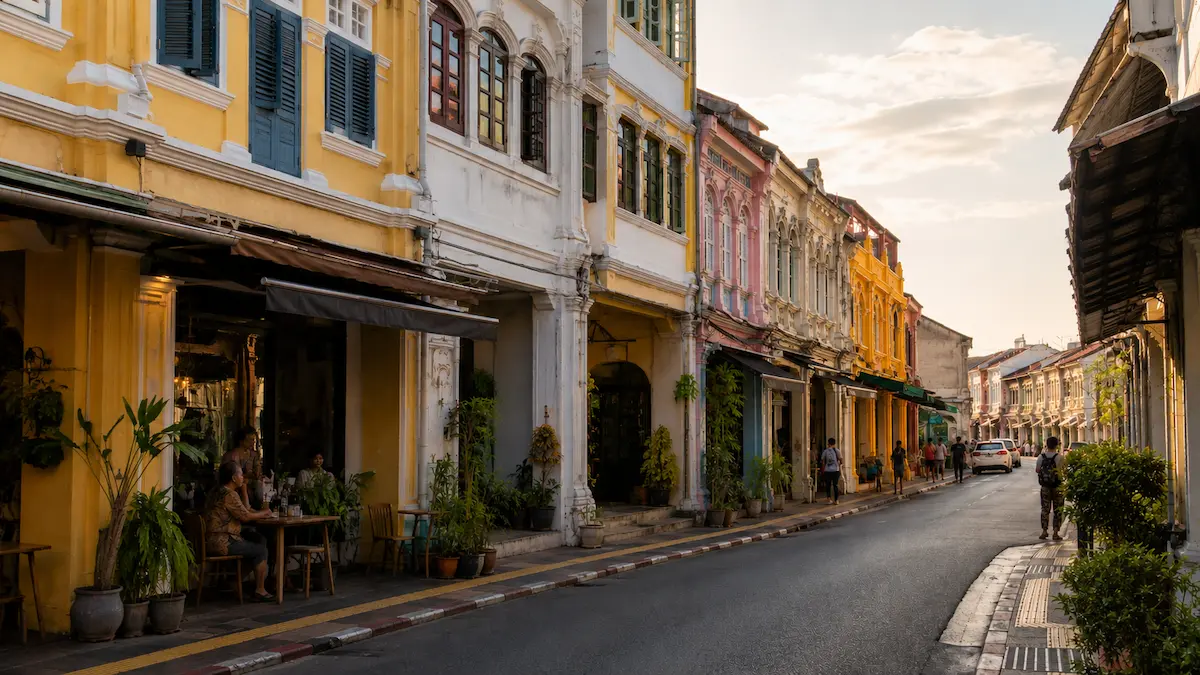
This makes it especially appealing for:
- food-focused travelers
- photographers
- café culture travelers
- short cultural stays
- market exploration
- travelers wanting variety beyond beaches
One of the biggest strengths of Phuket Old Town is how naturally walkable it feels. Travelers can spend hours moving slowly between cafés, local restaurants, small shops, dessert spots, temples, and historic streets without needing constant transport.
The atmosphere also changes throughout the day.
Mornings tend to feel quieter and more local, while evenings become livelier as restaurants, bars, cafés, and night markets begin to fill. The Sunday Walking Street Market is particularly popular and draws both tourists and locals into the area.
Importantly, Phuket Old Town is usually not the best choice for travelers wanting a traditional beach holiday.
The beaches are not directly nearby, and travelers staying exclusively in the Old Town often spend significant time traveling if their main goal is swimming, beach clubs, or coastal resort relaxation. For this reason, many visitors treat Phuket Old Town as either:
- a short-stay destination
- a day trip
- or part of a split-stay Phuket itinerary
This approach often works extremely well.
For example, some travelers spend most of their trip in beach areas like Kata, Kamala, or Nai Harn before finishing with one or two nights in the Old Town to experience Phuket’s cultural and food scene before departure.
Phuket Old Town also offers some of the strongest café and photography environments on the island. The mix of architecture, lighting, local businesses, and street atmosphere creates a completely different visual identity from Phuket’s beach-focused areas.
For travelers wanting a broader understanding of Phuket beyond resorts and beaches, the Old Town adds important depth to the overall trip experience.
Mai Khao and Northern Phuket: Quiet Resort Phuket
Northern Phuket feels very different from the island’s southern tourism zones.
Areas like Mai Khao are defined less by nightlife, restaurants, and beach-town activity, and more by space, privacy, large resorts, and slower holiday pacing. For travelers seeking a quiet and low-stimulation Phuket experience, northern Phuket can work extremely well. For others, especially visitors wanting restaurants, nightlife, or daily exploration, the area may feel too isolated.
This is one of the biggest tradeoffs to understand before booking accommodation in the north.
Mai Khao: Space, Privacy, and Resort-Focused Travel
Mai Khao Beach stretches across a long section of Phuket’s northwest coastline and remains one of the island’s least developed major beach areas.
Unlike Patong, Kata, or Karon, there are relatively few dense tourism zones, entertainment districts, or walkable beach-town centers here. Instead, the area is dominated by:
- large beachfront resorts
- villa-style accommodation
- wellness retreats
- honeymoon-focused stays
- quiet coastal atmosphere
This creates a very different style of Phuket holiday.
The beach itself feels long, open, and uncrowded compared with many southern beaches. In some areas, travelers can walk significant distances without encountering heavy crowds, beach vendors, or dense tourist activity. The atmosphere feels calmer, quieter, and physically more spacious.
Mai Khao often works especially well for:
- honeymoon trips
- resort-focused holidays
- couples wanting quiet stays
- short relaxation breaks
- wellness-oriented travel
- travelers prioritizing resort facilities over external nightlife
The proximity to Phuket International Airport is another major advantage. After long flights, some visitors appreciate being able to reach their resort quickly without crossing the entire island.
At the same time, this convenience comes with tradeoffs.
Travelers staying in Mai Khao are much further from Phuket’s major nightlife, shopping, markets, and southern beach areas. Visiting places like Patong, Kata, Rawai, or Phuket Old Town can involve significant travel time, especially during busy traffic periods.
This means Mai Khao works best for travelers intentionally choosing a quieter and more self-contained holiday experience.
Rather than building each day around constant movement and sightseeing, the area suits travelers who are comfortable spending more time inside resort environments, on quieter beaches, or moving at a slower pace overall.
The atmosphere in northern Phuket also feels less commercially intense than southern Phuket. Roads are generally quieter, development is more spread out, and the overall emotional rhythm of the area feels slower and more subdued.
For some travelers, this becomes exactly what makes northern Phuket attractive.
Should You Stay in More Than One Area?
One of the most overlooked Phuket travel strategies is splitting your stay across multiple Phuket areas rather than booking a single hotel for the entire trip.
Many travelers researching where to stay in Phuket underestimate how different the island’s regions actually feel from one another. Because Phuket is large, spread out, and highly varied, staying in only one location can sometimes limit the overall experience — especially on longer holidays.
For shorter trips of four or five days, staying in one well-chosen base often makes the most sense. Constant hotel changes can reduce relaxation time, and transport logistics may begin to outweigh the benefits.
However, once trips move beyond a week, split stays often become far more appealing.
This is particularly true for travelers wanting to experience multiple sides of Phuket without spending large portions of each day crossing the island in traffic.
Why Split Stays Work Well in Phuket
Different Phuket areas naturally create different holiday rhythms.
Patong offers convenience, nightlife, restaurants, and activity. Rawai and Nai Harn feel slower and more residential. Bang Tao leans toward upscale lifestyle travel, while Phuket Old Town introduces culture, cafés, and food-focused exploration.
Trying to combine all of these experiences from a single hotel base can become tiring surprisingly quickly.
A split stay allows travelers to experience different Phuket accommodation areas more naturally rather than constantly commuting between them.
For example:
- beginning in Patong Beach Guide or Kata Beach Guide areas for tours and convenience
- then moving south to Nai Harn Beach Guide or Rawai Guide for slower beach days
- or combining a beach stay with one or two nights in Phuket Old Town Guide
This often creates a much smoother emotional flow across the trip.
For travelers building a longer Phuket base guide itinerary, combining multiple areas can dramatically improve the pacing of the holiday.
Popular Phuket Split-Stay Combinations
Patong + Nai Harn
A popular combination for travelers wanting both nightlife convenience and slower southern Phuket atmosphere.
Kata + Phuket Old Town
Works especially well for first-time visitors wanting beach relaxation alongside food, culture, and markets.
Bang Tao + Phuket Old Town
Combines upscale resort atmosphere with cafés, architecture, and local dining experiences.
Kamala + Rawai
Suitable for travelers wanting quieter Phuket beach areas alongside a more local southern Phuket rhythm.
Mai Khao + Southern Phuket
A strong option for longer trips combining quiet resort recovery with more active exploration later in the holiday.
When Split Stays May Not Be Necessary
Not every traveler benefits from changing hotels.
Visitors planning shorter trips, families traveling with young children, or travelers prioritizing simplicity may prefer to remain in one area for convenience. In many cases, choosing the right single base matters more than trying to experience every side of Phuket in one trip.
It also depends heavily on travel style.
Some travelers enjoy movement and variety, while others prefer settling into one hotel and building a slower routine around it.
For travelers uncertain where to stay in Phuket, it is often better to choose one strong location than constantly move without a clear purpose.
The Real Advantage of Split Stays
The biggest advantage of split stays is not simply “seeing more.”
It is reducing friction.
Rather than repeatedly spending an hour in traffic to reach another side of the island, travelers reposition themselves closer to the experiences they want during different stages of the trip. This often makes Phuket feel calmer, easier, and more enjoyable overall.
For many visitors, especially on holidays longer than 8–10 days, combining different Phuket areas can create a far more balanced and rewarding island experience.
For more planning advice, see How Many Days in Phuket, Phuket Itinerary Guide, and Phuket Transport & Practical Travel.
Best Phuket Areas by Travel Style
There is no single “best” area in Phuket for every traveler.
The right base depends on what type of holiday you want to have, how much movement you are comfortable with, whether you value nightlife or quiet beaches, and how you personally like to travel.
Some visitors prioritize convenience and walkability. Others care more about resort atmosphere, beach quality, food, nightlife, or slower pacing. Understanding your own travel style usually makes choosing a Phuket base much easier.
Below are some of the best Phuket areas based on different types of travelers and holiday priorities.
Best Area for First-Time Visitors
Kata or Karon
For many first-time visitors, Kata and Karon offer the safest balance overall.
Both areas provide:
- good beach access
- strong restaurant options
- moderate nightlife
- convenient tourism infrastructure
- easier pacing than Patong
They allow travelers to experience Phuket comfortably without the intensity of the island’s busiest entertainment zones.
Best Area for Nightlife
Patong
Patong remains Phuket’s main nightlife and entertainment hub.
Travelers wanting:
- bars
- clubs
- restaurants
- nightlife variety
- late-night activity
- convenience without scooters
will usually find Patong the easiest and most practical choice.
Best Area for Families
Kamala or Bang Tao
Both Kamala and Bang Tao offer calmer and more spacious environments that work well for family travel.
These areas typically provide:
- quieter beaches
- family-friendly resorts
- slower evenings
- reduced nightlife intensity
- more relaxed pacing
Bang Tao especially works well for families wanting resort infrastructure and larger accommodation options.
Best Area for Couples
Nai Harn or Kamala
Travelers seeking quieter and more scenic holidays often gravitate toward Nai Harn or Kamala.
Both areas feel:
- calmer
- less chaotic
- more beach-focused
- more emotionally restorative
Nai Harn leans more toward natural scenery and slower travel rhythm, while Kamala balances relaxation with easier access to restaurants and nearby attractions.
Best Area for Long Stays
Rawai
Rawai has become one of Phuket’s strongest long-stay areas.
The combination of:
- cafés
- gyms
- restaurants
- residential atmosphere
- scooter accessibility
- local rhythm
makes it particularly attractive for travelers staying several weeks or longer.
It often suits visitors who want to feel more connected to everyday Phuket life rather than remaining inside traditional resort environments.
Best Area for Luxury Resorts
Bang Tao or Mai Khao
Travelers prioritizing high-end resorts, villas, wellness stays, or premium resort facilities often prefer Bang Tao or Mai Khao.
Bang Tao offers:
- modern luxury atmosphere
- beach clubs
- upscale dining
- lifestyle-oriented travel
Mai Khao offers:
- quiet resort isolation
- larger beachfront resorts
- privacy
- slower pacing
Best Area Without Renting a Scooter
Patong or Kata
Travelers not planning to rent scooters usually benefit from staying somewhere more walkable.
Patong and Kata provide:
- restaurants nearby
- beach access
- convenience stores
- nightlife
- transport options
- tourism infrastructure
without requiring long daily taxi journeys.
Best Area for Quiet Beaches
Nai Harn or Mai Khao
Travelers seeking calmer beach environments with less commercial energy often prefer Nai Harn or Mai Khao.
Nai Harn offers:
- scenic southern Phuket atmosphere
- swimmable beach environment
- natural surroundings
Mai Khao offers:
- physical space
- long uncrowded beaches
- quieter resort atmosphere
Ultimately, the best Phuket base is usually the one that matches the pace and atmosphere you personally want from your holiday.
Travelers expecting nonstop nightlife may feel isolated in Mai Khao. Visitors seeking calm beach days may quickly feel overwhelmed in central Patong. Phuket works best when travelers choose an area that aligns naturally with how they actually want to spend their time on the island.
Conclusion
Choosing the right area in Phuket can shape the entire feel of your holiday.
The island is far more varied than many first-time visitors expect, and different bases create very different travel experiences. Some areas revolve around nightlife, convenience, and activity. Others focus on quieter beaches, slower pacing, resort atmosphere, local cafés, or more residential coastal living.
This is why there is no single “best” place to stay in Phuket.
The best area depends on the kind of holiday you want to have.
Travelers looking for energy, restaurants, and nightlife may feel most comfortable in Patong. Visitors wanting balanced beach holidays often prefer Kata or Karon. Those seeking slower and quieter stays may gravitate toward Kamala, Nai Harn, Rawai, or northern Phuket. Meanwhile, travelers wanting culture, food, and café atmosphere may find Phuket Old Town becomes one of the most memorable parts of the trip.
Importantly, many Phuket travel frustrations come from choosing a base that does not match personal travel style.
A quiet honeymoon-style traveler staying beside Bangla Road will likely feel overwhelmed. A nightlife-focused visitor staying in isolated northern Phuket may spend large portions of the trip inside taxis. Understanding these differences before booking accommodation usually leads to a much smoother and more enjoyable holiday overall.
Phuket rewards travelers who plan around atmosphere and pacing rather than simply choosing the most famous beach.
For many visitors, the goal is not finding the “best” area — it is finding the area that feels right for the type of experience they actually want from Phuket.
If you are still planning your trip, you may also find these guides helpful:
- First-Time Phuket Guide
- How Many Days in Phuket
- Best Beaches in Phuket
- Phuket Transport & Practical Travel
- Phuket Travel Planning Guide
And if you want a more complete overview of the island, including beaches, itineraries, transport, local insights, and practical travel advice, you can also explore our full Phuket travel resources on Go Find Asia.
Planning a Phuket trip can feel surprisingly overwhelming once you start comparing beaches, hotel areas, transport times, tours, and travel styles.
If you would prefer help building a smoother Phuket itinerary — including choosing the right area to stay, balancing beach time with day trips, and avoiding common first-time planning mistakes — you can also explore the curated Phuket travel planning resources available through Resurgence Travel.
Whether you are planning a relaxed beach escape, a balanced first-time Phuket holiday, or a more experience-focused island trip, thoughtful planning usually makes a significant difference to how Phuket actually feels once you arrive.
Frequently Asked Questions About Phuket Areas
What is the best area to stay in Phuket for first-time visitors?
For many first-time visitors, Kata or Karon offer the best overall balance of beaches, restaurants, convenience, and relaxed atmosphere. They provide easier pacing than Patong while still giving good access to tours, dining, and transport.
Is Patong a good place to stay in Phuket?
Patong works very well for travelers wanting nightlife, restaurants, shopping, convenience, and easy access to tours. However, it is also Phuket’s busiest tourism area and may feel too crowded or energetic for travelers seeking quiet beach holidays.
Which Phuket area is best for couples?
Nai Harn, Kamala, and parts of Bang Tao are often popular with couples seeking calmer beaches, scenic atmosphere, and slower travel pacing. These areas generally feel quieter and less nightlife-focused than Patong.
Which Phuket area is best for families?
Kamala, Karon, and Bang Tao are commonly considered some of Phuket’s best family-friendly areas due to their calmer atmosphere, spacious beaches, and strong resort infrastructure.
Is Phuket Old Town a good place to stay?
Phuket Old Town works well for short cultural stays, cafés, food experiences, and photography, but it is usually less suitable for travelers wanting direct beach access throughout their holiday. Many visitors combine it with a beach stay elsewhere on the island.
Should I stay in more than one area in Phuket?
For trips longer than a week, many travelers benefit from splitting their stay across two areas. This allows visitors to experience different sides of Phuket without constantly traveling across the island each day.
Which Phuket area is best without renting a scooter?
Patong and Kata are usually the easiest areas for travelers not planning to rent scooters because they offer better walkability, restaurants, nightlife, and tourism infrastructure within shorter distances.
What is the quietest area in Phuket?
Mai Khao and Nai Harn are generally among Phuket’s quieter areas. Mai Khao focuses more on resort isolation and long beaches, while Nai Harn offers a calmer southern Phuket atmosphere with scenic beach surroundings.
Is Rawai good for tourists?
Rawai is popular with long-stay travelers, digital nomads, and visitors seeking a more local and residential side of Phuket. However, it is different from Phuket’s classic resort-style beach areas and is usually better suited to travelers comfortable with scooters or regular transport use.
Which Phuket area has the best nightlife?
Patong has Phuket’s largest nightlife scene, including Bangla Road, bars, clubs, beach venues, and entertainment areas. Other beach towns have smaller nightlife scenes but are generally much quieter.
About the Author
David Hibbins is a Phuket-based travel publisher, photographer, and the founder of Go Find Asia and Resurgence Travel.
After spending years exploring Phuket’s different beach areas, local neighborhoods, cafés, markets, viewpoints, and island routes, his work focuses on helping travelers understand how Phuket actually feels beyond the simplified tourism version often presented online.
Rather than creating generic “best of Phuket” lists, David’s writing centers around travel pacing, atmosphere, logistics, and helping visitors choose experiences that genuinely match the type of holiday they want to have.
His work combines on-the-ground local experience, practical travel insight, photography, and long-form destination publishing focused on creating more thoughtful and realistic Phuket travel guidance.