What to Do in Patong Beach: Beyond the Noise and Neon
Most people arrive in Patong expecting a very specific version of Phuket.
Bright lights. Packed streets. Music spilling out onto the road long after midnight. A place that feels loud before you’ve even stepped into it.
And to be fair—that version exists.
But it’s only part of the picture.
Patong is one of the most concentrated, fast-moving parts of the island. Everything is close. Everything is available. And because of that, it’s easy to experience it on the surface—moving from one thing to the next without ever really deciding what’s actually worth your time.
That’s where most trips fall apart.
People don’t struggle because there’s nothing to do. They struggle because there’s too much—and no clear way to choose between it.
If you’re trying to figure out what to do in Patong Beach, the answer isn’t a list. It’s understanding how the place actually works, and then deciding how you want to move through it.
Because Patong can feel chaotic, or it can feel easy.
It depends on how you approach it.
If you’re planning a wider trip, it helps to understand how Patong fits into a full Phuket itinerary before deciding what to prioritise, then jump here.
What Patong Is Really Like (Before You Decide Anything)
Before you start planning what to do, you need to understand what Patong actually is.
Phuket has developed into one of Thailand’s most visited destinations, supported by tourism infrastructure outlined by the Tourism Authority of Thailand.
It’s not a quiet beach town.
It’s a central hub—built around movement, convenience, and volume.
Everything is compressed into a relatively small area. The beach runs along one side. Hotels, shops, massage places, and restaurants fill the streets behind it. And at the centre of it all sits Bangla Road, which takes over as the sun goes down.
During the day, Patong feels open and functional. People drift between the beach, cafes, and short activities. It’s active, but manageable.
At night, it shifts completely.
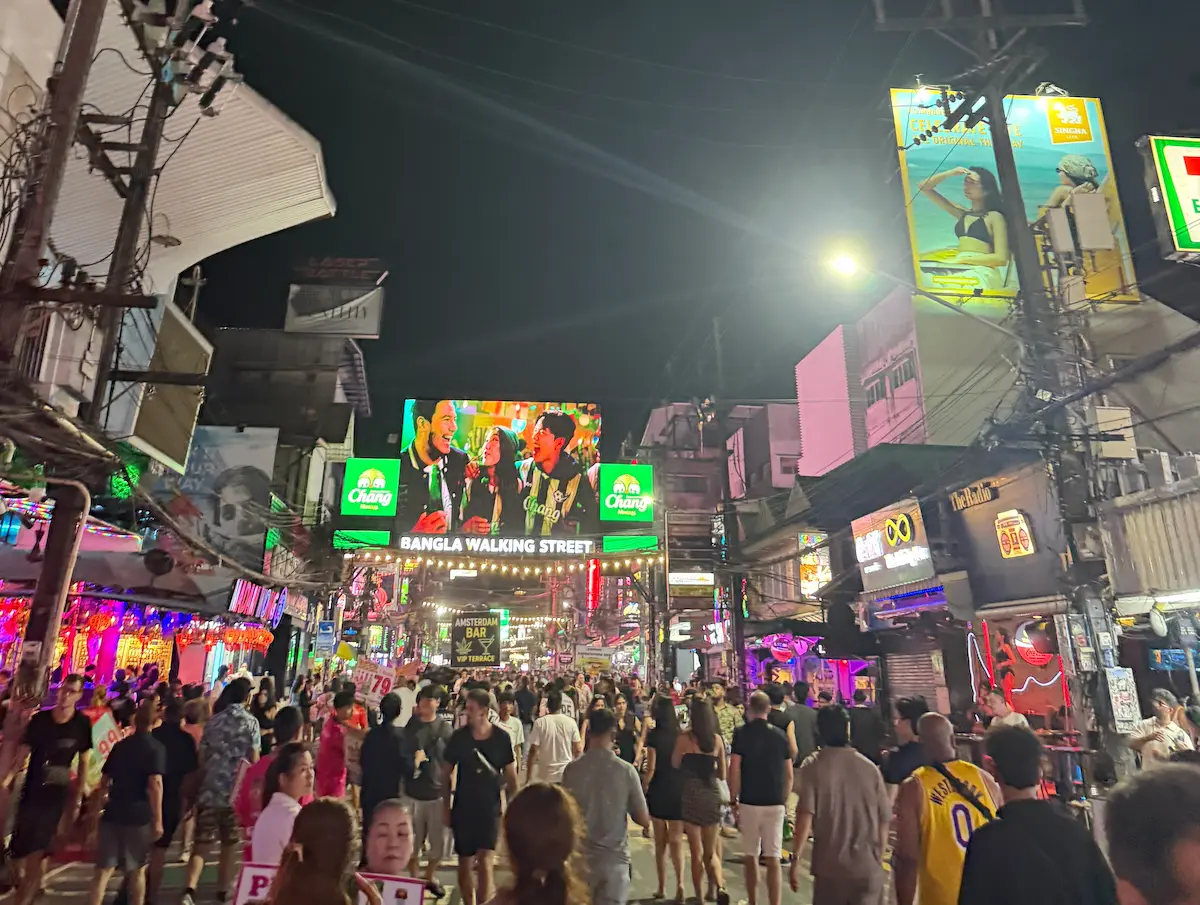
The same streets tighten. The pace changes. Music, lighting, and crowds take over, and the focus moves toward nightlife whether you’re looking for it or not.
That contrast is what defines the place.
If you’re expecting a calm, slow-paced experience, Patong will feel overwhelming. If you’re looking for variety, access, and energy, it becomes one of the easiest places in Phuket to base yourself.
That’s why many people mix Patong with quieter parts of the island, especially when choosing beaches that better match their pace.
Most people don’t get this wrong because they choose the wrong activities.
They get it wrong because they misunderstand the environment they’re moving through.
Once you understand that, everything else—what to do, where to go, what to skip—starts to make a lot more sense.
What to Do in Patong Beach During the Day
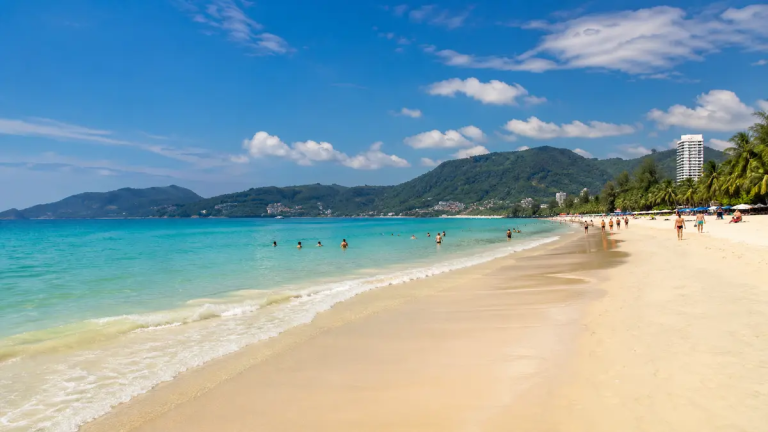
If you’re trying to figure out what to do in Patong Beach during the day, most of it starts in one place—the beach itself.
It’s long, open, and easy to access from almost anywhere in town. You don’t need a plan to use it. You just walk out and you’re there.
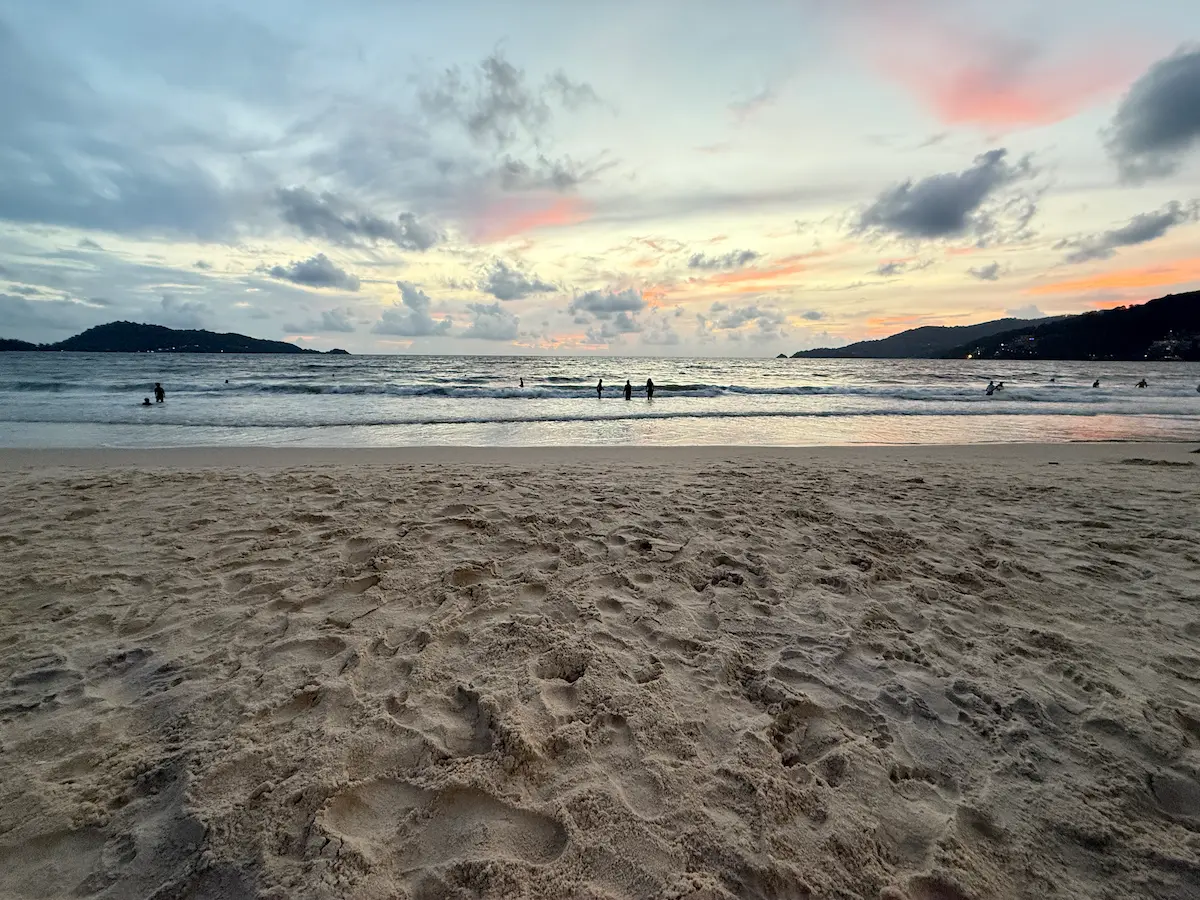
But what you do once you arrive is where people either drift… or actually enjoy it.
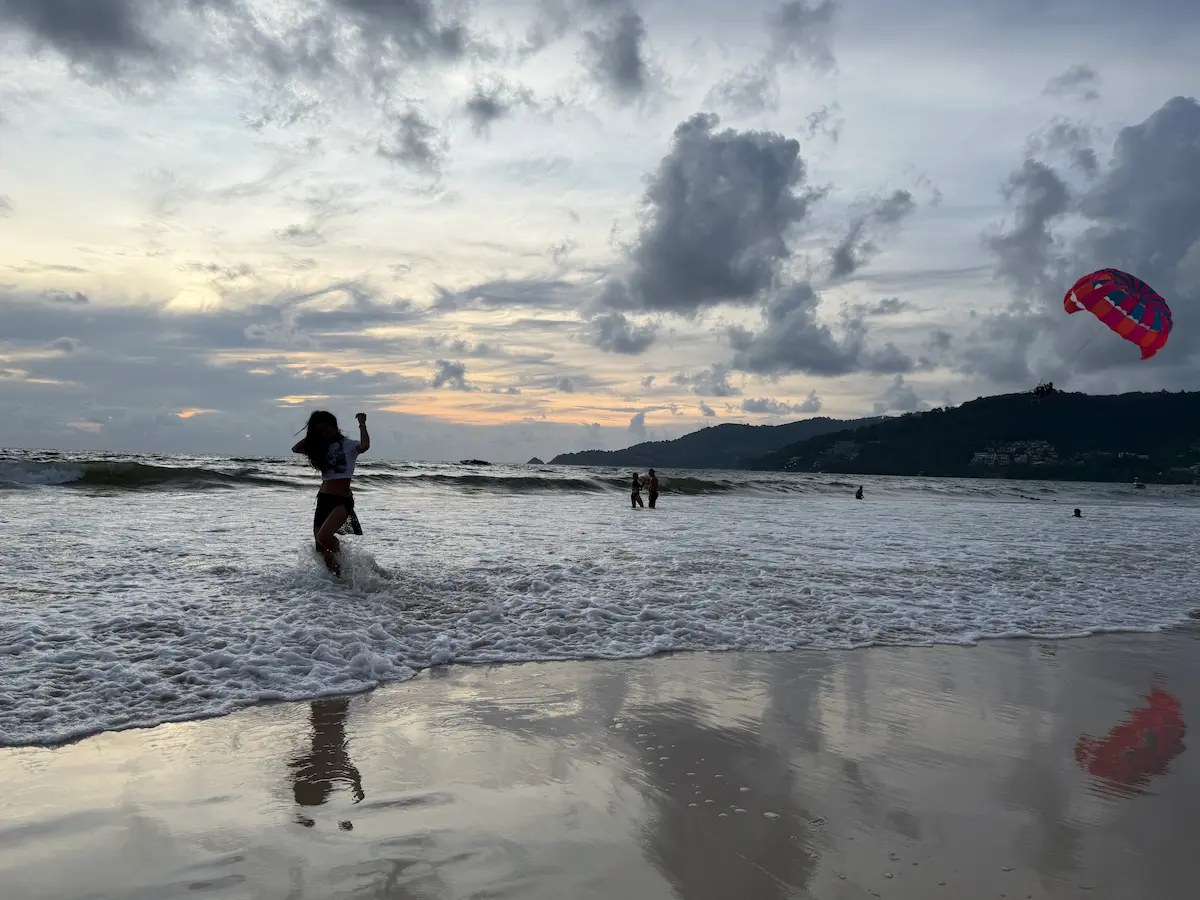
You’ll see jet skis and parasailing running along the shoreline, and they’re exactly what they look like—quick, easy, slightly chaotic fun. You don’t book weeks in advance. You decide on the spot.
If that’s your pace, it works.
If it’s not, the better option is to treat the beach as a base rather than the activity itself.
Walk the length of it. Move between sections. The energy shifts as you go—busier in the centre, quieter toward the edges. You’ll start to notice where you naturally slow down.
Just behind the beach is where a lot of the “in-between” time happens.
Massage shops, small cafes, cold drinks, shaded breaks from the heat. None of it needs planning, and that’s the point. Patong works best when you leave space between decisions.
This is also where people often overcomplicate things.
They try to schedule the day like it’s structured.
It’s not.
Patong during the day is about light movement. Small choices. Adjusting as you go.
If you treat it like a checklist, it becomes tiring fast.
If you treat it like a base you move in and out of, it becomes easy—and that’s when it actually starts to feel like a holiday.
Day Trips from Patong (When You Want More Than the Beach)
At some point, most people realise the beach alone isn’t enough.
Not because it’s bad—but because Phuket is bigger than Patong, and staying in one place too long starts to feel repetitive.
That’s where day trips come in.
If you want a clearer breakdown of which trips are actually worth doing—and which ones aren’t—you can explore them here:
Patong is one of the easiest places on the island to leave from. Tours, boats, and transfers are everywhere, and most trips are designed to be simple—early start, full day out, back by evening.
The most popular option is Phi Phi Islands.
Clear water, limestone cliffs, crowded but still worth seeing once. It’s the kind of place people expect Thailand to look like—and it delivers, even if you’re sharing it with a lot of other boats.
Then there’s James Bond Island in Phang Nga Bay.
Less about beaches, more about the landscape. Vertical rock formations rising out of the water, caves, and calm bays. It feels different to Phi Phi—slower, more about the environment than the activity.
Closer to Patong, you’ve got Coral Island and Racha Island.
These are easier days. Shorter travel time, less effort, more time actually in the water. If you don’t want a full-on day, this is usually the better call.
The mistake people make is trying to do too many of these.
They stack tours back-to-back and end up exhausted.
One or two well-chosen trips is enough.
If you’re staying in Patong for a few days, think of day trips as contrast—not the main event. They’re there to break up the rhythm, not replace it.
That’s where you start choosing properly instead of just booking whatever’s in front of you.
Patong Nightlife (What It’s Actually Like)
If you’re deciding what to do in Patong Beach, nightlife is part of that whether you plan for it or not.
You don’t have to go looking for it.
It finds you.
Bangla Road is the centre of it all. As the sun drops, the street closes to traffic and shifts into something else entirely. Lights come on, music gets louder, and everything compresses into a single strip.
Bars on both sides. Clubs further in. People moving constantly.
It’s not subtle.
And it’s not designed to be.
What catches people off guard isn’t the noise—it’s the pace. Everything happens at once. Promoters, music, lights, movement. If you walk in expecting to “ease into it,” you’ll feel overwhelmed.
The better way to approach it is to treat it like a pass-through, not a commitment.
Walk it first.
See what actually fits your energy.
Some places are open-front bars—easy to sit, have a drink, and watch what’s happening around you. Others are louder, heavier, more club-focused. You’ll know quickly which direction you lean.
And if none of it feels right, that’s fine too.
You don’t need to force it.
Patong nightlife works best when you dip in and out, not when you try to build your whole night around it.
A lot of people make the mistake of thinking this is the experience.
It’s not.
It’s one option in a place that gives you plenty.
Once you understand that, you stop reacting to it—and start choosing how much of it you actually want.
Food, Markets, and Easy Wins
Not everything in Patong needs to be planned.
Some of the better parts of the day come from the gaps in between—when you’re not trying to “do” anything at all.
Food is one of those.
You’ll find everything here. Street food, small local spots, tourist restaurants, and places that sit somewhere in between. It’s not hard to eat well, but it is easy to overpay or end up somewhere forgettable if you just follow the main strip without thinking.
The trick is simple—step slightly away from where everything is concentrated.
You don’t need to go far. One or two streets back is usually enough. Prices drop, menus become more local, and the whole experience feels less transactional.
Night markets are another easy win.
They’re not unique to Patong, but they work. Quick food, variety, movement, and a way to try multiple things without committing to a full meal. It’s casual, flexible, and fits naturally into the way Patong already moves.
This is also where people tend to overthink things again.
They start looking for the “best” place.
But Patong isn’t really built like that.
It’s built for availability.
You’re rarely far from something decent, and most of the time the difference comes down to where you choose to sit, not what you choose to order.
If you keep it simple—move slightly off the main flow, stay flexible, and don’t overcommit—you’ll eat better without needing to research every meal.
What’s Actually Worth Your Time (And What Isn’t)
Most people don’t struggle in Patong because there’s nothing to do.
They struggle because everything is presented like it’s equally worth doing.
It isn’t.
If you try to do everything, you end up experiencing very little of it properly.
The better approach is to decide early what kind of experience you want—and then ignore the rest.
If you’re here for energy, movement, and variety, lean into it.
Stay central. Use the beach during the day. Step into the nightlife without overcommitting to it. Take one solid day trip to break things up. That combination works.
If you’re here for something quieter, Patong probably isn’t where you should be spending most of your time.
And that’s not a criticism—it’s just a mismatch.
You can still use it as a base, but you’ll need to move out of it regularly. Beaches further south or north, slower areas, places where the pace drops.
A lot of frustration comes from trying to turn Patong into something it isn’t.
The same goes for individual activities.
Jet skis, parasailing, bars, markets—they’re all available, but not all of them will feel right to you. Just because something is easy to access doesn’t mean it’s worth your time.
This is where most trips improve or fall apart.
Not based on what you can do—but on what you choose not to do.
Once you make that shift, Patong stops feeling chaotic.
And starts feeling controlled.
Where to Stay in Patong (Quick Direction)
Where you stay in Patong makes a bigger difference than most people expect.
Not because the hotels are drastically different—but because the location changes how the place feels.
If you stay close to Bangla Road and the main beachfront, everything is immediate. You’re within walking distance of nightlife, restaurants, and the busiest part of the beach. It’s convenient, but it comes with noise and constant movement.
Move a little further out, and the experience shifts.
You still have access to everything, but it’s quieter. Easier to step away when you want to. That balance is usually what works best for most people.
The mistake is choosing purely on price without understanding the area.
A cheaper hotel in the wrong spot can cost you more in time, transport, and overall experience.
If you want a clearer breakdown of the best areas and hotel types based on how you travel, you can explore that here:
It’s one of the few decisions that affects your entire trip, so it’s worth getting right.
What to Do in Patong Beach (When You See It Clearly)
By the time people leave Patong, most of them realise the same thing.
It wasn’t about finding more to do.
It was about understanding what actually mattered while they were there.
If you’re trying to decide what to do in Patong Beach, the answer isn’t to pack your days full. It’s to recognise how the place works—and then move through it with a bit more intention.
Beach when it suits. One or two day trips for contrast. Nightlife if it fits your energy, not because you feel like you should.
Everything is available.
That doesn’t mean everything deserves your time.
Once you filter properly, Patong becomes easier. Less reactive. More controlled.
And that’s when it starts to feel like a place you’re experiencing—not just passing through.
If you want to go a step further and avoid the usual mistakes around where to stay, how to move, and how to structure your time, you can access the free Phuket guide here:
It’s simple, practical, and built around the same idea—making better decisions instead of just doing more.
FAQs About What to Do in Patong Beach
Is Patong Beach worth visiting?
Yes—if you understand what it is. Patong is busy, central, and built for convenience. It works well if you want easy access to beaches, nightlife, and day trips, but it’s not designed for quiet or isolation.
How many days should you spend in Patong?
For most people, 2–3 days is enough. That gives you time to enjoy the beach, experience the nightlife once or twice, and take a day trip without it starting to feel repetitive.
Is Patong Beach good for families?
It can be, but it depends on where you stay. Quieter areas away from Bangla Road work better for families, especially if you’re focusing on daytime activities rather than nightlife.
What is the best time to visit Patong Beach?
The best time is typically November to April, when the weather is drier and the sea is calmer. This makes beach time and boat trips more reliable.
Is Patong Beach expensive?
It can be—but it doesn’t have to be. Prices vary widely depending on where you eat, stay, and book activities. Moving slightly away from the main strip usually gives you better value without sacrificing convenience.