Rawai Beach Guide (Phuket)
Introduction
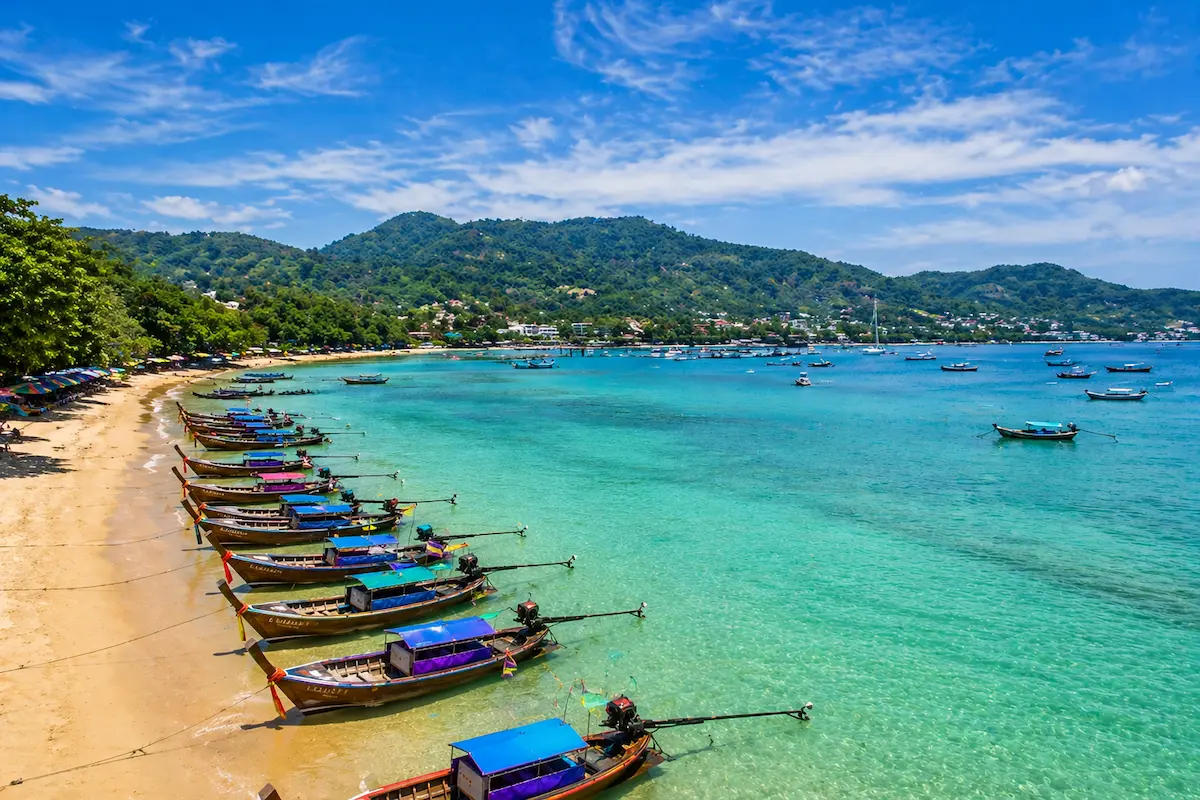
At first glance, Rawai Beach Phuket looks like it should work the same as other beaches on the island. There’s a long stretch of shoreline, boats sitting just offshore, and a steady flow of activity throughout the day.
But once you arrive, it becomes clear that Rawai Beach Phuket is used very differently.
This is where a lot of travellers get it wrong.
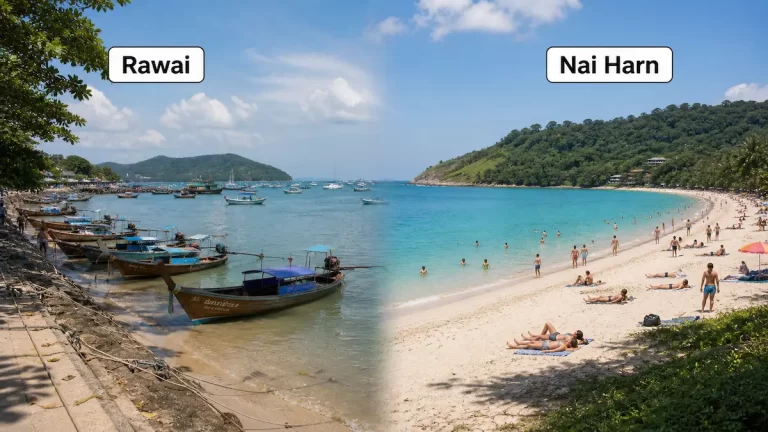
Rawai isn’t built around swimming or typical beach time. You won’t find the same setup of sunbeds, clear swimming zones, or long hours spent in the water. Instead, the shoreline is lined with longtail boats, fishermen, and local activity that gives the area a completely different purpose.
That difference is exactly what defines it.
Rawai Beach Phuket functions more as a working waterfront than a traditional beach destination. Boats come and go throughout the day, many heading out to nearby islands, and the entire area feels more connected to local life than to tourism-driven beach routines.
For some travellers, that’s the appeal.
It’s quieter, less crowded, and offers a glimpse of a different side of Phuket that isn’t built around constant activity or entertainment. The pace is slower, the environment is less structured, and the experience feels more grounded.
But it’s not for everyone.
If you’re expecting to spend your days swimming, relaxing on the sand, and stepping straight into clear water, Rawai Beach Phuket will feel like the wrong choice. It doesn’t offer that type of experience, and trying to treat it like other beaches is where most trips start to feel off.
This is where expectations matter.
If you arrive understanding what Rawai actually offers—and what it doesn’t—it can be a strong base for the right type of trip. If not, it can feel like you’ve chosen the wrong part of the island.
In this guide, we’ll break down Rawai Beach Phuket properly—what it’s actually like, where to stay, what to do, and how it compares to other areas so you can decide if it fits your trip.
Rawai Beach Phuket: Quick Overview
If you’re trying to understand Rawai Beach Phuket quickly, the key point is simple—it’s not a typical swimming beach.
The shoreline is lined with longtail boats, many of which are used for transport to nearby islands rather than leisure on the beach itself. You’ll see fishermen, local vendors, and a steady flow of boats coming and going throughout the day, which gives the area a more functional feel.
This is what defines Rawai.
Instead of being built around sunbathing and swimming, Rawai Beach Phuket is more about movement and access. It’s one of the main departure points for island hopping in the south of Phuket, making it a practical base if you plan to explore smaller nearby islands.
Behind the waterfront, the area becomes more residential.
You’ll find a mix of restaurants, local shops, and long-stay accommodation, but everything is more spread out compared to busier parts of Phuket. It doesn’t have the same density or walkability as places like Patong or Kata, which changes how you move through your day.
The pace here is slower.
There’s less pressure to do things, fewer crowds, and a more relaxed environment overall. For some travellers, that’s exactly what they’re looking for. For others, it can feel like there’s not enough happening.
Rawai Beach Phuket tends to suit:
- Travellers who want a quieter, more local feel
- People planning island trips from the south of Phuket
- Longer stays where routine matters more than variety
- Anyone comfortable using transport rather than walking everywhere
It doesn’t try to compete with Phuket’s main beach areas.
Instead, Rawai Beach Phuket offers something different—less about the beach itself, and more about what sits around it.
What Rawai Beach Phuket Is Actually Like
Rawai Beach Phuket feels different from the moment you arrive.
The first thing you notice isn’t the beach—it’s the boats.
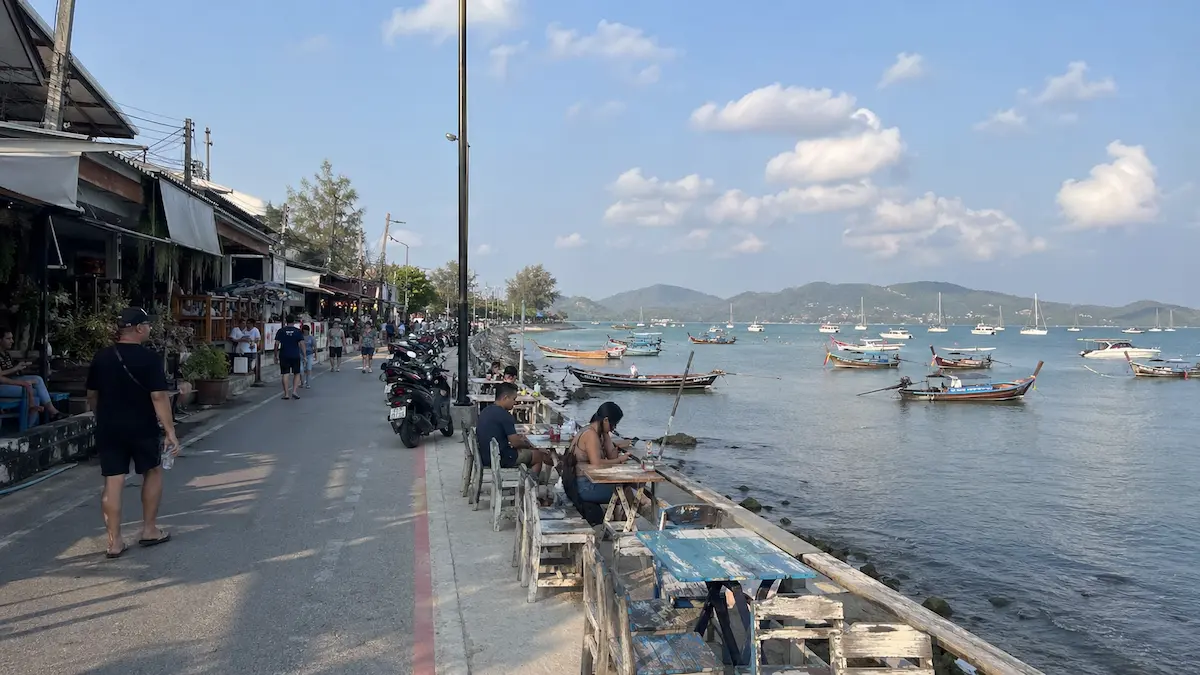
Longtail boats line the shoreline, anchored just off the sand, with engines, ropes, and equipment visible rather than hidden. Throughout the day, they come and go, picking up passengers, delivering supplies, or heading out toward nearby islands. The movement is constant, but it’s not chaotic—it’s functional.
This is not a beach built for swimming.
The water near the shore is shallow, often filled with anchored boats, and not set up for typical beach use. You won’t see large groups of people in the water or long stretches of open swimming space. Instead, most of the activity happens on the edge—people walking, waiting, organising trips, or sitting at nearby restaurants.
That changes how you spend time here.
Instead of settling into one spot on the sand, Rawai Beach Phuket encourages movement. You’re more likely to walk along the waterfront, stop for food, or organise a boat trip than spend hours in the water. The experience is built around what’s happening, not just where you sit.
Behind the beach, the environment shifts again.
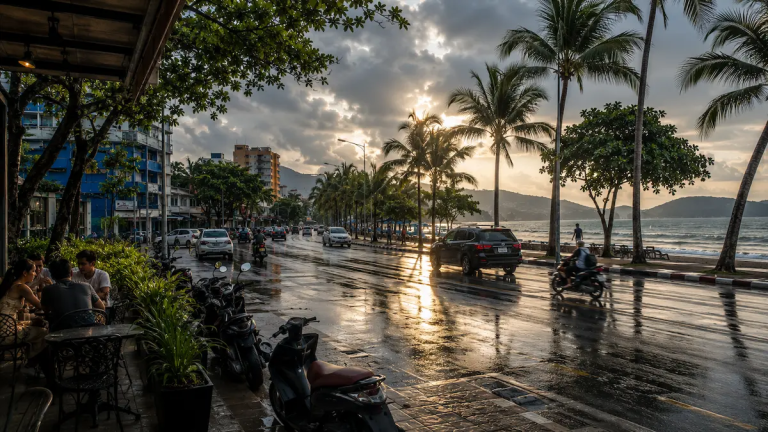
The main road runs parallel to the shoreline, with seafood restaurants, small shops, and local businesses facing the water. This is where much of the activity moves in the evenings, with people coming for fresh seafood and a more relaxed dining atmosphere.
Further inland, it becomes quieter.
Residential streets, villas, and long-stay accommodation dominate, giving Rawai a more lived-in feel compared to Phuket’s more tourist-focused areas. It’s not designed around short-term visitors in the same way, which is why it often appeals more to people staying longer or looking for a slower pace.
This is where the trade-off becomes clear.
Rawai Beach Phuket offers a more local, less structured experience, but it removes some of the simplicity found in more traditional beach areas. You’ll rely more on transport, spend less time in the water, and need to be more deliberate about how you plan your days.
For some travellers, that’s exactly what they want.
For others, it feels like something is missing.
Understanding that difference is what determines whether Rawai works for your trip—or becomes a place you wish you’d chosen differently.
Where to Stay in Rawai Beach Phuket
Where you stay in Rawai Beach Phuket has a bigger impact than in more compact areas.
Because Rawai is spread out and not built around a central tourist zone, your exact location will shape how easy—or how inconvenient—your stay feels day to day.
Most accommodation sits either along the waterfront road or further inland in quieter residential areas.
Staying close to the beachfront gives you direct access to restaurants, the boat departure points, and the main activity along the shoreline. This is the most connected part of Rawai, and it works best if you want to step outside and have immediate options nearby.
However, even here, things are not tightly packed.
You’ll still find yourself walking more than in places like Patong or Kata, and the overall density is lower. That means fewer immediate choices, but also less noise and less pressure to move quickly.
Further inland, the experience changes again.
This is where Rawai starts to feel more residential. Villas, guesthouses, and longer-stay accommodation dominate, often offering more space, privacy, and better value compared to beachfront locations. For travellers staying a week or more, this setup can work very well.
But the trade-off is clear.
You will rely on transport for almost everything—getting to the beach, restaurants, or nearby areas. Without a scooter, taxi, or rideshare, even simple trips can become inconvenient.
This is where expectations matter.
Rawai Beach Phuket already leans toward a slower, less structured experience. Staying too far from the main areas can push it further in that direction, which works for some travellers but feels limiting for others.
If you’re still deciding how Rawai fits into your overall trip, this broader guide on where to stay in Phuket helps put each area into context based on how you want your trip to flow.
In most cases, choosing a location that balances access with comfort—close enough to stay connected, but far enough to enjoy the quieter environment—will give you the best version of Rawai Beach Phuket.
Things to Do Around Rawai Beach Phuket
Rawai Beach Phuket isn’t built around traditional beach activities, but that doesn’t mean there’s nothing to do—it just means the focus is different.
Most of the activity here revolves around movement, food, and nearby access rather than staying in one place.
One of the main reasons people stay in Rawai is for island access.
The beach acts as a departure point for longtail boats heading to smaller nearby islands. These trips are usually simple to organise directly from the shoreline, and they offer a different experience compared to larger, more structured tours. Instead of full-day itineraries, you can arrange shorter, more flexible outings depending on what you want to see.
This is where Rawai Beach Phuket becomes practical.
If exploring nearby islands is part of your plan, being based here makes it easier to access them without travelling across the island first. It’s a more direct, less structured way of experiencing that side of Phuket.
Food is another big part of the experience.
Along the waterfront, you’ll find a line of seafood restaurants where the focus is fresh, simple meals rather than polished dining. The nearby seafood market adds to this, giving you the option to choose what you want and have it prepared locally. Even if you don’t use the market directly, the presence of it shapes the atmosphere of the entire area.
Beyond Rawai itself, the surrounding area adds variety.
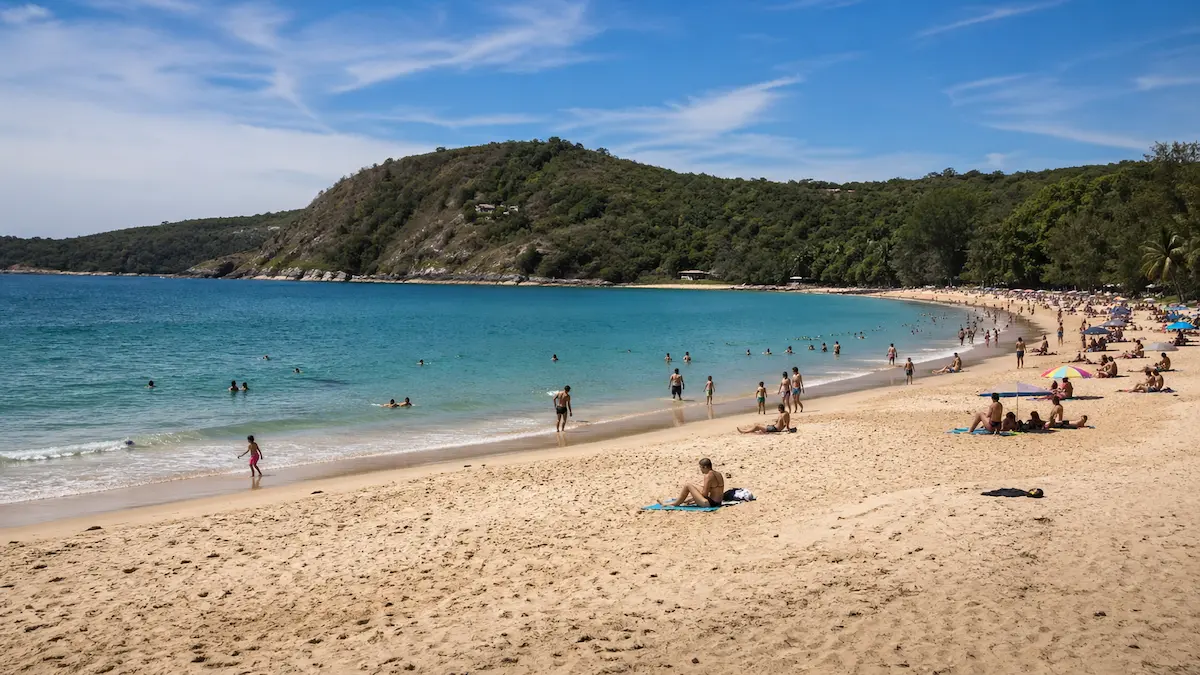
Nai Harn Beach is a short drive away and offers a completely different beach experience—clearer water, better swimming conditions, and a more traditional setup. This is where many people staying in Rawai go when they want proper beach time.
If you’re planning to explore further across the island, this guide to Phuket day trips helps narrow down what’s actually worth doing without filling your schedule with unnecessary stops.
It’s also worth thinking about how Rawai fits into your overall trip structure.
Because the area is quieter and less activity-driven, it works best when combined with a clear plan—knowing when to stay local and when to explore other parts of Phuket.
If you’re still mapping that out, this Phuket itinerary shows how to structure your days so your location supports your plans rather than working against them.
Rawai Beach Phuket doesn’t overwhelm you with options—but it gives you access to a different side of the island if you know how to use it.
Rawai vs Patong vs Kata vs Karon
The easiest way to understand Rawai Beach Phuket is to compare it directly with the areas most people are already considering—Patong, Kata, and Karon.
They all sit within the same part of the island, but they serve completely different purposes.
Rawai Beach Phuket is not designed around the beach itself.
Patong is the opposite. It’s dense, active, and built around convenience. Everything is close—restaurants, nightlife, shopping—and you can move through your day without much planning. It’s the easiest place to stay if you want constant activity, but it also comes with noise and crowds.
Kata sits in the middle.
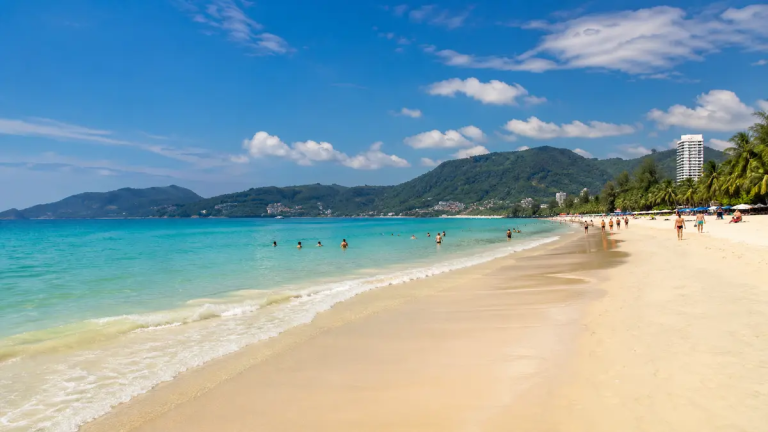
It offers a balance between activity and comfort, with a clean, swimmable beach and enough restaurants and services within walking distance to keep things simple. It’s structured, manageable, and works well for most first-time visitors.
Karon shifts toward space.
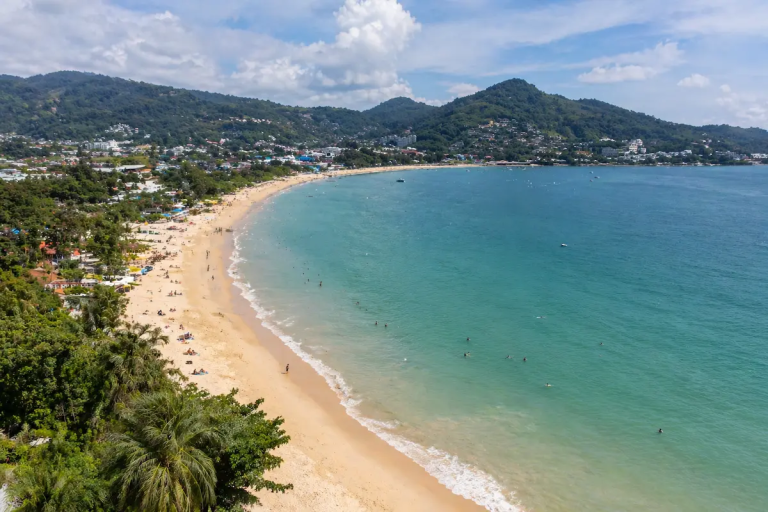
The beach is longer and more open, giving you more room and a slower pace. But it also spreads things out, which means less immediate convenience and more walking or transport.
Rawai Beach Phuket moves in a different direction entirely.
It’s not about convenience, balance, or even beach quality. It’s about access and environment. You’re based near a working waterfront, with boats, local activity, and a slower, less structured pace. You’re not stepping onto a swimming beach—you’re stepping into a functional part of the island.
This is where the decision becomes clear.
If you want energy and everything close together, Patong makes the most sense.
If you want balance and ease, Kata is usually the safest choice.
If you want space and a quieter environment, Karon works well.
If you want something more local, slower, and built around access rather than the beach itself, Rawai Beach Phuket is the better fit.
For a deeper breakdown of how the main tourist areas compare, this guide to Patong vs Kata vs Karon explains how each location works in real conditions.
Rawai Beach Phuket isn’t competing with those areas—it’s offering a completely different way to experience the island.
Pros and Cons of Rawai Beach Phuket
Rawai works very well for the right type of trip—but it’s one of the easiest places in Phuket to get wrong if expectations aren’t clear.
Pros
- Quieter, more local atmosphere
- Direct access to nearby islands via longtail boats
- Strong seafood and local dining scene
- Less crowded than major tourist areas
- Good for longer stays and slower travel
Cons
- Not suitable for swimming or traditional beach time
- More spread out, with limited walkability
- Fewer restaurants and nightlife options compared to Patong or Kata
- Requires transport for most activities
- Can feel too quiet for shorter or first-time trips
Rawai Beach Phuket doesn’t try to deliver the typical Phuket experience.
Instead, it offers a more functional, less tourist-driven environment. That can feel refreshing and authentic—or inconvenient and limiting—depending on what you’re looking for.
Understanding that trade-off is what makes the difference.
Is Rawai Beach Phuket Right for You?
By now, the decision should feel clearer.
If you’re looking for a traditional beach stay—swimming, relaxing on the sand, and having everything within easy walking distance—Rawai Beach Phuket is not the right choice. You’ll spend your time travelling to other beaches, which defeats the purpose of staying here.
But if your priorities are different, Rawai can work very well.
It suits travellers who:
- Prefer a quieter, more local environment
- Plan to explore nearby islands
- Are comfortable using transport
- Value space and routine over constant activity
This is where Rawai Beach Phuket finds its place.
It’s not trying to compete with Phuket’s main beach destinations. It works best as a base for a slower, more flexible style of travel where the focus is on movement, access, and local experience rather than the beach itself.
Once that’s what you’re looking for, the choice becomes straightforward.
Plan the Rest of Your Phuket Trip
Choosing the right area is only part of getting your trip right. How you structure your days, what you prioritise, and how you move around the island often makes just as much difference as the location itself.
If you want a clear, practical plan to follow without second-guessing your decisions, I’ve put together a full Phuket guide that walks through where to stay, what to do, and how to make the most of your time without overcomplicating it.
Frequently Asked Questions
Is Rawai Beach Phuket good for swimming?
Rawai Beach Phuket is not suitable for swimming. The shoreline is used for boats and local activity rather than typical beach use, so most visitors go to nearby beaches like Nai Harn for swimming.
Is Rawai Beach Phuket a good place to stay?
Rawai Beach Phuket is a good place to stay if you want a quieter, more local environment and don’t mind using transport. It works best for longer stays rather than short visits.
What is Rawai Beach Phuket known for?
Rawai Beach Phuket is known for its longtail boats, seafood restaurants, and access to nearby islands rather than traditional beach activities.
How far is Rawai Beach Phuket from Patong?
Rawai Beach Phuket is around 30–40 minutes from Patong by car, depending on traffic. It’s far enough to feel quieter but still accessible when needed.
Is Rawai better than Kata or Karon?
Rawai Beach Phuket is not better or worse—it’s different. Kata and Karon are better for beach use, while Rawai is better for a quieter base and island access.
Are there restaurants near Rawai Beach Phuket?
Yes, Rawai Beach Phuket has a good selection of seafood restaurants along the waterfront, as well as local dining options nearby.
Who should stay in Rawai Beach Phuket?
Rawai Beach Phuket suits travellers who want a slower pace, local atmosphere, and access to island trips rather than a traditional beach-focused stay.