Rawai vs Nai Harn: Which Area Should You Choose in Phuket?
If you’re trying to decide between Rawai vs Nai Harn, you’re already looking in the right part of Phuket.
Both areas sit in the south of the island, close to each other geographically but very different in how they feel day to day. On a map, Rawai and Nai Harn might look almost interchangeable. In reality, choosing between Rawai vs Nai Harn can shape your entire trip—how you move around, what your days look like, and how easy everything feels once you arrive.
This is where many travellers get it wrong.
Phuket isn’t a destination where you can book a hotel based on photos alone and expect everything to fall into place. The area you choose becomes your base, and that decision affects how much time you spend travelling, how you experience the island, and whether your trip feels smooth or disjointed.
That’s exactly why understanding the difference between Rawai vs Nai Harn matters.
Rawai is known for its local feel, long-stay atmosphere, and access to island hopping. Nai Harn, on the other hand, is built around one of Phuket’s best beaches, with a quieter, more polished environment that suits a different kind of trip.
Neither is better in a general sense—but one will suit you better depending on how you travel.
In this Rawai vs Nai Harn guide, we’ll break down the real differences between the two areas, so you can make a clear decision based on your trip style, how long you’re staying, and what you actually want your days in Phuket to look like.
Rawai vs Nai Harn: Quick Comparison
If you’re deciding between Rawai vs Nai Harn and want a quick answer before diving deeper, here’s how they compare at a glance:
Rawai vs Nai Harn — Key Differences
- Overall vibe:
Rawai feels local, lived-in, and more spread out, while Nai Harn is quieter, more contained, and focused around the beach. - Beach quality:
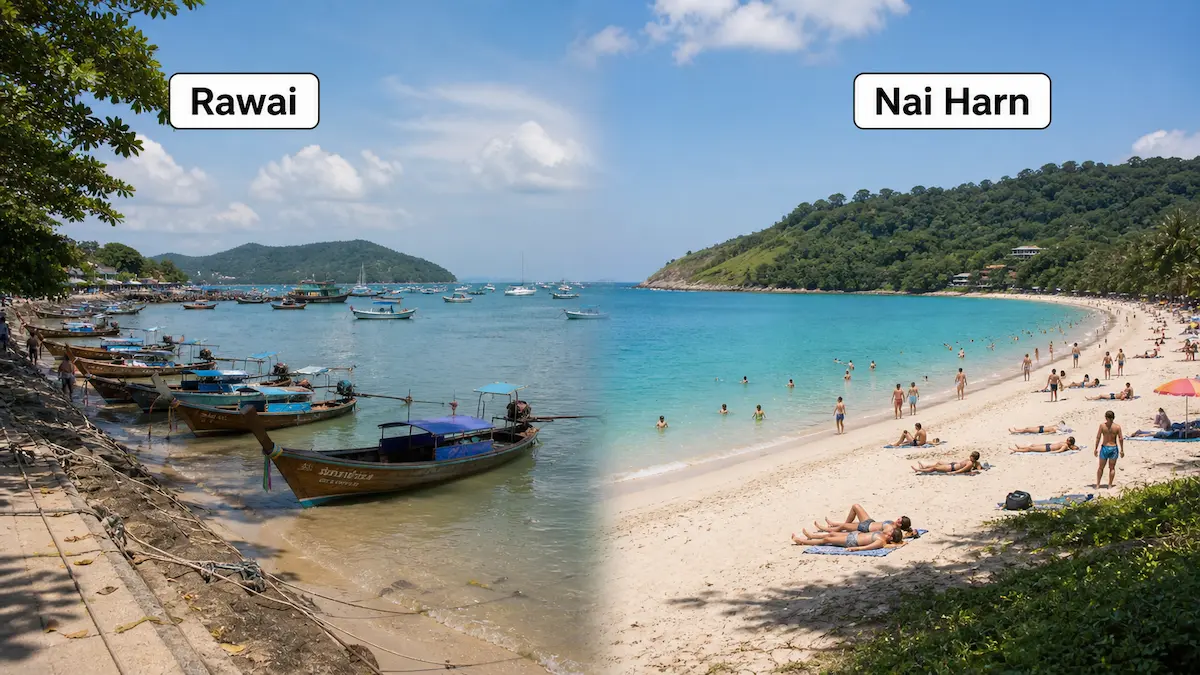
Nai Harn has one of the best swimming beaches in Phuket. Rawai Beach is not designed for swimming—it’s more of a working waterfront with longtail boats and island access. - Things to do:
Rawai is better for island hopping, local exploring, and longer stays. Nai Harn is more about beach days, relaxing, and nearby viewpoints. - Food and dining:
Rawai has a stronger, more varied food scene with local restaurants and seafood options. Nai Harn has fewer choices, but generally higher-end and more curated. - Nightlife:
Both are quiet compared to other parts of Phuket. Rawai has a bit more going on in the evenings, while Nai Harn stays low-key. - Convenience:
Rawai is more spread out and requires transport. Nai Harn is easier to navigate within its immediate area but more limited overall.
Rawai vs Nai Harn: Which One Should You Choose?
If you’re still unsure between Rawai vs Nai Harn, the simplest way to think about it is this:
Choose Rawai if you want a more local experience, plan to stay longer, or want easy access to island trips and everyday living.
Choose Nai Harn if you want a great beach, a quieter environment, and a more relaxed, short-stay holiday feel.
This Rawai vs Nai Harn comparison gives you the quick answer—but the real difference becomes clearer once you look at how each area actually works day to day.
Location & Layout: How Rawai and Nai Harn Fit Into Phuket
When comparing Rawai vs Nai Harn, one of the first things to understand is how close they actually are—and why that doesn’t mean they offer the same experience.
Both areas sit in the far south of Phuket, roughly 10–15 minutes apart by car or scooter depending on traffic. On a map, that makes them look almost interchangeable. But in reality, the layout and structure of each area create very different day-to-day experiences.
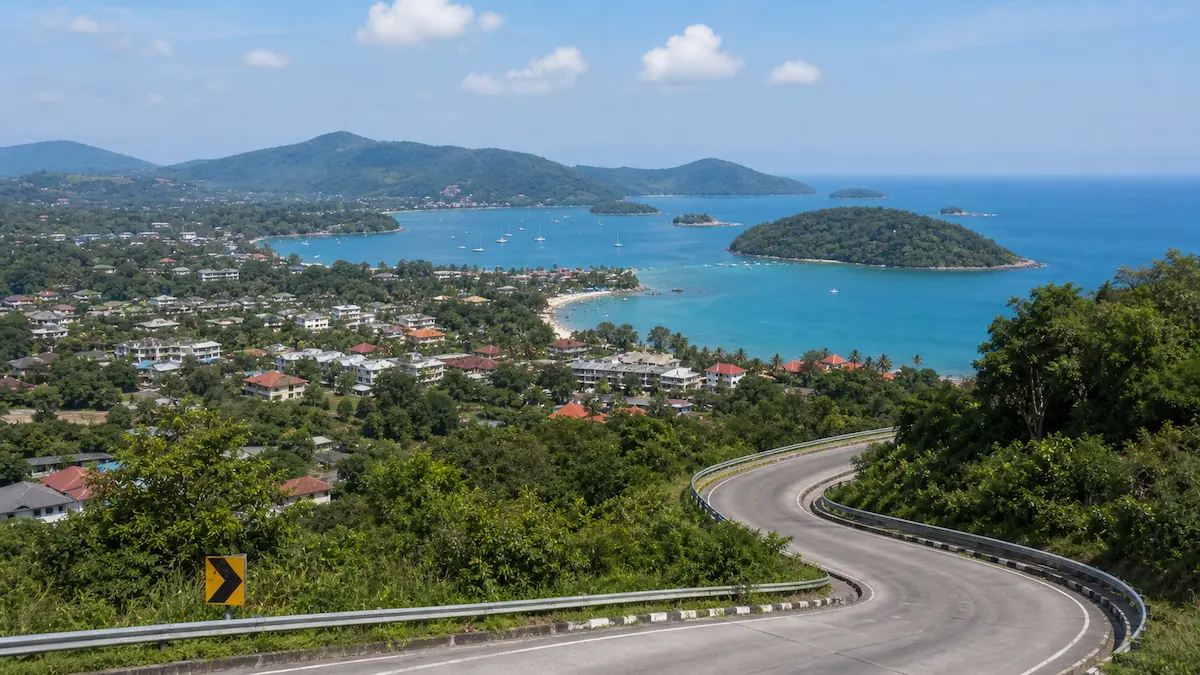
Rawai is more spread out and feels like a working coastal town. It runs along a long stretch of waterfront, with roads branching inland toward residential areas, local restaurants, and smaller beaches. Getting around Rawai usually involves short drives between places rather than walking from one central point.
Nai Harn, on the other hand, is much more contained. The area is built around a single bay, with the beach, nearby hotels, restaurants, and a few key roads all sitting within a relatively compact space. That makes Nai Harn easier to navigate locally, especially if your focus is staying close to the beach.
This difference becomes important once you start thinking about your daily routine.
In Rawai, you’ll likely be moving between locations—heading out for meals, driving to nearby beaches, or organising trips from the pier. In Nai Harn, your time is more centred around one main area, with less need to travel unless you’re exploring further afield.
Both areas are also further from Phuket’s main tourist hubs like Patong, Kata, and Karon. That means longer travel times if you plan to visit those areas regularly. If you’re unsure how that fits into your trip, it helps to understand where to stay in Phuket based on how much you want to move around the island.
Transport plays a role here too. Neither Rawai nor Nai Harn is ideal for purely walking-based travel beyond short distances. Most visitors rely on taxis, ride apps, or scooters to get around—something to keep in mind when comparing Rawai vs Nai Harn for convenience.
The key takeaway is simple:
Rawai vs Nai Harn isn’t about distance—it’s about how each area is structured and how that affects your daily movement.
Once you understand that, it becomes much easier to decide which one fits your trip.
Beach Comparison: Rawai vs Nai Harn
When it comes to Rawai vs Nai Harn, the biggest difference—and the one that matters most for most travellers—is the beach itself.
This is where the two areas separate clearly.
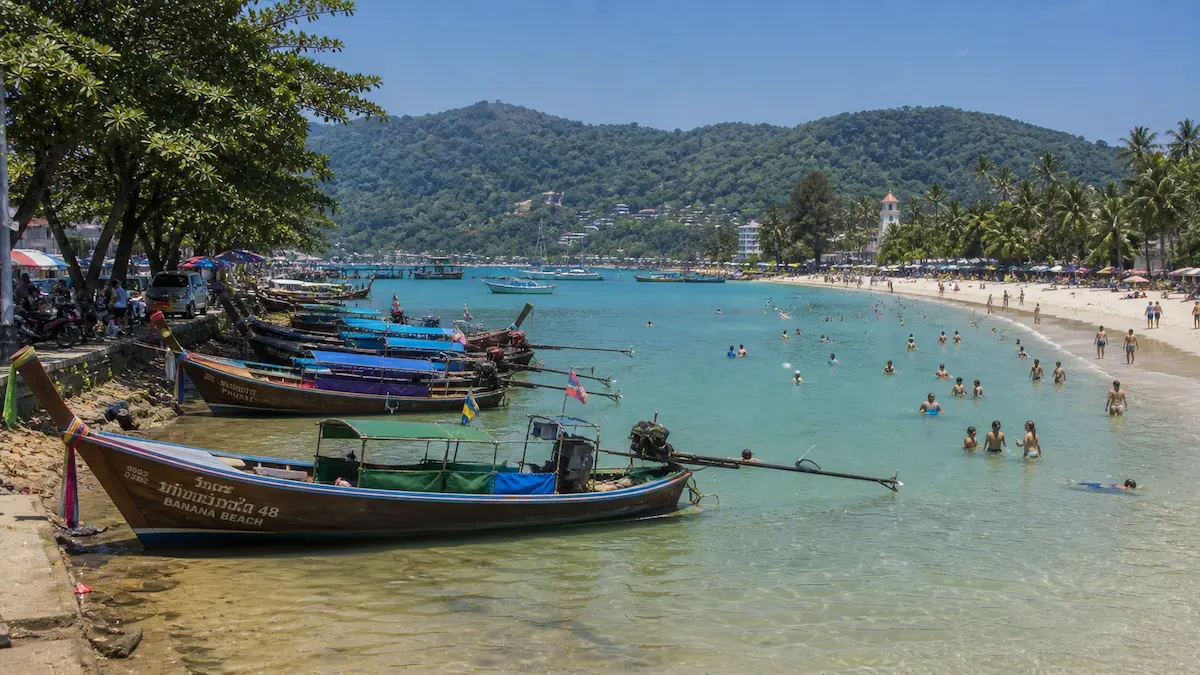
Rawai Beach
Rawai Beach is not a typical Phuket beach.
You won’t find people swimming here, and it’s not designed for sunbathing or spending a full day in the water. Instead, Rawai functions as a working waterfront, lined with longtail boats, piers, and access points for nearby islands.
That doesn’t make it a bad area—it just means the beach serves a different purpose.
Rawai is where many island trips start. Boats head out daily to nearby islands, and the area has a strong connection to local life, seafood markets, and long-stay living. It’s active, practical, and useful—but not built around the classic beach experience most people expect when they think of Phuket.
If your priority is swimming, relaxing on the sand, and spending full days at the beach, Rawai will likely feel like a compromise.
Nai Harn Beach
Nai Harn Beach is almost the opposite.
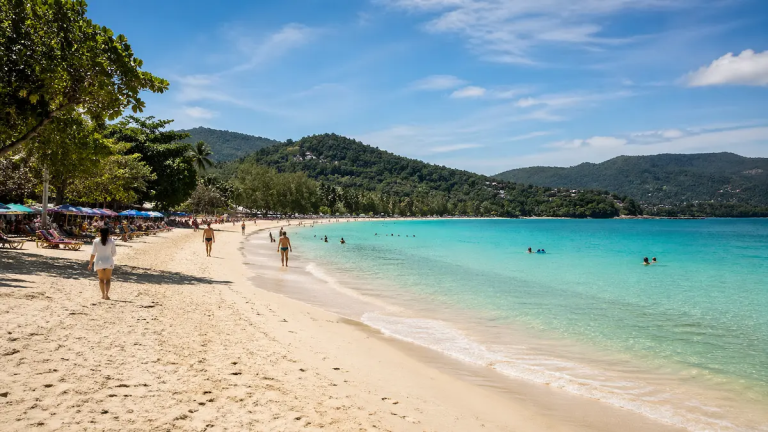
It’s widely considered one of the best beaches in Phuket, with clean sand, clear water, and a setting that feels more natural and less built-up than many other parts of the island.
This is the kind of beach where you can:
- Swim comfortably
- Spend hours relaxing
- Walk the shoreline without crowds
The bay is more protected than many west coast beaches, which helps with swimming conditions during the main season. It’s also surrounded by greenery rather than heavy development, which gives it a more open and scenic feel.
For many travellers comparing Rawai vs Nai Harn, this is the deciding factor.
Rawai vs Nai Harn: Which Beach Is Better?
If your trip is built around the beach itself, the answer is straightforward:
Nai Harn is significantly better for swimming, relaxing, and traditional beach days.
But if your focus is less about the beach and more about location, local atmosphere, and access to island trips:
Rawai still works—it just serves a different role.
If you’re unsure how these compare to other parts of the island, it helps to look at the best beaches in Phuket to see where Nai Harn fits overall and why Rawai stands apart.
The Key Difference
When comparing Rawai vs Nai Harn, this is the simplest way to think about it:
Nai Harn is a destination beach.
Rawai is a functional coastal base.
Once you understand that, the rest of the comparison becomes much clearer.
Atmosphere & Vibe: Rawai vs Nai Harn
When comparing Rawai vs Nai Harn, the difference in atmosphere is just as important as the beach—sometimes more.
Both areas are quieter than places like Patong or Kata, but they offer very different day-to-day experiences once you settle in.
Rawai: Local, Lived-In, and Spread Out
Rawai has a more local, residential feel.
It’s not built around short-term tourism in the same way as other parts of Phuket. Instead, it’s a mix of locals, expats, and longer-stay visitors who use the area as a base rather than just a holiday destination.
You’ll notice this in how the area functions:
- Restaurants are more everyday and varied
- Cafés and small businesses are spread out
- There’s a steady, lived-in rhythm rather than a tourist-focused flow
Rawai feels like a place people stay, not just visit.
That gives it a more authentic and flexible atmosphere, but it also means you’ll rely more on transport and won’t have everything within walking distance.
For travellers comparing Rawai vs Nai Harn, Rawai suits those who:
- Prefer a local environment over a resort-style setting
- Plan to stay longer
- Don’t mind moving around during the day
Nai Harn: Calm, Contained, and Relaxed
Nai Harn feels more focused.
The area is built around the beach, with most hotels, restaurants, and key spots sitting within a relatively compact space. That creates a calmer, more contained environment where everything feels close and easy to manage.
The atmosphere is quieter and more polished than Rawai, but not overly commercial.
You won’t find large crowds or heavy nightlife here. Instead, the pace is slower, with most days centred around the beach and evenings focused on dining rather than going out.
For many travellers comparing Rawai vs Nai Harn, Nai Harn feels more like a traditional holiday base:
- Easy to settle into
- Relaxed without being isolated
- Simple to navigate without constant movement
Rawai vs Nai Harn: Which Atmosphere Suits You?
This is where the decision becomes personal.
Choose Rawai if you want a more local, flexible environment and don’t mind trading convenience for a lived-in feel.
Choose Nai Harn if you want a quieter, more contained area where everything revolves around a great beach and a relaxed pace.
The Key Difference
When it comes to Rawai vs Nai Harn, the atmosphere can be summed up simply:
Rawai feels like living in Phuket.
Nai Harn feels like staying in Phuket.
That difference alone is often enough to decide.
Things to Do: Rawai vs Nai Harn
When comparing Rawai vs Nai Harn, the types of activities available in each area reflect their overall vibe.
You’re not choosing between more or less to do—you’re choosing between different kinds of days.
Things to Do in Rawai
Rawai is more active than it first appears—but not in a traditional tourist way.
The area works best as a base for exploring rather than somewhere where everything happens in one place.
One of the biggest advantages of Rawai is its access to island trips. Boats leave from nearby piers daily, making it one of the easiest places in Phuket to organise trips to smaller surrounding islands. If you’re planning to include these kinds of experiences, it helps to explore the full range of Phuket day trips so you can choose what actually fits your itinerary.
Beyond that, Rawai is well suited to:
- Exploring different parts of the south
- Visiting quieter beaches nearby
- Spending time around local markets and seafood restaurants
- Using the area as a base for a longer, more flexible stay
It’s less about ticking off attractions and more about having options.
For travellers comparing Rawai vs Nai Harn, Rawai offers more variety—but requires more movement to access it.
Things to Do in Nai Harn
Nai Harn is more focused.
The main activity here is the beach itself, and for many people, that’s exactly the point. You can spend full days swimming, relaxing, and enjoying one of the best coastal settings on the island without needing to go far.
That doesn’t mean there’s nothing else to do—it just means everything is more localised.
From Nai Harn, you can:
- Visit nearby viewpoints
- Take short trips to surrounding beaches
- Enjoy relaxed walks and low-key exploring
But compared to Rawai, Nai Harn isn’t a hub for organising tours or moving around the island.
For travellers deciding between Rawai vs Nai Harn, Nai Harn offers less variety—but a more effortless day-to-day experience.
Rawai vs Nai Harn: Activity Style
This is the simplest way to think about it:
Rawai suits travellers who want to explore, move around, and use their base as a starting point.
Nai Harn suits travellers who want to stay close to one great beach and keep their days simple.
The Key Difference
When comparing Rawai vs Nai Harn for things to do:
Rawai is about options.
Nai Harn is about simplicity.
Neither is better—it just depends on how you want your days to feel.
Food, Restaurants & Nightlife: Rawai vs Nai Harn
When comparing Rawai vs Nai Harn, the food scene and evening atmosphere are noticeably different—even though both areas are relatively quiet compared to the rest of Phuket.
Food & Restaurants in Rawai
Rawai has one of the stronger everyday food scenes in the south of Phuket.
Because it’s more residential and expat-heavy, you’ll find a wide mix of:
- Local Thai restaurants
- Seafood spots along the waterfront
- Casual cafés and international options
Dining here feels more varied and less curated. You’re not limited to a small cluster of places—you have options spread across the area, which suits longer stays or travellers who like trying different spots.
Rawai is also known for its seafood, particularly around the waterfront where you can find fresh options at reasonable prices.
For travellers comparing Rawai vs Nai Harn, Rawai offers more choice and more flexibility, especially if food is a big part of your trip.
Food & Restaurants in Nai Harn
Nai Harn has fewer options, but the quality is generally high.
Most restaurants are located within a relatively small area, often close to the beach or nearby hotels. The focus tends to be on:
- Well-presented dining
- Smaller, curated menus
- A more polished overall experience
You won’t find the same level of variety as Rawai, but you also won’t need to search far for a good meal.
For shorter stays, this works well. For longer stays, some travellers may find the options a bit limited.
Nightlife in Rawai vs Nai Harn
Neither Rawai nor Nai Harn is known for nightlife.
Evenings in both areas are generally low-key, with most activity centred around restaurants rather than bars or clubs.
That said:
- Rawai has slightly more going on, with a handful of casual bars and places that stay open later
- Nai Harn is quieter, with evenings typically ending after dinner
If nightlife is a priority, neither area is the right choice—you’d be better off looking at areas like Patong.
Rawai vs Nai Harn: Food & Evenings
Choose Rawai if you want more variety, local dining, and a bit more flexibility in the evenings.
Choose Nai Harn if you prefer fewer but more refined options and a quieter, more relaxed night-time atmosphere.
The Key Difference
When comparing Rawai vs Nai Harn for food and nightlife:
Rawai offers variety and local flavour.
Nai Harn offers simplicity and consistency.
Who Should Stay Where: Rawai vs Nai Harn
By this point, the differences between Rawai vs Nai Harn should be clear—but the easiest way to decide is to match each area to your travel style.
This isn’t about which area is “better.”
It’s about which one fits how you want your trip to feel.
Choose Rawai if…
Rawai suits travellers who want flexibility, variety, and a more local experience.
You should choose Rawai if you:
- Are staying longer (a week or more)
- Prefer a local, lived-in environment over a tourist-focused one
- Plan to explore different parts of Phuket rather than stay in one place
- Want easy access to island trips and boat departures
- Enjoy having a wide range of food options and everyday convenience
Rawai works best as a base rather than a destination.
It gives you room to move, but you’ll need to be comfortable organising transport and structuring your days.
Choose Nai Harn if…
Nai Harn suits travellers who want simplicity, comfort, and a strong beach-focused experience.
You should choose Nai Harn if you:
- Are visiting for a shorter stay (3–5 days)
- Want to be close to one of the best beaches in Phuket
- Prefer a quieter, more contained area
- Like the idea of walking to most places rather than travelling around
- Want a relaxed holiday without needing to plan too much each day
Nai Harn works best as a destination rather than a base.
Everything is easier, but you’ll have fewer options overall.
Rawai vs Nai Harn: The Simple Decision
If you’re still deciding between Rawai vs Nai Harn, this is the clearest way to think about it:
Choose Rawai if your trip is about exploring Phuket.
Choose Nai Harn if your trip is about enjoying one great location.
The Key Difference
When it comes to Rawai vs Nai Harn:
Rawai gives you flexibility.
Nai Harn gives you simplicity.
Pros & Cons: Rawai vs Nai Harn
If you’re comparing Rawai vs Nai Harn and just want a quick breakdown, here are the main advantages and trade-offs of each area.
Rawai — Pros
- Wide range of restaurants and local dining options
- Strong base for island trips and exploring southern Phuket
- More local, lived-in atmosphere
- Better suited to longer stays
- More variety in day-to-day activities
Rawai — Cons
- No real swimming beach
- More spread out, requires transport
- Less immediate “holiday feel”
- Not ideal if you want everything within walking distance
Nai Harn — Pros
- One of the best beaches in Phuket
- Clean, swimmable water and scenic setting
- More contained and easy to navigate
- Quiet, relaxed atmosphere
- Ideal for short, beach-focused stays
Nai Harn — Cons
- Fewer restaurant and activity options
- Limited nightlife
- Less suited to longer stays
- Not a central base for exploring the island
Final Verdict: Rawai vs Nai Harn
So, which one should you choose?
When comparing Rawai vs Nai Harn, there isn’t a universal winner—but there is a clear answer depending on how you travel.
Choose Rawai if you want a flexible base, a more local feel, and the ability to explore different parts of Phuket.
Choose Nai Harn if you want a great beach, a quieter environment, and a simple, relaxed holiday without needing to move around too much.
If your trip is built around the beach, Nai Harn is the stronger choice.
If your trip is built around exploring, variety, and longer stays, Rawai makes more sense.
Still Not Sure? Plan It Properly
If you’re still deciding between Rawai vs Nai Harn—or trying to work out how it fits into your overall trip—the easiest way to get clarity is to look at the full structure of your plan.
The Phuket travel planning guide breaks down how to choose your area, structure your days, and avoid the common mistakes that make trips feel rushed or disjointed.
Start with the Phuket travel planning guide
Optional Step: Simplify the Whole Process
If you don’t want to piece everything together yourself, you can also use the free Phuket guide to see exactly how to structure your trip based on your travel style, trip length, and preferred areas.
👉 Get the free Phuket guide here
FAQ: Rawai vs Nai Harn
1. Is Rawai or Nai Harn better to stay in Phuket?
Nai Harn is better for a beach-focused holiday with a quieter, more relaxed atmosphere. Rawai is better for longer stays, local experiences, and exploring different parts of southern Phuket.
2. Which has the better beach, Rawai or Nai Harn?
Nai Harn has a significantly better beach for swimming and relaxing. Rawai Beach is not designed for swimming and is mainly used for boats and island trips.
3. Is Rawai or Nai Harn better for first-time visitors?
For most first-time visitors, Nai Harn is the easier choice. It offers a simple layout, a great beach, and a relaxed environment without needing to travel much.
4. Is Rawai good for tourists?
Yes, Rawai is good for tourists who prefer a more local and less crowded area. It’s especially popular with longer-stay visitors and those who want to explore the south of Phuket.
5. Is Nai Harn too quiet?
Nai Harn is quiet compared to other parts of Phuket, but not empty. It’s ideal for travellers who want a calm, beach-focused stay without nightlife or crowds.
6. Do you need a car or scooter in Rawai or Nai Harn?
In Rawai, transport is almost essential because the area is spread out. In Nai Harn, you can manage more easily within the local area, but transport is still useful for exploring further.
7. Is Rawai or Nai Harn better for nightlife?
Neither area is known for nightlife. Rawai has slightly more evening activity with casual bars and restaurants, while Nai Harn is quieter and more focused on dining.
8. Which is better for long stays, Rawai or Nai Harn?
Rawai is generally better for long stays due to its variety of restaurants, local feel, and flexibility. Nai Harn is better suited to shorter, relaxed holidays.
9. How far is Rawai from Nai Harn?
Rawai and Nai Harn are about 10–15 minutes apart by car or scooter, depending on traffic. Despite being close, they offer very different experiences.
10. Is Rawai vs Nai Harn a big difference?
Yes, even though they are close geographically, the difference between Rawai vs Nai Harn is significant in terms of beach quality, atmosphere, and how you experience your trip.