Phuket Markets Guide: Where to Shop, Eat, and Explore Across the Island
Visiting Phuket markets is one of the easiest ways to experience a different side of the island beyond beaches, resorts, and day tours. While Phuket is famous for places like Patong Beach and the nearby islands, its markets often give travellers a more grounded look at everyday life, local food, street culture, and the atmosphere that appears after the heat of the day begins to fade.
Some Phuket markets are focused heavily on food, with rows of grilled seafood, Thai snacks, fruit smoothies, and small local dishes cooked fresh in front of you. Others lean more toward shopping, with clothing stalls, souvenirs, handmade products, music, and busy walkways packed with both tourists and locals. A few markets blend everything together into a full evening experience where people come not only to buy things, but simply to walk around, eat, and spend time together.
One of the interesting things about Phuket markets is how different they can feel from one another. A market in Phuket Old Town has a completely different atmosphere compared to somewhere like Patong or a large weekend market on the outskirts of town. Some feel organised and tourist-friendly, while others are louder, hotter, and more chaotic in a way that feels far more local and authentic.
For first-time visitors, markets can also become one of the easiest ways to try Thai food without committing to a full restaurant meal. Instead of ordering one large dish, you can slowly move through the stalls trying smaller foods, desserts, drinks, and grilled snacks while exploring different parts of the market at your own pace.
This guide covers some of the best Phuket markets for food, shopping, local atmosphere, and evening exploration across the island. Whether you are looking for famous night markets, local food spots, or a more relaxed walking street experience, Phuket has a market that will probably fit your travel style.
If you are still planning the rest of your trip, it may also help to read our First-Time Phuket Guide and Phuket Old Town Guide before deciding which Phuket markets you want to visit first.
What Makes Phuket Markets Different?
Part of what makes Phuket markets so popular is that they are usually about far more than shopping alone. In many places around the island, the market itself becomes the evening activity. People arrive to walk slowly through the stalls, eat dinner, listen to music, meet friends, and enjoy the atmosphere long after the daytime beach crowds begin to disappear.
Unlike large indoor shopping centres, most Phuket markets feel open, busy, and constantly moving. Food smoke drifts through the walkways, scooters pass nearby outside the entrances, vendors call out to customers, and tables quickly fill with both tourists and locals eating together. Even markets aimed partly at visitors still tend to feel more casual and social than heavily commercial.
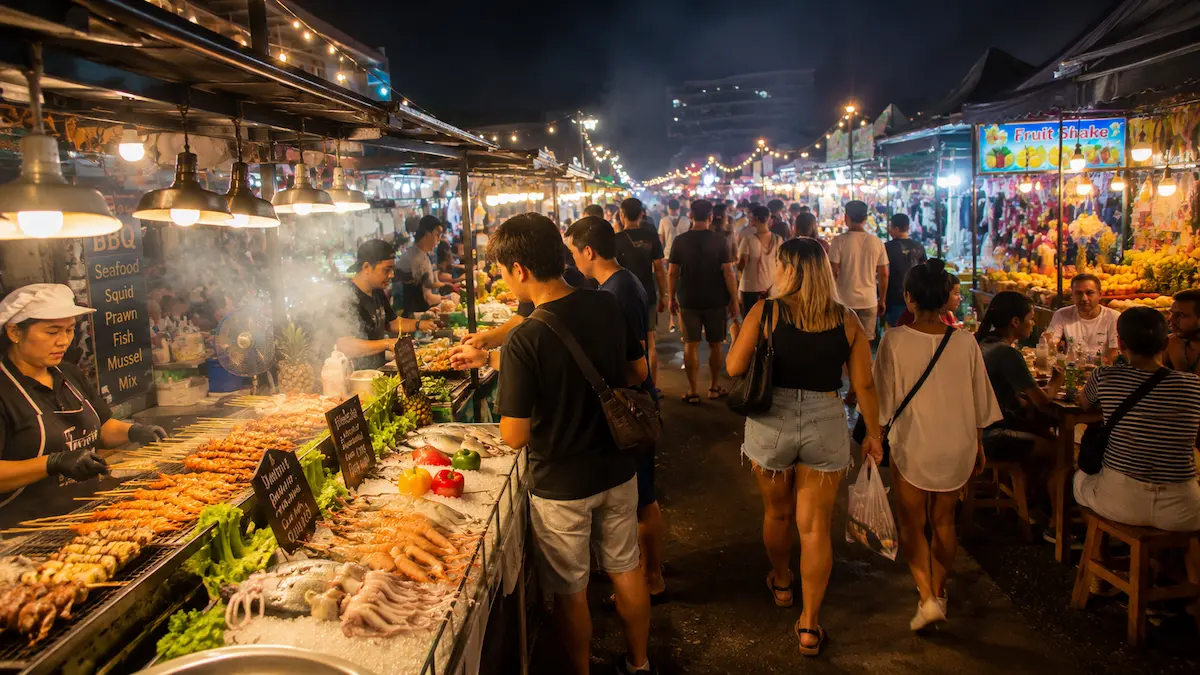
Another thing that separates Phuket markets from many western-style markets is how strongly food dominates the experience. In some markets, the food section is easily the biggest attraction. You might arrive planning to buy souvenirs and end up spending most of your time eating grilled seafood, trying fresh fruit shakes, or standing beside a small stall watching someone cook pad Thai over intense heat.
Many Phuket markets also change personality depending on the day and time. Some are only active on weekends, while others become busiest after sunset when temperatures cool down. A market that feels fairly relaxed at 5 PM can become packed by 7 PM, especially during high season or holidays.
There is also a noticeable difference between markets built mainly for tourists and those still heavily used by locals. Tourist-focused Phuket markets usually have more souvenirs, clothing stalls, cocktails, and organised seating areas, while local markets often focus more on fresh produce, seafood, meats, snacks, and practical everyday shopping.
For travellers, that mix is part of what makes exploring Phuket markets interesting. You are not just walking through a shopping area. You are seeing different layers of Phuket life all operating together at once — tourism, local families, street food culture, nightlife, and everyday routines blending into the same space.
If you want a broader understanding of local food culture after visiting the markets, our upcoming Thai Food in Phuket Guide will cover many of the dishes and flavours you are likely to encounter while exploring Phuket markets. Travellers visiting temples or more local neighbourhood markets should also read Thailand Etiquette for Tourists once it is published, especially for practical cultural tips and respectful behaviour guidelines.
Best Phuket Markets for First-Time Visitors
If you are visiting Phuket for the first time, some markets are much easier to navigate and enjoy than others. A few are heavily designed around tourists and evening entertainment, while others feel more local, crowded, or focused on practical shopping rather than atmosphere. The best Phuket markets for first-time visitors usually combine food, walking space, shopping, and a relaxed environment that is easy to explore even if you have never visited Thailand before.
The good news is that Phuket has several markets that work extremely well for travellers looking for a casual evening activity without needing much planning beforehand.
Chillva Market Phuket
Chillva Market is one of the most modern and youth-focused Phuket markets on the island. Built around colourful container-style stalls and open seating areas, it feels slightly trendier and more relaxed than some of the older traditional markets around Phuket.
The atmosphere here is usually casual and social rather than intense or chaotic. You will find a mix of Thai street food, snacks, desserts, clothing stalls, small bars, music, and local-style seating spread throughout the market. It tends to attract a younger crowd including Thai students, local groups, and tourists looking for a more relaxed night market experience.
Food is still the main attraction at Chillva Market. One of the easiest ways to enjoy it is simply to walk slowly through the rows of stalls and pick up small dishes as you go. Grilled meats, seafood, fried snacks, smoothies, and desserts are all common, and prices are generally reasonable compared to tourist-heavy restaurant areas.
Unlike some Phuket markets that can feel overwhelming for first-time visitors, Chillva is relatively easy to explore because of its layout and atmosphere. The market is spread out enough that it rarely feels too cramped, even during busy evenings.
For travellers staying in Patong, the market usually requires a short taxi, Grab, or tuk tuk ride depending on traffic and time of day. If you are still planning where to stay on the island, our Where to Stay in Phuket guide explains which areas work best for nightlife, food, beaches, and local exploration.
Naka Weekend Market
Naka Weekend Market is one of the largest and most famous Phuket markets, especially for visitors looking for a classic busy night market atmosphere. It is often one of the first markets tourists hear about when researching Phuket, and once you arrive it becomes obvious why.
The market is large, loud, crowded, and packed with almost everything imaginable. You will find rows of souvenir stalls, clothing, bags, shoes, electronics, handmade products, street food, seafood, fruit stalls, desserts, cocktails, and countless small vendors squeezed together under covered sections and outdoor walkways.
Compared to Chillva Market, Naka feels far more chaotic and intense, especially later in the evening. That is part of the experience. Some visitors love the energy while others find it slightly overwhelming after an hour or two.
Food again plays a huge role here. Entire sections of the market are dedicated to cooking stalls and open-air seating areas where people stop for dinner while exploring. Seafood, grilled meats, fresh fruit, Thai desserts, smoothies, and fried snacks are everywhere, with smoke and food aromas constantly drifting through the market.
Naka Weekend Market is also one of the better Phuket markets for souvenir shopping if you want to bring home gifts, clothing, or smaller travel items. Bargaining is common in some sections, although usually in a fairly relaxed way.
Because the market becomes extremely busy at peak times, arriving slightly earlier in the evening can make the experience more comfortable. Rain can also affect movement through some outdoor sections during wet season months.
If you are still organising the practical side of your trip, our Phuket Travel Planning Guide and Getting Around Phuket articles can help you understand transport options and how long it realistically takes to move between different parts of the island.
Phuket Old Town Sunday Walking Street
The Sunday Walking Street Market in Phuket Old Town feels very different from many other Phuket markets because the setting itself becomes part of the attraction. Instead of being built around a large open market area, the stalls stretch through the historic streets of Phuket Old Town surrounded by colourful Sino-Portuguese buildings, cafés, old shopfronts, and narrow side streets.
For many travellers, this is one of the most visually interesting markets in Phuket.
The atmosphere is usually more relaxed and cultural compared to some of the larger night markets. While there is still plenty of food and shopping, many people come simply to walk through the streets, take photos, listen to live music, and enjoy the environment itself.
Food stalls are spread throughout the walking street selling everything from grilled seafood and local desserts to Thai snacks and fresh drinks. Smaller handmade products, artwork, clothing, and souvenir stalls are also common, but the overall experience feels less aggressive and more focused on atmosphere.
Because Phuket Old Town already has cafés, restaurants, museums, and historic streets nearby, many visitors combine the market with a broader evening exploring the area. This makes it one of the easiest Phuket markets to turn into a half-day or full evening experience rather than just a quick stop.
The market can become extremely crowded later at night, especially during high season, but the atmosphere usually stays fairly relaxed despite the crowds.
If you plan to visit this market, it is worth reading the full Phuket Old Town Guide beforehand so you can explore more of the surrounding area instead of only seeing the walking street itself.
Best Phuket Markets for Food
For many travellers, the food becomes the real reason to visit Phuket markets. Even people who arrive planning to do some shopping often end up spending most of their time moving between food stalls, trying different dishes, and sitting at small shared tables watching the atmosphere around them.
One of the advantages of eating at Phuket markets is variety. Instead of committing to a full restaurant meal, you can try smaller portions from multiple stalls throughout the evening. This makes markets one of the easiest places to experience different Thai flavours in a more casual and affordable way.
Seafood is especially common across many Phuket markets. Grilled prawns, squid, shellfish, fish, and skewers cooked over open flames appear almost everywhere, particularly in larger night markets. Southern Thai flavours also show up regularly, often with stronger spice levels and heavier seafood influence compared to some central Thai dishes tourists may already recognise.
Alongside seafood, you will usually find:
- grilled meats
- fried chicken
- pad Thai
- fried rice
- Thai pancakes
- satay skewers
- mango sticky rice
- fruit smoothies
- coconut desserts
- fresh tropical fruit
One of the easiest mistakes first-time visitors make is trying to plan exactly what they want to eat before arriving. Phuket markets work better when you move slowly and stay flexible. Some of the best food experiences happen when you simply stop at busy stalls that smell good or seem popular with local customers.
Busy stalls are often a good sign. In most Phuket markets, high turnover means food is being cooked constantly rather than sitting for long periods. While basic common sense still matters, food hygiene at popular stalls is generally better than many first-time travellers expect.
Timing also changes the experience significantly. Arriving too early can mean some food vendors are still setting up, while arriving at peak time often means heavier crowds and difficulty finding seating. For many Phuket markets, the best balance is usually early evening before the busiest rush begins.
Cash is still useful at many markets, especially smaller stalls, although mobile payment options are becoming more common with younger vendors and larger tourist-focused markets.
Travellers wanting a deeper understanding of local dishes, regional flavours, and how Thai food culture works in Phuket should also read our upcoming Thai Food in Phuket Guide once published. If you are trying to balance your food budget alongside tours and accommodation, our Phuket Travel Costs guide may also help you plan realistic daily spending across the island.
Best Local Markets in Phuket
While some Phuket markets are built heavily around tourism and evening entertainment, others still function primarily as part of everyday local life. These markets often feel less polished and less focused on creating a tourist experience, but they can also provide a more realistic look at how many people on the island actually shop, eat, and move through their daily routines.
Local Phuket markets are usually busiest earlier in the day, especially in the mornings when fresh produce, seafood, meat, spices, and prepared foods are being sold to local residents, restaurant owners, and workers. Compared to the larger night markets, these spaces often feel faster, louder, and more practical rather than slow and social.
For travellers, that difference can actually make them interesting.
Instead of souvenir stalls and cocktail stands, you are more likely to see seafood packed in ice, vegetables arriving in bulk, local snacks being cooked quickly for takeaway, and small food counters serving simple meals to people stopping before work. The atmosphere feels less curated and far more connected to ordinary Phuket life.
Banzaan Market
Banzaan Market is one of the easier local-style Phuket markets for tourists to visit because of its location near Patong. The lower level operates more like a fresh market selling seafood, fruit, vegetables, meats, and local ingredients, while upstairs food areas and nearby stalls create a more visitor-friendly environment.
The seafood section is usually the main attraction for tourists. Visitors can walk through rows of fresh seafood before choosing restaurants nearby to cook selected items. Even if you do not buy anything, the market still provides an interesting contrast to the beach-focused atmosphere most travellers associate with Patong.
Because of its location, Banzaan sits somewhere between local market and tourist market rather than fitting completely into either category.
Travellers staying nearby may also want to read What to Do in Patong Beach and Where to Stay in Patong for a better understanding of how markets, nightlife, beaches, and local food areas connect together around Patong.
Smaller Fresh Markets Around Phuket
Outside the better-known tourist areas, smaller fresh markets exist all across Phuket. Many visitors never notice them because they are often located beside ordinary roads, tucked into neighbourhood areas, or active mainly in the mornings before tourists are moving around the island.
These smaller Phuket markets are usually not designed as attractions. They exist because local people genuinely use them every day.
You may see:
- fresh fruit stalls
- herbs and spices
- cooked takeaway meals
- grilled chicken
- seafood packed on ice
- rice dishes
- vegetables arriving from mainland suppliers
- local desserts wrapped for takeaway
For photographers and travellers interested in everyday life, these smaller markets can sometimes feel more memorable than the larger tourist-oriented night markets. The experience is less about entertainment and more about observation.
At the same time, visitors should remain respectful. Some smaller markets are not tourist attractions in the traditional sense, and constantly photographing vendors or blocking walkways can quickly become intrusive.
If you plan to explore local neighbourhoods and markets beyond the main tourist areas, reading Is Phuket Safe and Getting Around Phuket beforehand can help you move around the island more confidently and realistically.
What to Buy at Phuket Markets
Shopping is still a major part of many Phuket markets, even though food often becomes the biggest attraction for most visitors. Depending on the market, you can find everything from cheap souvenirs and beach clothing to handmade products, snacks, artwork, accessories, and small local items designed mainly for tourists.
Clothing is probably the most common thing sold across Phuket markets. T-shirts, lightweight beachwear, shorts, dresses, sandals, and casual travel clothes appear almost everywhere, especially in larger night markets like Naka Weekend Market. Quality varies heavily between stalls, and prices can range from extremely cheap to surprisingly high depending on location and how tourist-focused the market is.
Souvenirs are also everywhere. Magnets, soaps, bags, handmade crafts, wooden carvings, elephant-themed products, postcards, and small decorative items are easy to find throughout most Phuket markets. Some products are genuinely handmade, while others are mass-produced tourist items repeated across multiple stalls.
One thing travellers notice quickly is the amount of imitation branded goods sold at certain Phuket markets. Fake designer bags, copied clothing brands, watches, and accessories are common in some areas. Most visitors understand what they are buying, but expectations should stay realistic regarding quality and durability.
Food products can actually become some of the best things to buy at Phuket markets, especially if you want practical gifts or small items that feel more connected to the trip itself. Local snacks, dried fruit, spices, sauces, tea products, and packaged desserts are often easier to transport home than fragile souvenirs.
Bargaining exists in many Phuket markets, but it is usually less aggressive than some travellers expect. In heavily tourist-focused areas, vendors often expect a little negotiation, especially on clothing or souvenir items. At the same time, extremely small price differences rarely matter much financially, so keeping the interaction relaxed and respectful usually creates a better experience for everyone.
For travellers trying to balance shopping, tours, food, and transport costs during their trip, our Phuket Travel Costs guide breaks down realistic budgeting expectations across different travel styles in Phuket.
Tips for Visiting Phuket Markets
A little planning can make visiting Phuket markets far more enjoyable, especially for first-time travellers who are not used to the heat, crowds, or pace of busy evening markets in Thailand.
One of the biggest things to prepare for is temperature. Even after sunset, many Phuket markets stay hot and humid, especially in covered areas with cooking stalls and heavy crowds. Lightweight clothing and comfortable shoes make a huge difference, particularly if you plan to spend several hours walking through larger markets.
Rain is another factor many visitors underestimate. During wet season months, sudden tropical downpours can appear with very little warning. Some Phuket markets have covered sections while others are far more exposed, so carrying a small umbrella or light rain layer is often worth it.
Cash is still useful in most Phuket markets, especially at smaller food stalls or local vendors. Larger tourist-focused markets increasingly accept mobile payments or card options, but small cash notes make buying food and drinks much easier. Having exact change or smaller bills can also speed things up during busy periods.
Transport planning matters more than many first-time visitors expect because Phuket is a large island, and markets are spread across very different areas. A market that looks close on a map can still involve significant travel time depending on traffic, especially during evening hours.
For shorter local trips, Phuket-style tuk tuks are common and convenient, particularly around beach areas like Patong. For longer journeys between areas, many travellers now rely on Grab, Bolt, or regular taxis instead. Our Getting Around Phuket guide explains the differences between each option and what visitors should realistically expect regarding pricing and convenience.
Timing also changes the experience significantly. Arriving too early can mean half the stalls are still setting up, while arriving too late often means heavier crowds and limited seating. In many Phuket markets, early evening usually provides the best balance between atmosphere and comfort.
Travellers should also keep expectations realistic regarding crowds and personal space. Some markets become extremely busy, especially during high season or weekends. While Phuket is generally safe for tourists, crowded environments still require normal awareness around phones, wallets, and bags. Visitors wanting a broader overview of travel safety should also read Is Phuket Safe before exploring the island more extensively.
Photography is usually fine at most Phuket markets, especially in tourist-oriented areas, but respectful judgement still matters. Taking general atmosphere photos is normal, while pushing cameras directly into the faces of vendors or interrupting people eating can quickly become uncomfortable.
Most importantly, Phuket markets work best when you slow down a little. Instead of rushing through trying to see everything immediately, allow time to wander, eat gradually, sit occasionally, and enjoy the atmosphere itself. Often the most memorable parts of visiting Phuket markets are not specific purchases at all, but the small moments happening between the stalls.
Are Phuket Markets Worth Visiting?
For most travellers, Phuket markets are absolutely worth visiting at least once during a trip to the island. Even visitors who are not particularly interested in shopping often end up enjoying the atmosphere, food, and energy that many markets create after sunset.
Part of the appeal is that Phuket markets offer something different from the beach-and-resort side of Phuket that dominates most travel advertising. Instead of organised tours or hotel environments, markets feel more informal, unpredictable, and connected to everyday movement around the island.
Some visitors come mainly for the food, moving slowly between stalls trying grilled seafood, local snacks, fruit shakes, and desserts throughout the evening. Others enjoy the photography, music, shopping, or people-watching. Many travellers simply like having a relaxed evening activity that does not require strict planning or expensive bookings.
At the same time, it is important to keep expectations realistic. Not every Phuket market feels deeply local or hidden. Some are heavily tourist-oriented, crowded, and built largely around souvenirs and entertainment. That does not necessarily make them bad experiences — it just means different markets offer different atmospheres depending on what type of evening you are looking for.
For first-time visitors especially, markets can become one of the easiest ways to experience multiple sides of Phuket at once. Food culture, nightlife, shopping, local routines, and tourism all blend together in a way that feels very different from simply sitting inside a resort or restaurant.
If you are still building your itinerary, Phuket markets are often best experienced alongside other parts of the island rather than treated as standalone attractions. Combining markets with areas like Phuket Old Town, Patong, beach sunsets, or local neighbourhood exploration usually creates a far more memorable experience overall.
Before planning the rest of your trip, it may also help to read our First-Time Phuket Guide, Phuket Travel Planning Guide, and Where to Stay in Phuket to better understand how different parts of Phuket connect together.
Planning Your Phuket Trip?
If you are planning your first visit to Phuket, exploring the island becomes much easier once you understand how different areas, beaches, markets, transport options, and nightlife zones connect together.
At Resurgence Travel, we create practical Phuket travel resources designed to help travellers avoid common mistakes, choose the right areas to stay, and build smoother itineraries based on their own travel style rather than generic package tourism.
Before your trip, you may also find these guides helpful:
- First-Time Phuket Guide
- Phuket Travel Planning Guide
- Where to Stay in Phuket
- Phuket Itinerary
- Getting Around Phuket
- Phuket Travel Costs
Whether you are visiting Phuket for beaches, food, nightlife, island tours, local culture, or simply a more relaxed tropical holiday, having a realistic plan before arriving can make the experience far less stressful and far more enjoyable.
FAQ About Phuket Markets
What is the best market in Phuket for first-time visitors?
For most first-time visitors, Chillva Market, Naka Weekend Market, and the Phuket Old Town Sunday Walking Street are usually the easiest and most enjoyable Phuket markets to explore. Each offers a mix of food, shopping, and atmosphere, but they all feel slightly different depending on the experience you want.
Which Phuket market is best for food?
Naka Weekend Market is one of the best Phuket markets for food variety, especially if you want seafood, Thai street food, desserts, grilled meats, and local snacks all in one place. Chillva Market is also popular for a more relaxed food-focused evening atmosphere.
Are Phuket markets expensive?
Most Phuket markets are reasonably affordable compared to restaurants and shopping centres in tourist areas. Street food is often inexpensive, while souvenir and clothing prices vary depending on the market and how tourist-focused it is.
Can you bargain at Phuket markets?
Yes, bargaining is common at many Phuket markets, especially for clothing, souvenirs, and accessories. However, bargaining is usually relaxed rather than aggressive, and small price differences are rarely worth turning into an uncomfortable interaction.
What time do Phuket markets open?
Most Phuket night markets begin setting up during the late afternoon and become busiest between roughly 6 PM and 9 PM. Weekend markets like Naka Market and the Phuket Old Town Walking Street are usually most active after sunset.
Which Phuket market is best for souvenirs?
Naka Weekend Market is one of the best Phuket markets for souvenirs because of its large number of stalls selling clothing, bags, gifts, handmade items, and travel products.
Are Phuket markets safe for tourists?
Phuket markets are generally safe for tourists, but like any crowded environment, it is important to stay aware of your belongings, especially phones, wallets, and bags during busy evenings.
Do Phuket markets accept credit cards?
Some larger Phuket markets and younger vendors now accept mobile payments or cards, but cash is still the easiest payment method at many stalls, especially smaller food vendors.
What should I wear to Phuket markets?
Lightweight clothing and comfortable shoes work best because Phuket markets are often hot, humid, and crowded, even after sunset. During wet season months, carrying a small umbrella can also help.
Which Phuket market feels the most local?
Smaller fresh markets and areas like Banzaan Market often feel more connected to everyday local life compared to larger tourist-focused night markets. Morning fresh markets around the island can also provide a more authentic atmosphere.
Is Phuket Old Town Walking Street worth visiting?
Yes, the Phuket Old Town Sunday Walking Street is one of the most visually interesting Phuket markets because it combines food, shopping, music, and local atmosphere with the historic Sino-Portuguese streets of Phuket Old Town.
How do you get to Phuket markets?
Most visitors use Grab, Bolt, taxis, or Phuket-style tuk tuks to reach Phuket markets. Travel times can vary significantly depending on traffic and where you are staying on the island.
About the Author
David Hibbins is the founder of Go Find Asia and a long-term Phuket-based travel writer focused on practical, experience-driven travel guides across Thailand and Southeast Asia. His work combines on-the-ground exploration with realistic travel planning to help visitors understand how destinations actually work beyond the typical tourist highlights.
Through Go Find Asia and Resurgence Travel, David creates detailed guides covering Phuket beaches, nightlife, local culture, transport, food, and itinerary planning with a strong focus on helping first-time travellers avoid common mistakes and experience a more balanced side of the island.
Rather than chasing luxury-only travel or overly curated social media versions of Thailand, his writing focuses on real travel experiences, local atmosphere, and helping travellers make better decisions based on their own travel style.