
Island Dreams: My Unforgettable Phuket Phi Phi Island Tour by Speedboat
There are days in Thailand that etch themselves into memory like light on water. My Phuket to Phi Phi Islands Tour began long before sunrise, when the sky over Patong was a soft violet haze and the streets were still half asleep. The air was warm, heavy with the scent of salt and frangipani, and somewhere beyond the dark hills, the Andaman Sea waited.
At the pier, the hum of engines and the clatter of coolers signaled that adventure was stirring. Couples took selfies against the dawn, crew members tossed ropes, and the aroma of instant coffee mixed with sea breeze. There’s something electric about joining a group of strangers at this hour — everyone bleary-eyed yet excited, each chasing the same dream: a day of white sand, turquoise lagoons, and limestone cliffs that rise like cathedrals from the sea.
Table of Contents
- Morning Departure from Phuket
- Racing Across the Andaman Sea
- Maya Bay — A Return to Paradise
- Viking Cave & Pileh Lagoon — Emerald Worlds
- Monkey Beach Mayhem
- Snorkeling in the Coral Garden
- Lunch on Phi Phi Don — Island Rhythms
- Bamboo Island — Sea Like Glass
- Sailing Home — Reflections
- Plan Your Phi Phi Day Tour
- Choosing Your Tour
- Seasonal Note
- FAQ
- Further Reading
Phi Phi Islands Tour: Morning Departure from Phuket
After a quick coffee and the usual safety briefing, our guide — a cheerful Thai woman named Fon — called out, “Let’s go family!” That word, family, echoed throughout the day. By the time we climbed aboard the sleek white speedboat, we were chatting like old friends.
The engines growled to life, and as we pulled away from the dock, Phuket’s coastline faded in watercolor shades of gray and green. The sea shifted from slate to turquoise, the sky turned a clean, endless blue, and within minutes, the mainland was gone.
Racing Across the Andaman Sea
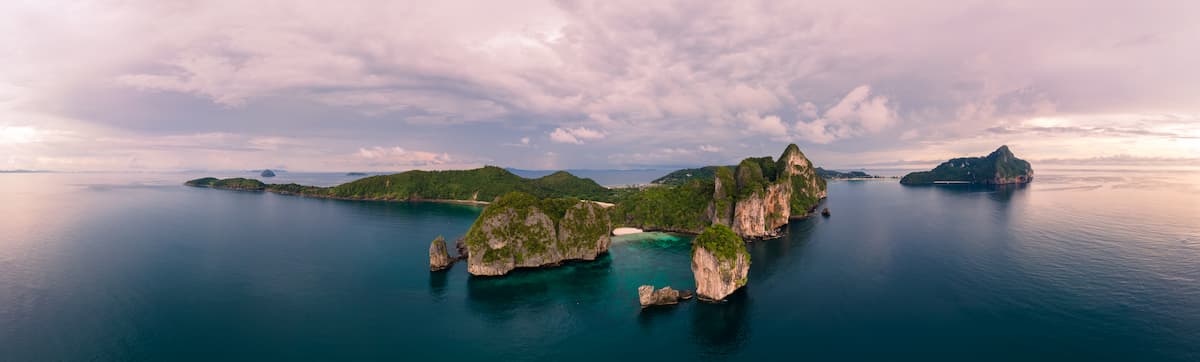
This Phi Phi Islands Tour from Phuket aboard the speedboat doesn’t so much sail as fly. The captain leans into each crest, the bow slicing spray, and laughter mixes with shrieks as sea mist catches everyone’s faces. Every few miles, limestone cliffs emerge — first faint shapes, then sharp silhouettes, rising hundreds of feet straight from the sea.
Maya Bay — A Return to Paradise
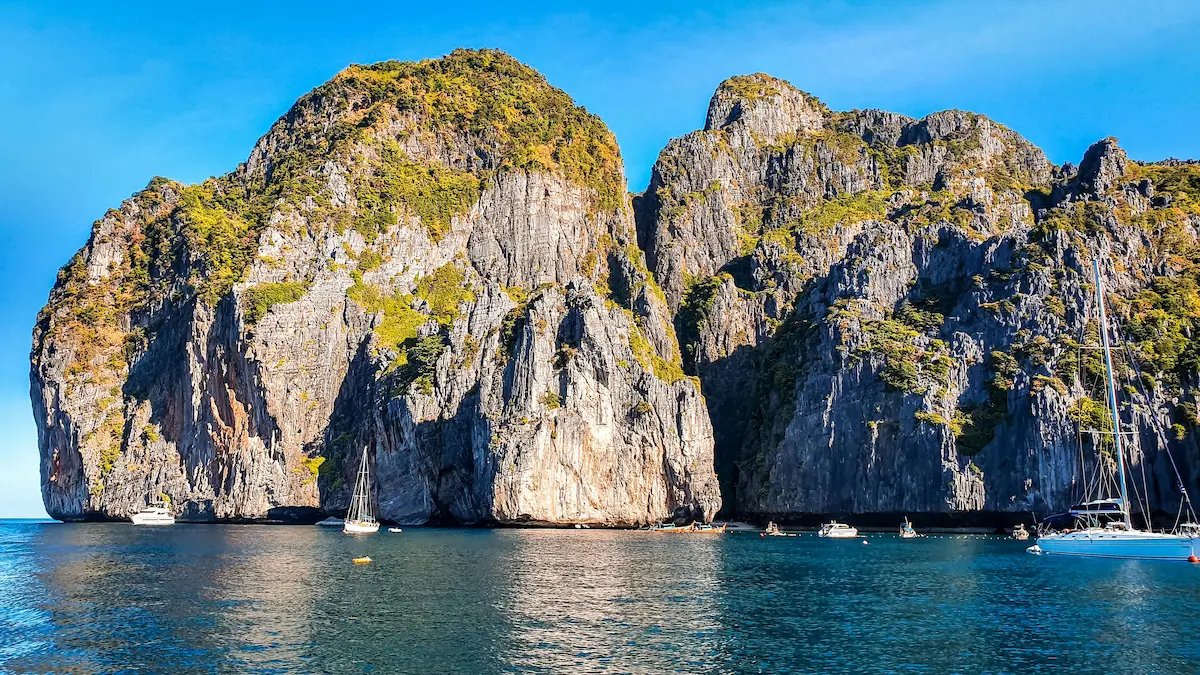
By mid-morning, we reached legendary Maya Bay. The water here is an impossible shade of turquoise. Towering cliffs embrace the bay, wrapping it in a crescent of white sand so soft it squeaks. The island reopened with strict protections; swimming inside the bay is restricted to help fragile reefs recover — and the quiet adds to the mystique.
A Little History
Maya Bay sits within the Hat Noppharat Thara–Mu Ko Phi Phi National Park. After years of over-tourism, Thai authorities closed it in 2018 to allow recovery. Coral transplants, visitor caps, and route controls now keep it healthy — proof that preservation and tourism can coexist.
Viking Cave & Pileh Lagoon — Emerald Worlds
We skirted the island’s western edge toward Viking Cave, a cleft in the limestone where swiftlet nests are harvested for bird’s nest soup, a practice embedded in maritime culture. Faint drawings inside the cave are said to resemble Viking ships — myth or memory, no one knows.
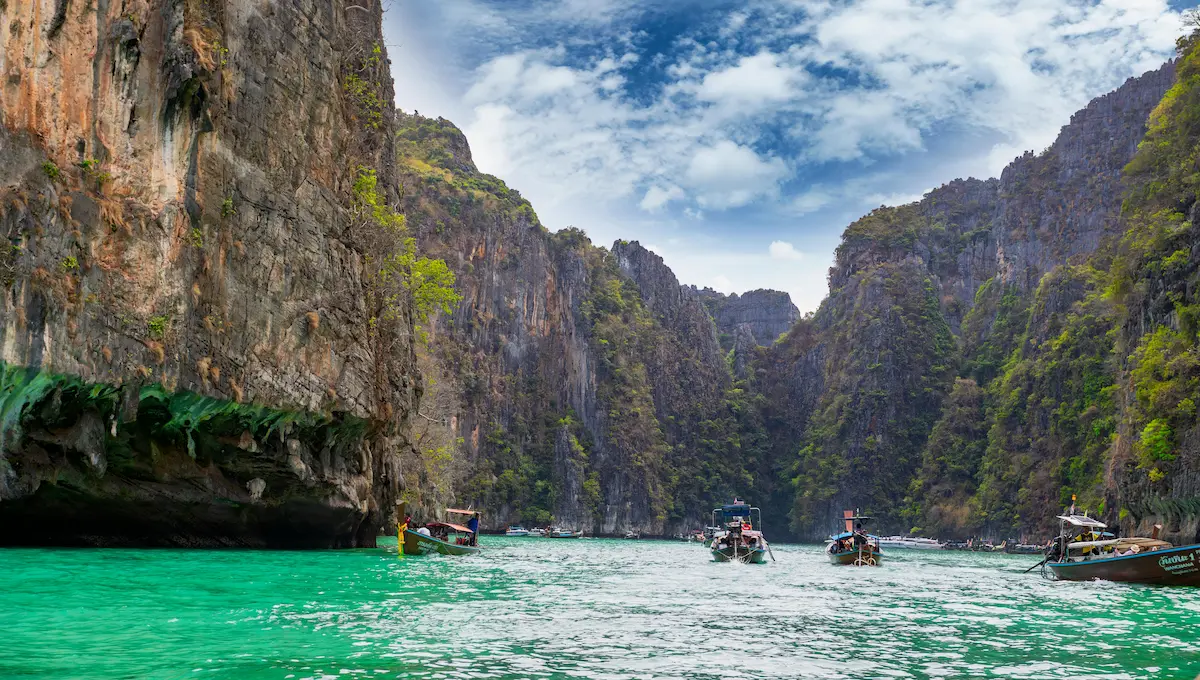
Just beyond, Pileh Lagoon opened like a secret: emerald water ringed by vertical cliffs. We eased through a narrow entrance, and the whole boat fell into a hush before the first splash. Floating there, looking up at fern-streaked walls, felt weightless and timeless.
Ecology Note
Pileh’s distinctive color comes from its limestone floor and shallow depth. It’s a sanctuary for juvenile reef fish. Boats now anchor outside the lagoon mouth to prevent anchor damage — one more way conservation reshapes the modern tour.
Monkey Beach Mayhem
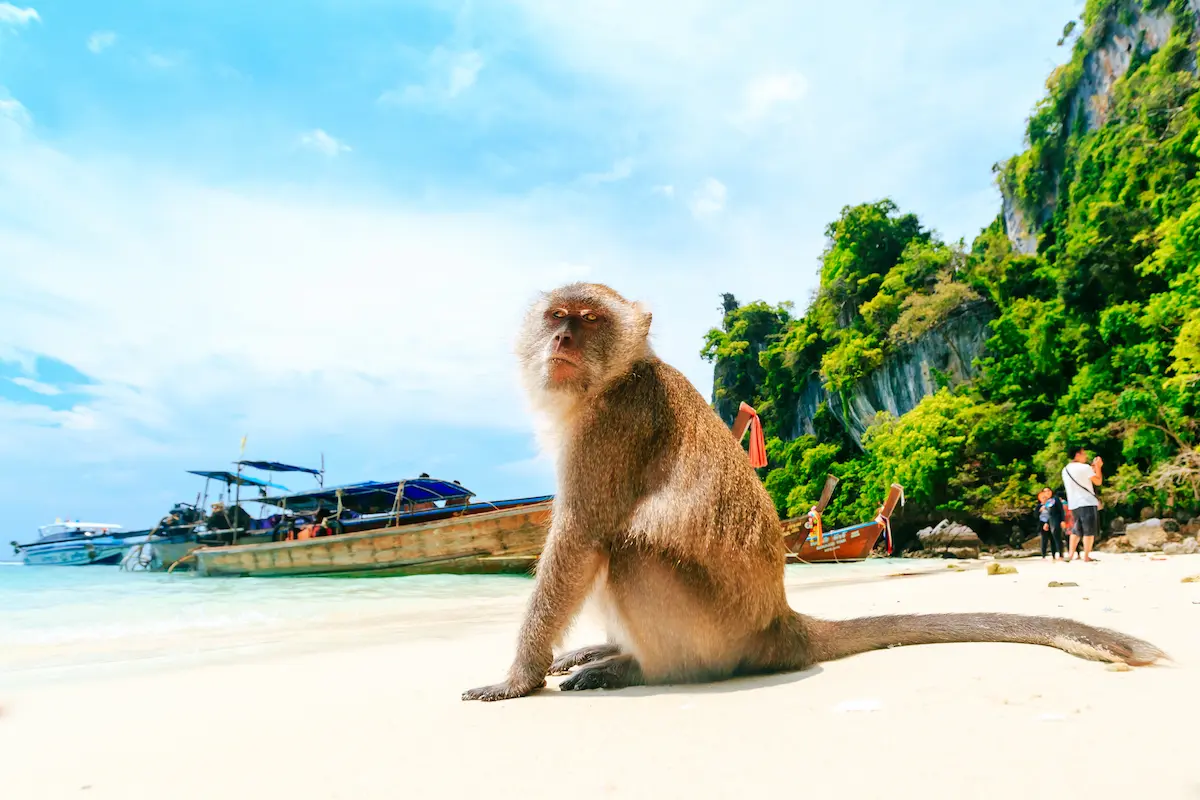
If Pileh is serenity, Monkey Beach is pure comedy. Macaques bound between branches like acrobats. No food, no touch — they’re cute but crafty. One stole sunglasses, another nabbed a soda. It’s chaotic, a little wild, and impossible not to laugh.
Snorkeling in the Coral Gardens
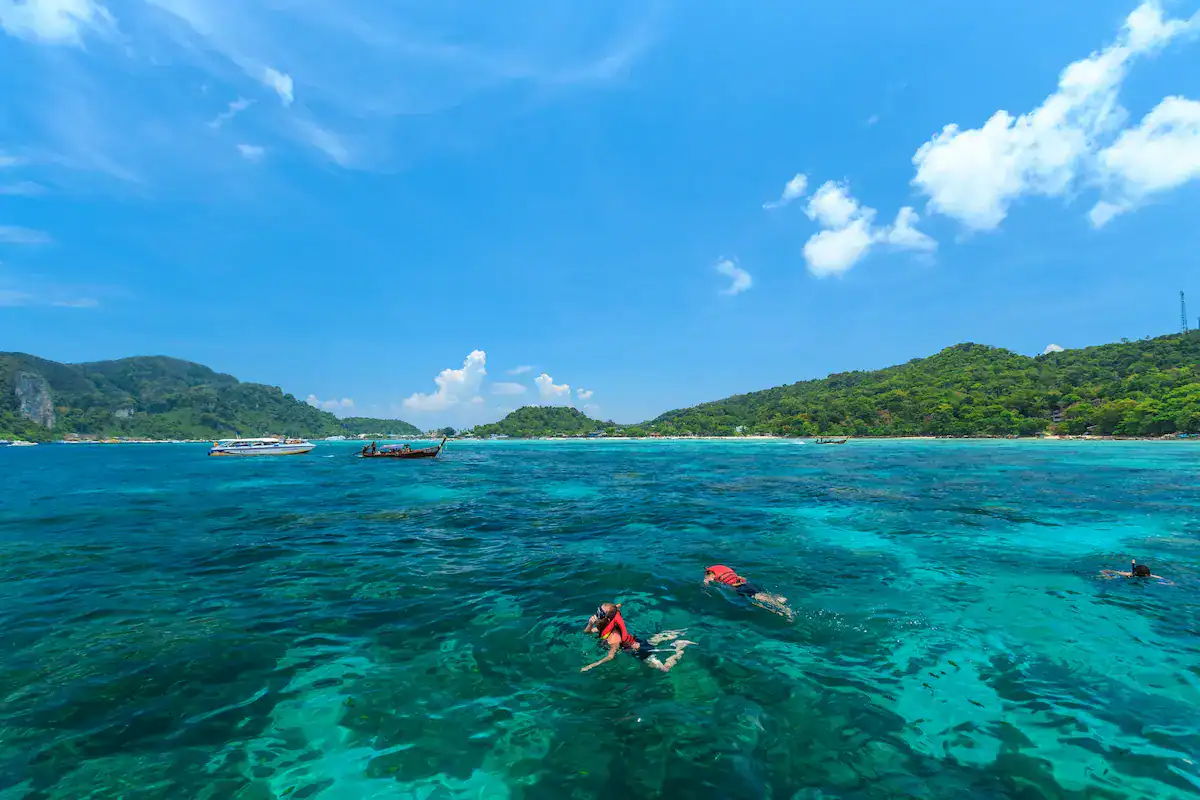
Near Loh Samah Bay we slipped into blue water alive with color — bright fish darting through soft coral, sun-shafts cutting like ribbons. For twenty minutes the world above disappeared. It was just breathing, bubbles, and a school of yellow tangs drifting like confetti.
Photographer’s Moment
Bringing a GoPro or housing? Set white balance manually — blues are strong. Midday light falls like stained glass; it’s gorgeous in stills if you shoot slightly down-sun.
Lunch on Phi Phi Don — Island Rhythms
We docked at Phi Phi Don for a breezy beachside buffet: curry, fried rice, grilled chicken, and sweet watermelon. Under coconut shade, we traded stories while local kids played football on the sand.
Culture Note
Phi Phi Don was hard-hit in the 2004 tsunami. Rebuilding has been remarkable — hotels reconstructed, reefs slowly returning, and guides proud to share their home. That resilience is part of what you feel on this tour.
Bamboo Island — Sea Like Glass
Our final stop was Bamboo Island, a ring of white sand and water so clear it seems invisible. No monkeys, few crowds — just wind, water, and the occasional hermit crab etching hieroglyphs in the shore.
Photographer’s Moment
Late-afternoon light is unbeatable. Keep shutter speed high to catch micro-textures on wavelets — the sea turns to liquid glass against the white sand.
Sailing Home — Reflections
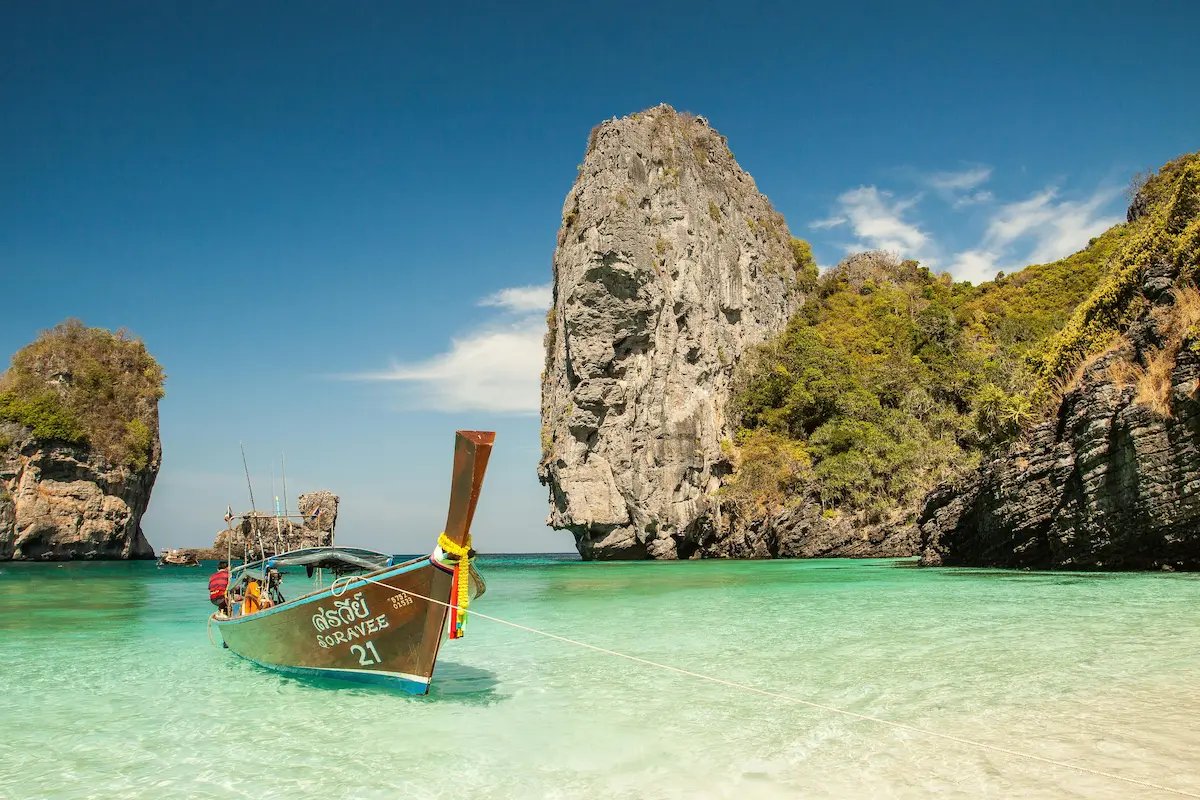
The ride back to Phuket was quieter. Pineapple slices, soft gold light, long shadows on the cliffs. It’s the kind of day that stays with you — stitched into memory by salt, sun, and laughter.
Plan Your Phi Phi Islands Tour (From Phuket)
If you’re traveling to Phuket, this is the signature day trip. Here’s what to know:
- Best time to visit: November–April for calmer seas and clear skies.
- What to bring: Reef-safe sunscreen, towel, hat, waterproof phone case, light layers, and some cash for fees.
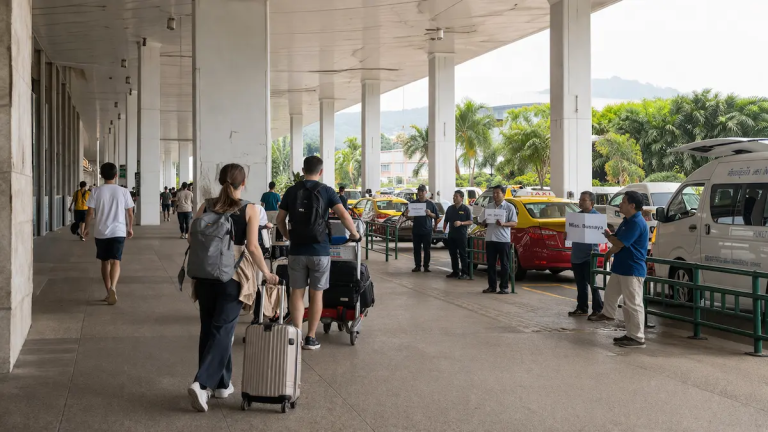
- Getting there: Most operators include hotel pickup/drop-off (Patong, Karon, Kata, Kamala).
- Extra costs: National Park fees (approx THB 400 adult / THB 200 child) may be collected in cash at the pier.
- Responsible travel: Use reef-safe sunblock, don’t touch coral, never feed wildlife.
- When to book: Sunrise departures mean fewer crowds at Maya Bay and magical light for photos.
Typical Inclusions
- Hotel transfers (select areas), speedboat transport, English-speaking guide
- Buffet lunch on Phi Phi Don, soft drinks & fruit
- Snorkeling gear (mask & fins)
- Stops at Maya Bay, Pileh Lagoon, Monkey Beach, Bamboo Island (routes vary with conditions)
Note: Some operators collect national park fees separately. Always check your voucher.
Ready to Go?
Trusted platforms with instant confirmation and multiple operator options.
Choosing Your Tour
Platforms list multiple operators, from classic speedboats to luxury catamarans. Check reviews and group sizes: smaller groups mean more time per stop and a calmer experience.
Seasonal Note
During the southwest monsoon (May–October), seas can be rougher. Operators adjust routes or timing when needed. If you’re motion-sensitive and want the smoothest ride, aim for the dry season.
You Might Also Like
- Thailand Islands Guide 2025 (planning tips, seasons, routes)
- Phuket Ferry & Speedboat Guide (routes, prices, how to choose)
- Similan Islands Day Trip (snorkeling heaven)
- Koh Lanta Travel Guide (quiet beaches & sunset spots)
- Best Time to Visit Phuket (month-by-month)
Frequently Asked Questions
How long is the speedboat ride from Phuket to the Phi Phi Islands?
Usually 45–60 minutes each way, depending on sea conditions and the departure pier.
What is typically included in a Phi Phi day tour?
Hotel transfers (selected areas), speedboat, English-speaking guide, soft drinks/fruit, buffet lunch on Phi Phi Don, snorkeling gear (mask/fins), and stops such as Maya Bay, Pileh Lagoon, Monkey Beach, and Bamboo Island. Routes can vary with weather.
Can you swim at Maya Bay?
Swimming inside Maya Bay is restricted to protect the reef. You can walk the beach and take photos during the allowed visiting window; swimming usually happens at nearby approved spots.
What should I bring?
Reef-safe sunscreen, hat, sunglasses, towel, waterproof phone case, light clothing, dry bag if you have one, and some cash for national park fees or extras.
When is the best season to go?
November–April generally offers calmer seas and clearer skies. May–October can bring rougher water and occasional route changes, but moody skies and lush scenery.
Are tours safe during the monsoon season?
Operators monitor weather closely and adjust routes/times or cancel if needed. If you’re motion-sensitive, the dry season is more comfortable.
How much are the national park fees?
Expect around THB 400 per adult and THB 200 per child, often collected in cash at the pier unless your operator includes it. Always check your voucher.
Will the tour pick me up from my hotel?
Most tours include pickup/drop-off from Patong, Karon, Kata, and Kamala. Other areas may have a surcharge or require meeting at the pier—confirm when booking.
Is the snorkeling suitable for beginners?
Yes. The crew provides life jackets and basic guidance. Stay near the boat, follow instructions, and avoid touching coral or feeding fish.
Can I bring a camera or GoPro?
Absolutely. A waterproof case or action camera works best. Set white balance manually underwater for truer colors, and bring a dry bag for the boat.
I want to go here soon.